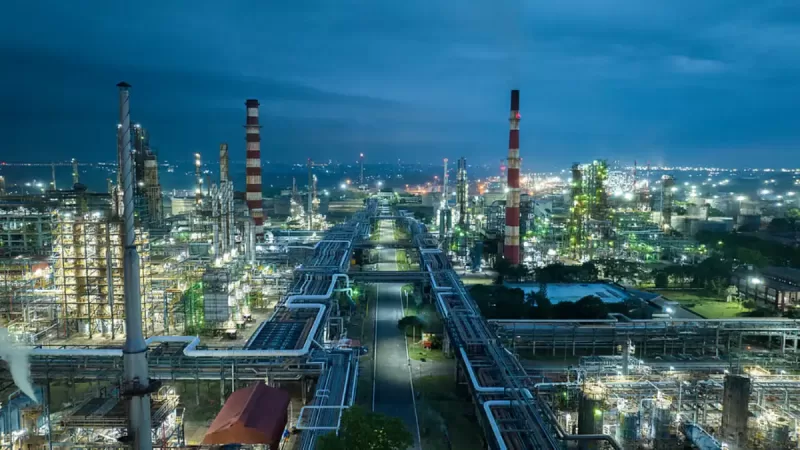
It became the first Indian refinery to publicly bar its crude suppliers from both the Strait of Hormuz and the Red Sea. It just posted one of the sharpest profit turnarounds of any Indian PSU this year. And it quietly helps fill the underground caverns that form part of India's national strategic oil reserve. Here is why Mangalore Refinery and Petrochemicals Limited (MRPL) matters far more than its size alone suggests.
A Refinery Bigger Than Its Hometown Suggests
Mangalore Refinery and Petrochemicals Limited (MRPL) is a Category 1, Schedule 'A' Miniratna Central Public Sector Enterprise under the Ministry of Petroleum and Natural Gas, and a majority-held subsidiary of Oil and Natural Gas Corporation (ONGC). It operates a 15 million-tonnes-per-annum (MMTPA) refinery on the coast at Mangaluru, alongside an integrated petrochemical complex, and ranks among India's more technically complex refineries by Nelson Complexity Index — meaning it can extract more high-value fuels like diesel and jet fuel from cheaper, heavier and more sour crude oils than many simpler refineries can.
Over the past thirteen months, MRPL has been at the centre of India's most sensitive live energy-security question — how to keep crude flowing if the Strait of Hormuz or the Red Sea become unsafe — while also reporting one of the sharpest financial turnarounds of any Indian PSU this year, and quietly becoming one of the companies most directly responsible for keeping a piece of India's strategic oil reserve full.
The Live Story: MRPL and the Hormuz-Red Sea Crisis
On 27 July 2026, MRPL became the first Indian refinery to explicitly instruct crude suppliers to avoid both the Strait of Hormuz and the Red Sea in a spot tender, according to Business Standard's reporting. The restriction was inserted into a tender for up to one million barrels of crude, for cargoes due to be delivered between 25 August and 6 September 2026. No other Indian refiner had included that specific dual restriction in a spot crude tender before this.
This was not a hypothetical precaution. Two crude tankers carrying Saudi oil for Indian refiners — including MRPL — reportedly went dark, switching off their AIS transponders amid a Houthi blockade in the Red Sea. The tankers, named Amazon and Rodos, were carrying crude destined for IOCL and MRPL, expected to reach Chennai and Mangalore in early August 2026.
Behind this, ONGC — MRPL's parent company — approved a $500 million guarantee specifically to support MRPL's import of Saudi Aramco crude. It is about as direct an illustration of ONGC's backing for MRPL as exists: not a policy statement, but a specific, dollar-denominated financial guarantee tied to a live supply-security situation.
The Financial Turnaround: From Loss to a ₹1,931 Crore Year
MRPL's FY2025-26 annual report, filed with the stock exchanges ahead of its 38th Annual General Meeting on 24 August 2026, tells a genuine turnaround story:
Standalone Profit After Tax for FY2025-26 came in at ₹1,931 crore, up from just ₹51 crore in FY2024-25 — a roughly 38-fold increase. Profit Before Tax surged to ₹4,022 crore, from ₹113 crore the previous year. Gross Refining Margin (GRM) improved to US$9.22 per barrel, from US$4.45 per barrel in FY2024-25. Revenue from Operations was ₹1,05,155 crore, actually slightly lower than FY2024-25's ₹1,09,280 crore — meaning this was a margin-and-efficiency story, not simply a revenue story. The Board declared an interim dividend of ₹4 per share (40%), totalling ₹701.04 crore, which was subsequently confirmed as the final dividend for the year.
The most recent quarter, Q1 FY2026-27 (April–June 2026), showed an even sharper swing: net profit of approximately ₹945-946 crore, compared with a net loss of ₹270.66 crore in the same quarter a year earlier, and compared with just ₹117 crore in the preceding quarter. Revenue from operations for the quarter rose 98.24% year-on-year to ₹41,609 crore. The stock rallied as much as 13.29% intraday on the results, on 16 July 2026. Several reports note this quarter's profit was supported in part by an exceptional, one-off gain, alongside underlying operational improvement.
FY2025-26's Records: A Refinery Running Past Its Limits
According to MRPL's own FY2025-26 annual report, the company set an unusual number of "highest-ever" production and logistics records in a single year, even while absorbing a planned Phase-II shutdown:
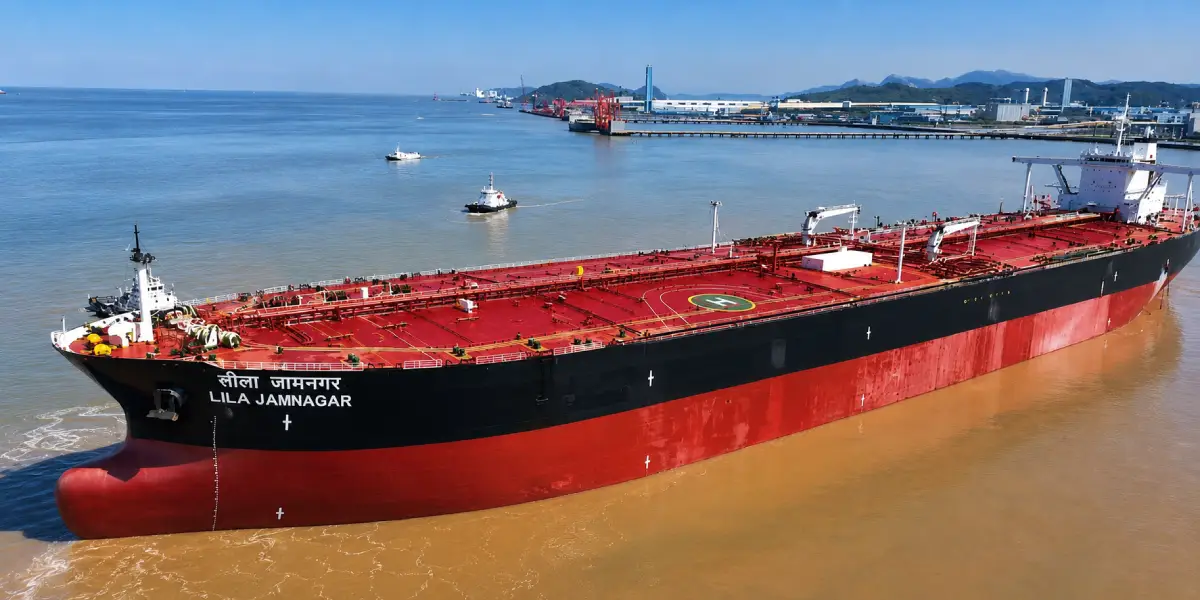
Highest-ever HSD (diesel) production: 6.78 million tonnes (MMT), beating the previous best of 6.68 MMT set in FY2024-25. Highest-ever Xylol production: 34.3 thousand tonnes (TMT), versus a previous best of 23.91 TMT. Highest-ever Toluene production: 4.4 TMT, versus a previous best of just 0.78 TMT — notable because MRPL only began producing Toluene from its Aromatic complex for the domestic market in January 2025. Highest-ever MTO (Mineral Turpentine Oil) production: 21 TMT, versus a previous best of 5.9 TMT. Highest-ever quarterly crude throughput: 4.56 MMT, achieved in Q3 FY2025-26. Highest-ever monthly product export: 723.2 TMT, in September 2025. Highest-ever number of VLCCs (Very Large Crude Carriers) handled in a year: 13, versus a previous best of 9.
The refinery processed 16.774 MMT of crude overall in FY2025-26 at 111.8% capacity utilisation — despite a planned Phase-II shutdown during the year, which makes the utilisation figure more notable, not less. MRPL's crude basket for the year comprised 273 different crude grades sourced from multiple regions globally, and it processed four entirely new crude varieties for the first time: HOUT (from the Neutral Zone), Sarir Mesla (Libya), Gindungo (Angola) and Mostarda (Angola).
Separately, at least one industry report describes MRPL as having, at some point, run at a crude processing rate surpassing 18 MMTPA on an annualised basis — 120% of its 15 MMTPA design capacity — though this appears to reflect a different measurement window than the FY2025-26 annual total above.
Recognition: Eleven Awards in One Evening, and a Fourth Straight R&D Title
MRPL's FY2025-26 was also unusually decorated. At the 15th PRCI (Public Relations Council of India) Excellence Awards 2025, held in Goa on 27 September 2025, MRPL won eleven awards in total, including Gold in three categories: Best Community PR Event, Best Music Video, and Best Employee Event. The honours were received by MRPL's Chief General Manager, Dr Rudolph Joyer Noronha.
At the Energy Technology Meet (ETM) 2025, held around 30 October 2025, MRPL won the Best Refining Innovation (R&D) award for the fourth consecutive time. MRPL also won the Karnataka Best Employer Brand Award 2025 on 18 September 2025 at a ceremony in Bengaluru endorsed by CHRO Asia, presented by Dr Venkata Ramana Akkaraju, Chairperson of the New Mangalore Port Authority — a small illustration of how closely MRPL's leadership and the port's leadership operate within the same regional ecosystem. The company's FY2025-26 annual report also lists the FIPI Innovator of the Year (Team) Award 2025, the 24th Global Greentech Environment and Sustainability Award 2025, and the Mahatma Award for HR Excellence among its recognitions for the year.
New Mangalore Port itself held its own Annual Awards Nite 2025-26 on 15 July 2026 at Panambur, honouring port stakeholders in the year it recorded its own highest-ever cargo handling of over 50 MMT — the Port's 50th financial year, with a target of 53 MMT for FY2026-27.
R&D and Patents: A Refinery Making Its Own Painkiller Ingredient
Among the more genuinely surprising facts in MRPL's recent history: the company has developed and patented its own process technology to manufacture Iso-Butyl Benzene (IBB), an Active Pharmaceutical Ingredient used in the manufacture of ibuprofen, working in collaboration with CSIR-National Chemical Laboratory (CSIR-NCL). MRPL holds 100% of the intellectual property for this process. A demonstration plant of 200 tonnes-per-annum capacity, using MRPL's own captive feedstock, was targeted for commissioning around November 2025 — meaning a refinery best known for diesel and petrol has also engineered its way into a pharmaceutical supply chain most people would never associate with an oil company.
MRPL is also building a 20 KLPD demonstration Bio-ATF (Sustainable Aviation Fuel) plant, at an approved cost of ₹364 crore, directed by the Ministry of Petroleum and Natural Gas, targeted for completion around January 2027. This is tied to India's participation in the second phase of CORSIA (the UN's Carbon Offsetting and Reduction Scheme for International Aviation) from 2027 onward.
R&D spending rose to ₹4,672.57 lakh in FY2025-26, up 16.29% from ₹4,018 lakh the year before, with MRPL's Innovation Centre working across AI/ML applications, Active Pharmaceutical Ingredients, plastic circularity, and crude-to-chemicals research.
Strategic Oil Security: The Caverns Nobody Sees
One of the least publicly visible but most strategically significant things MRPL does has nothing to do with what comes out of its refinery gates. MRPL plays an active role in helping the Indian Strategic Petroleum Reserves Limited (ISPRL) fill India's underground strategic crude oil storage caverns at Permude (Mangaluru) and Padur (Udupi) — physical stockpiles built to cushion India against a global supply shock. The Ministry of Petroleum and Natural Gas has specifically mandated ISPRL to work closely with public-sector oil companies, including MRPL, on filling these caverns, historically taking advantage of periods of low international crude prices to do so.
More recent reports describe ONGC's plans to reserve roughly half of Mangaluru's oil storage capacity — a facility with a total capacity of 1.75 million tonnes — specifically for India's strategic petroleum reserve purposes, with MRPL collaborating on this. It directly ties Mangaluru's refining infrastructure to India's national energy-security architecture in a way most residents of the city likely do not realise.
The Port Relationship: A Symbiosis Going Back Two Decades
MRPL's relationship with New Mangalore Port dates to the earliest years of its expansion. Historical company records show MRPL contributed ₹20 crore toward the construction of a dedicated new jetty at New Mangalore Port Trust for the company's exclusive use, and became an equity shareholder in the 364-367 km Mangalore-Hassan-Bangalore multi-product pipeline, which carried its first parcel of high-speed diesel to Bangalore on 1 August 2003.
That relationship remains active today. Among MRPL's ongoing infrastructure projects is a new 20-inch fuel oil export pipeline to NMPA, replacing an existing line, targeted for completion around August 2026.
From a Joint Venture to a Government Powerhouse: MRPL's History
MRPL was set up as a joint venture between Hindustan Petroleum Corporation Limited (HPCL) and the Aditya Birla Group (through Indian Rayon and Industries Limited), incorporated around 1987-88. Its first phase, with a capacity of 3.69 MMTPA, was commissioned in 1996, and capacity was expanded to 9.69 MMTPA by the end of the 1990s.
On 28 March 2003, ONGC acquired the Aditya Birla Group's entire 37.39% shareholding and infused an additional ₹600 crore in equity capital, making MRPL a majority-held ONGC subsidiary — the single most important structural event in the company's history. MRPL has been a Central Public Sector Enterprise (CPSE) since 2005, and was designated a Schedule A CPSE in 2013. The refinery's last major capacity expansion was completed in 2015, with the commissioning of its Polypropylene Unit, bringing installed capacity to its present 15 MMTPA.
Along the way, MRPL built out an aviation-fuel business through a landmark joint venture with Shell Aviation announced in January 2008, sold its first spot crude cargo to Iran in April 2008, and in June 2008 withdrew, together with ONGC, from a planned greenfield refinery and SEZ project at Kakinada.
The Petrochemical Pivot: Betting Against the Electric Vehicle
One of the more consequential recent strategic decisions has received relatively little local attention: MRPL has shelved a planned refinery capacity expansion in favour of a large petrochemical investment, reportedly worth around ₹47,000 crore, aimed at boosting production of chemicals used in plastics and paints rather than transportation fuels. The logic is straightforward — the growth of electric vehicles is expected to slow long-term demand growth for petrol and diesel, while petrochemical demand is expected to keep growing. ONGC, MRPL's parent, has separately indicated an intention to invest roughly ₹1 lakh crore group-wide to expand petrochemical capacity to 8 MTPA by 2030, up from a current 3.4 MTPA.
MRPL's petrochemical joint venture, ONGC Mangalore Petrochemicals Limited (OMPL), sits adjacent to MRPL's own complex inside the Mangaluru Special Economic Zone, producing Para-Xylene and Benzene. MRPL holds a controlling 51% stake in OMPL, with ONGC holding the remaining 49%.
Retail and Direct Marketing: HiQ's Quiet Four-State Expansion
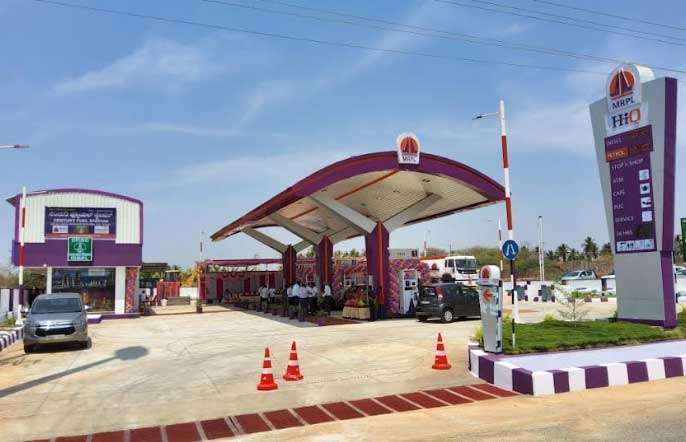
MRPL has been steadily building a retail fuel-station network under its own HiQ brand. The network grew from 101 outlets as of FY2023-24, to 167 after 66 new outlets were commissioned in FY2024-25 (with the company's first entry into Tamil Nadu that year), to 252 outlets after FY2025-26, when 85 further outlets were added and the network entered Andhra Pradesh for the first time — meaning HiQ now operates across Karnataka, Kerala, Tamil Nadu and Andhra Pradesh.
On the institutional side, MRPL's total institutional sales volume — spanning products like Bitumen, Sulphur, Pet coke, ATF, Polypropylene and Xylol — reached 2.99 million tonnes in FY2024-25, generating revenue of ₹15,214.29 crore, a 22.5% increase in volume and 23.6% increase in value over the prior year. On the aviation side, FY2024-25 saw MRPL's highest-ever ATF (jet fuel) production in any year, at 2.72 MMT, up from a previous best of 2.09 MMT.
CSR: From Wenlock's New Floors to a Science Gallery
MRPL runs its corporate social responsibility programme under the name "Samrakshan" — framed around protecting and promoting the social, cultural and environmental heritage of its surrounding community. The CSR budget grew from ₹35.36 crore in FY2023-24 to ₹82.85 crore in FY2024-25 — more than doubling — with the entire committed amount spent on initiatives across education, healthcare, infrastructure and environment.
Specific FY2024-25 CSR commitments included support for a new Astronomy and Space Science Gallery at Pilikula Regional Science Centre near Mangaluru; procurement of a cancer detection mobile facility; construction support for a palliative care centre in Mangaluru; and support for the construction of additional floors at Wenlock Government Hospital, Mangaluru — the district's oldest and largest public hospital.
Employment: 2,450 People
As of 31 March 2026, MRPL's total employee strength stood at 2,450, comprising 2,231 male and 219 female employees.
Sustainability and Safety
MRPL has set a Net Zero target for Scope 1 and Scope 2 emissions by 2038 — more ambitious than India's national 2070 Net Zero target. In FY2025-26, the company reported a 9.63% reduction in Scope 1 and Scope 2 emission intensity, and an 11.44% absolute reduction compared to its FY2022-23 baseline, alongside total fuel savings of 43,436 MTOE from energy-efficiency measures. MRPL has also commissioned a 30 MLD desalination plant to mitigate water-scarcity risk to its operations, and is separately investing in a 2G ethanol plant and exploring green hydrogen initiatives.
The Takeaway
MRPL's strategic importance to Mangaluru does not rest on a single dramatic fact — it rests on the accumulation of several, each individually significant and together compelling: it is the refinery whose crude-tender decisions are now being watched as an early signal of how Indian companies are responding to Red Sea and Gulf shipping risk; it is the company whose parent, ONGC, is putting real money behind its Saudi crude imports; it is a quiet but active participant in filling India's strategic oil reserve; it has patented its own pharmaceutical-ingredient manufacturing process; and it has, within a single financial year, gone from a ₹51 crore profit to a ₹1,931 crore one.
Surprising Facts About MRPL
- It makes an ingredient used in ibuprofen. MRPL has patented its own process, developed with CSIR-National Chemical Laboratory, to manufacture Iso-Butyl Benzene — a key pharmaceutical ingredient — and owns 100% of the resulting intellectual property.
- It was the first Indian refinery to bar both the Red Sea and the Strait of Hormuz from a crude tender. A precaution no other Indian refiner had publicly taken before.
- It quietly helps guard India's national oil security. MRPL plays an active role in filling India's underground strategic petroleum reserve caverns at Permude and Padur, near Mangaluru and Udupi.
- Its annual profit rose almost 38-fold in a single year — from ₹51 crore in FY2024-25 to ₹1,931 crore in FY2025-26.
- It handled 13 supertankers (VLCCs) in one year, its highest ever, up from a previous best of 9.
- It processed 273 different crude oil grades in a single year, including four brand-new varieties from Libya, Angola, and the Neutral Zone — showing an unusual level of refining flexibility.
- Its CSR budget more than doubled in one year, from ₹35.36 crore to ₹82.85 crore, funding projects from a science gallery to new hospital floors.
- It helped fund additional floors at Wenlock Government Hospital, Mangaluru's oldest and largest public hospital.
- Its retail fuel network, HiQ, expanded into a fourth state (Andhra Pradesh) in FY2025-26, growing to 252 outlets across South India.
- It is building India's aviation biofuel capability early, with a dedicated Sustainable Aviation Fuel demonstration plant ahead of a global emissions rule India adopts from 2027.
- It won 11 national awards in a single evening at the 2025 PRCI Excellence Awards, plus a fourth consecutive Best Refining Innovation (R&D) title.
- It began life as a private company. MRPL started as a joint venture with the Aditya Birla Group, decades before ONGC took it over in 2003 and turned it into a public-sector energy major.
- Its Net Zero target (2038) beats India's own national target by over three decades. India's overall Net Zero goal is set for 2070.
Frequently Asked Questions
What is MRPL?
MRPL (Mangalore Refinery and Petrochemicals Limited) is a 15 MMTPA oil refinery and petrochemical company based in Mangaluru, Karnataka. It is a Central Public Sector Enterprise and a majority-owned subsidiary of ONGC, operating under the Ministry of Petroleum and Natural Gas.
Is MRPL a government company?
Yes, today it is. MRPL started in 1987-88 as a joint venture between Hindustan Petroleum Corporation Limited and the Aditya Birla Group. ONGC acquired the Birla Group's stake in March 2003, making MRPL a majority government-owned subsidiary from that point onward.
Why is MRPL considered strategically important?
MRPL sits at the intersection of several national priorities: crude oil import security (including its recent decision to avoid the Red Sea and Strait of Hormuz in a spot tender), India's strategic petroleum reserve (through its role filling underground caverns near Mangaluru and Udupi), and regional economic activity through its refinery, petrochemical operations, retail network, and its relationship with New Mangalore Port.
Is MRPL currently profitable?
Yes. MRPL reported a standalone Profit After Tax of ₹1,931 crore for FY2025-26, up sharply from ₹51 crore the year before, driven mainly by improved refining margins. Its most recent quarter (Q1 FY2026-27) also swung to a profit of roughly ₹945-946 crore, compared with a net loss in the same quarter a year earlier.
What does MRPL produce besides fuel?
Alongside petrol, diesel and jet fuel, MRPL produces petrochemicals including Xylol, Toluene, Benzene, Mineral Turpentine Oil and Polypropylene, and has developed a patented process to manufacture Iso-Butyl Benzene, a pharmaceutical ingredient used in ibuprofen.
What is HiQ?
HiQ is MRPL's own retail fuel station brand. As of FY2025-26, the network had grown to 252 outlets across Karnataka, Kerala, Tamil Nadu and Andhra Pradesh.
How many people does MRPL employ?
As of 31 March 2026, MRPL's total employee strength stood at 2,450.
What is MRPL's connection to New Mangalore Port?
The relationship goes back over two decades. MRPL contributed funding toward building a dedicated jetty at the port in its early years, and the two organisations continue to operate closely together, including on ongoing infrastructure projects like a new fuel-export pipeline connecting the refinery to the port.


0 Comments
Leave a Comment