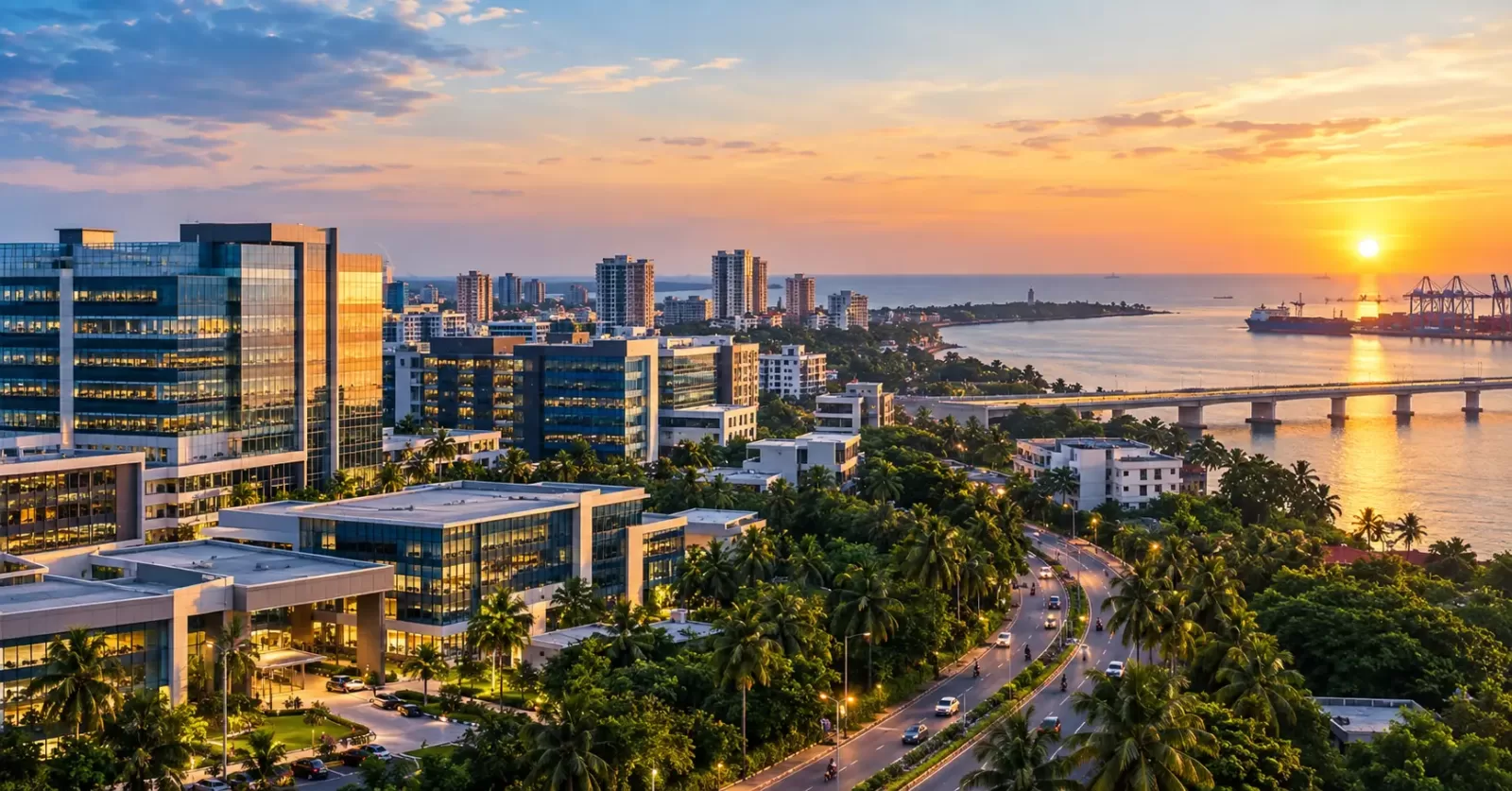
Mangaluru's IT workforce has nearly doubled in three years, a Danish company scaled from 20 to 850 employees here, and the state budget has promised a dedicated IT park. Is this coastal city really becoming Karnataka's next technology hub — or just a well-marketed satellite of Bengaluru?
Three years ago, a Danish company called EGDK India opened a small office in Mangaluru with about 20 employees. Today, that same office employs more than 850 people. It is one data point, but it is the kind that has made industry watchers start asking a question that would have sounded far-fetched a decade ago: is Mangaluru actually becoming Karnataka's next technology hub?
The honest answer is more interesting than a simple yes or no. Mangaluru is genuinely growing as a technology destination — the numbers back that up. But it is not yet the kind of self-sustaining hub that Bengaluru is, and the people building this ecosystem describe it less as a rival to the state capital and more as something new: a "plus one."
The Numbers Behind the Buzz
Start with the headline figure. Mangaluru's IT workforce has grown from around 15,000 in 2023 to roughly 25,000–26,000 today, according to industry estimates reported by Moneycontrol — nearly doubling in three years. Separate industry figures put the current base slightly higher, at around 28,000 IT employees, with founders in the ecosystem setting a public target of scaling that to 200,000 over the next five to eight years.
Over the past two years, more than 40 companies have set up operations across the coastal belt, together creating roughly 8,000 jobs.
Mangaluru's Tech Growth, By The Numbers
| # | Metric | Figure |
|---|---|---|
| 1 | IT workforce, 2023 | ~15,000 |
| 2 | IT workforce, 2026 (industry estimate) | ~25,000–28,000 |
| New companies set up in coastal belt (past 2 years) | 40+ | |
| Jobs created by these new companies | ~8,000 | |
| Engineering graduates produced annually (23+ colleges incl. NITK) | 12,000–15,000 | |
| Projected annual engineering graduates (next 3 years) | 17,000–20,000 | |
| Other graduates entering workforce annually | ~40,000 | |
| Reported attrition rate in Mangaluru tech firms | 6–7% (vs. significantly higher in metros) | |
| Founder-set target: IT professionals by 2033–34 | 200,000 | |
| Founder-set target: startups by 2035 | 4,000, including 5 unicorns | |
| Tech companies in Mangaluru cluster (per KDEM, Sept 2025) | 225+, generating Rs 4,500+ crore annually | |
| IT professionals in KDEM's Mangaluru cluster count (Sept 2025) | ~10,000 | |
| Official target: tech jobs by 2034 (Draft Mangaluru Cluster Vision Report) | 2,00,000+ | |
| Official target: tech exports by 2034 | Rs 40,000 crore |
Who Is Actually Setting Up Here
The most-cited proof point is EGDK India Private Limited, a subsidiary of Denmark-based EG A/S, which scaled from about 20 employees to over 850 within three years. Bose Professional set up its first dedicated R&D centre outside the United States in Mangaluru. LegalTech firm UniCourt runs its primary development centre from the city, and product companies such as Winman Software India and Semnox Solutions have built global businesses from Mangaluru rather than treating it as a satellite office.
Consulting majors have started paying attention too. At TiE Con Mangaluru 2026, Deloitte South Asia CEO Romal Shetty told the gathering that the firm would come to Mangaluru — describing it as "only a matter of time" as Deloitte continues to scale hiring across India.
The ecosystem isn't limited to conventional tech companies. DesiCrew, a tech-enabled impact-sourcing firm founded by Saloni Malhotra, has expanded its presence in and around Mangaluru, running back-office operations and AI/ML data services from the coastal belt as part of a broader strategy of building sustainable employment outside traditional IT corridors.
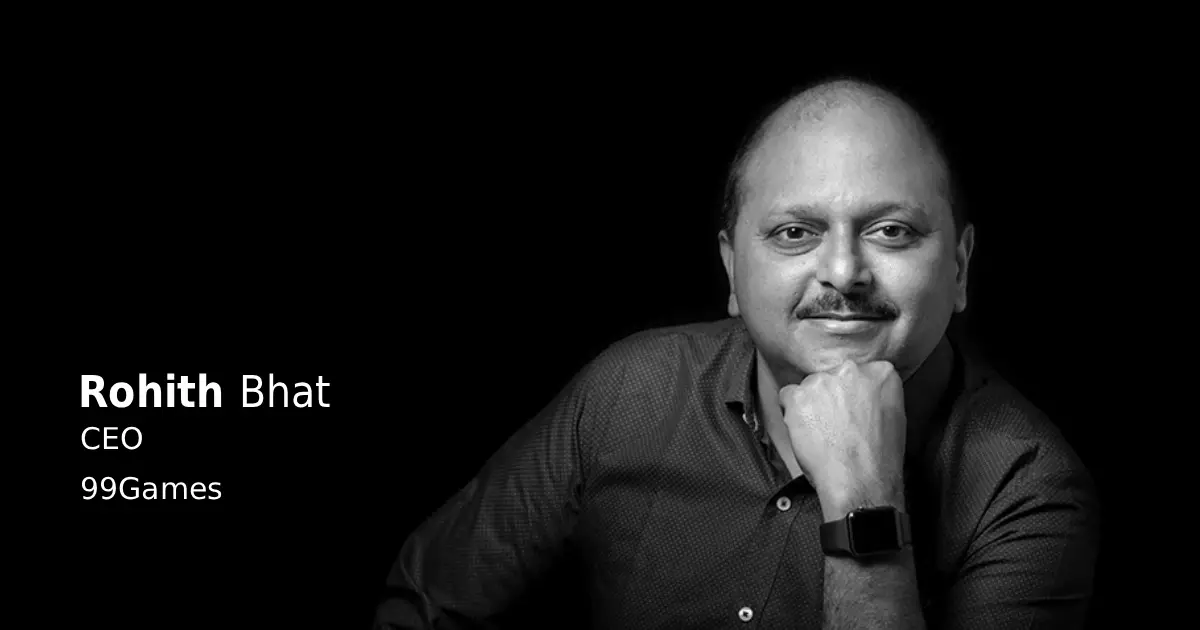
Homegrown companies have already produced exits that lend the region some credibility on paper. Rohith Bhat, founder of Robosoft Technologies and founding president of TiE Mangaluru, points to more than $250 million in exits delivered by founders from the region, including Robosoft's own sale to Japan's TechnoPro and Niveus Solutions' acquisition by NTT Data.
The Case For Mangaluru: A "15-Minute City"
Ask people building companies here why they chose Mangaluru over Bengaluru, and the answers converge on a fairly consistent list: lower cost of living, lower attrition, shorter commutes and a large, steady supply of engineering talent.
Rashanth Shenoy Katpady, co-founder and CTO of UniCourt, describes Mangaluru as "essentially a 15-minute city," pointing to direct flight connectivity — six flights a day to Bengaluru, seven to Mumbai and three to Delhi — minimal commute times and reported attrition levels around 6–7%, well below what most metro tech hubs report.
The talent pipeline is real and specific to this region. The coastal belt produces roughly 12,000–15,000 engineering graduates a year from more than 23 engineering colleges, including NITK Surathkal — a number projected to rise to 17,000–20,000 over the next three years — alongside around 40,000 other graduates entering the workforce annually. NITK itself, established in 1960 as the Karnataka Regional Engineering College, has already produced founders behind companies like Practo, Delhivery and Chai Point, though most of those ventures were built and scaled in Bengaluru rather than Mangaluru itself.
A pandemic-driven "Back to Ooru" trend has added momentum. An estimated 1.2–1.5 lakh professionals returned to the coastal belt of Mangaluru, Udupi and Manipal during the pandemic, and many have stayed on, continuing to work remotely or building new ventures locally. Founders like Eshwar Shetty of Yatharth Social, and Oshin Aggarwal and Manjunath of parenting platform Sitaara, describe the move as a deliberate choice rather than a fallback — trading metro visibility for what they describe as sustainability and a better quality of life.
The Policy Push
This momentum has state backing. Karnataka's GCC Policy (2024–2029) specifically targets Beyond Bengaluru cities — Mysuru, Mangaluru, Hubballi-Dharwad-Belagavi, Tumakuru, Kalaburagi and Shivamogga — with incentives including 100% electricity duty exemption for five years and EPF contribution reimbursement for companies with 100 or more employees. Notably, these incentives apply specifically outside the Bengaluru Urban District, making Mangaluru and similar cities structurally more attractive on paper for companies chasing cost efficiency.
In the 2026–27 state budget, Chief Minister Siddaramaiah announced a dedicated IT Park for Mangaluru, to be managed by KEONICS, aimed at giving global capability centres "plug-and-play" infrastructure, while Mysuru was separately designated as Karnataka's second major IT city. The state's broader ambition is 500 new GCCs and roughly 3.5 lakh jobs statewide by 2029, contributing to a targeted $50 billion in GCC-sector economic output.
Karnataka IT-BT Minister Priyank Kharge has described Mangaluru's advantage in terms of a "cluster" spanning Manipal, Udupi and Mangaluru, backed by a strong human resource base, and has pointed to plans for skill development, digital and physical infrastructure, more Centres of Excellence and co-working space subsidies.
The Part the Boosters Don't Always Mention
Not every signal has been positive. The same minister who has championed Mangaluru's tech ambitions also acknowledged a real obstacle: concerns over employee safety amid recurring communal tensions in the region, which he said were deterring some companies from investing — a statement that drew criticism when reported. It is a reminder that Mangaluru's tech story is unfolding alongside, not separately from, the region's broader social and political dynamics, and that infrastructure and talent alone don't fully determine where global companies choose to invest.
There are also practical infrastructure gaps still being addressed rather than solved. Land prices within Mangaluru's city limits have risen enough that the Mangaluru Urban Development Authority (MUDA) announced in September 2026 that future growth would need to extend north along the Surathkal–Baikampady–Mulki corridor, with new roads, affordable housing and eased traffic congestion as explicit goals — an acknowledgment that the existing urban core is already feeling the strain of growth still in its early stages. Connectivity between Mangaluru and Bengaluru itself remains a work in progress: the widening of NH-75, Vande Bharat services following electrification of the Sakleshpur–Subrahmanya ghat section, and a proposed Bengaluru–Mangaluru Expressway are all still being built out rather than complete.
An Emerging Third Pillar: Data Centres
One structural advantage rarely discussed outside industry circles is geography. Most of India's submarine internet cable landing stations are concentrated in Mumbai and Chennai, but Mangaluru's coastal location, land availability and heavy rainfall — useful for data centre cooling — have made it a candidate for a new data centre cluster. The Karnataka government has commissioned feasibility studies, and discussions around a plug-and-play data centre park are underway, though data centres remain capital-intensive and comparatively light on direct job creation even where they succeed.
A Live Test of the Thesis: Mangaluru Technovanza
If all this sounds like a pitch deck rather than a lived reality, there is at least one recurring, verifiable event where the claims get tested in public: Mangaluru Technovanza, the flagship "Beyond Bengaluru" showcase organised annually by the Karnataka Digital Economy Mission (KDEM).
The most recent edition — its fifth — was held on September 24, 2025, at the TMA Pai International Convention Centre in Mangaluru, inaugurated by Karnataka's IT/BT Minister Priyank Kharge. At that event, KDEM chairman B.V. Naidu offered some of the more precise, dated figures available on Mangaluru's tech sector: more than 225 tech companies generating over Rs 4,500 crore annually, and around 10,000 IT professionals directly tied to that cluster count, as of September 2025. It's worth noting this figure sits below the broader "25,000–28,000 IT workforce" estimates cited earlier in this article from separate industry reporting — likely because KDEM's cluster count and broader industry workforce estimates are measuring somewhat different things (a core registered-company cluster versus the wider IT and BPO-adjacent workforce). Readers should treat both figures as real but not directly comparable.
The same event also surfaced Mangaluru's official long-term roadmap: the Draft Mangaluru Cluster Vision Report, which targets over 4,000 startups, more than 2 lakh (200,000) tech jobs, and Rs 40,000 crore in tech exports by 2034. Notably, this matches almost exactly the independent targets cited earlier from Rohith Bhat of TiE Mangaluru — suggesting these aren't scattered founder guesses but a single, officially adopted set of goals being echoed across the ecosystem.
The next edition, Mangaluru Technovanza 2026, is scheduled for September 24, 2026, again at the TMA Pai International Convention Centre — roughly three weeks from the publication of this article. Some listings referencing this event have cited September 23; readers should confirm the exact date directly via KDEM's official Beyond Bengaluru channels closer to the event, as this article relies on KDEM's own published event calendar for the September 24 date. Whatever the exact day, the event is expected to again bring together GCC leaders, startup founders, policymakers and academic institutions to report on how far the cluster has moved since 2025 — making it one of the more useful annual checkpoints for tracking whether Mangaluru's tech ambitions are translating into real jobs and real companies, rather than just repeated announcements.
So, Is It Actually Happening?
The most accurate answer, echoed by people building companies in the city, is: not yet a hub in the Bengaluru sense — but a credible, fast-growing "plus one." Vinayak Palankar, visiting professor at NITK and CMO of Monster.com, calls Mangaluru a "complementary extension" to Bengaluru, suggesting that as distributed work models mature, cities like Mangaluru can host core, long-term teams rather than just overflow capacity.
The scale gap with Bengaluru remains enormous — Bengaluru alone hosts more than 870 Global Capability Centres and close to 40% of India's entire GCC base, a figure Mangaluru's emerging ecosystem is nowhere near approaching. What Mangaluru offers instead is a specific, defensible niche: lower costs, lower attrition, a steady stream of engineering graduates, and improving state-backed infrastructure, aimed at companies and professionals who no longer see "metro or nowhere" as their only options.
Rohith Bhat's own framing may be the most honest available: a five-to-eight-year runway with real, if ambitious, targets — 200,000 IT professionals, 4,000 startups, five unicorns, and $1 billion in regional startup investment by the mid-2030s. Whether Mangaluru gets there depends on whether the infrastructure, policy support and social conditions that are still visibly under construction get finished as fast as the pitch decks suggest.
For now, the fairest description is not "Karnataka's next Silicon Valley" but something more specific to this coastline: a city testing whether quality of life, cost efficiency and a strong local talent pipeline can be enough to build a serious technology economy without needing to become Bengaluru first.
Why are companies choosing Mangaluru over Bengaluru?
Commonly cited reasons include lower operating costs, lower attrition (reported at 6–7% versus significantly higher levels in metro cities), shorter commutes, direct flight connectivity, and a steady annual supply of engineering graduates from more than 23 regional colleges, including NITK Surathkal.
What government support exists for Mangaluru's tech sector?
Karnataka's GCC Policy (2024–2029) offers incentives — including electricity duty exemption and EPF reimbursement — specifically to companies setting up in "Beyond Bengaluru" cities, including Mangaluru. The 2026–27 state budget also announced a dedicated IT park for the city, to be managed by KEONICS.
What challenges does Mangaluru's tech growth still face?
These include rising land prices requiring the city to plan expansion along a new Surathkal–Baikampady–Mulki corridor, incomplete road and expressway connectivity to Bengaluru, and — according to Karnataka's own IT-BT Minister — investor concerns over employee safety linked to recurring communal tensions in the region.
What is Mangaluru Technovanza, and when is the next edition?
Mangaluru Technovanza is the Karnataka Digital Economy Mission's annual flagship "Beyond Bengaluru" event for the Mangaluru tech cluster. Its fifth edition was held on September 24, 2025, where KDEM reported 225+ tech companies generating over Rs 4,500 crore annually and around 10,000 IT professionals in the cluster. The next edition is scheduled for September 24, 2026, at the TMA Pai International Convention Centre, Mangaluru, though readers should confirm the exact date via KDEM's official channels closer to the event.
What role does NITK Surathkal play in Mangaluru's tech ecosystem?
NITK Surathkal is one of the region's premier engineering institutions and a significant contributor to the coastal belt's annual pool of engineering graduates. It has also produced founders behind well-known companies such as Practo, Delhivery and Chai Point, though most such ventures were subsequently built and scaled outside Mangaluru, largely in Bengaluru.


0 Comments
Leave a Comment