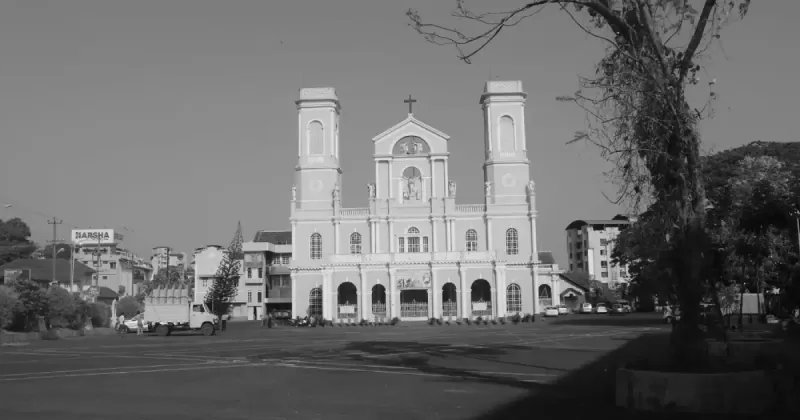
Ask a Konkani speaker what to call this city and you will hear "Kodial." The word is a small piece of evidence in itself. Konkani did not begin on this coast. It came south from Goa, carried by families who packed up between the 16th and 18th centuries, some chased out by religious persecution, others by hunger, disease and war.
They were not the first to arrive, and they were certainly not the last. Mangaluru is a port, and ports are made by arrivals. This article follows the main movements of people into the city, using what historians and published records can support, and says plainly where the record is thin.
Did You Know? In Konkani, Mangalore is Kodial and Udupi is Udip. Konkani speakers in South Canara are typically trilingual, comfortable in Konkani, Kannada and Tulu.
Before the Goans: A Port Others Already Knew
Long before the Konkani migrations, the Mangaluru coast sat on Arabian Sea trade routes. A published account of the city's history notes that Ibn Battuta, travelling in the 14th century, described Mangalore as a busy estuary port where Arab and Yemeni traders were involved in the spice trade. The Persian ambassador Abdur Razzaq passed through in 1448 on his way to the Vijayanagara court.
Many of these traders settled. The Muslims of Tulu Nadu are described in the standard references as descended largely from Arabian traders who married local women, which is one reason the Beary community speaks a Dravidian language of its own rather than Hindi-Urdu. The Portuguese took possession of Mangalore in 1526, adding another layer to a coast that already traded with the world.
The Goan Catholics: Three Waves South
The ancestors of today's Mangalorean Catholics came mostly from Portuguese Goa. They were converts, often called "New Christians," whose families had been Hindu before Portuguese rule. Historians date their movement into the Canara region, then under the Keladi (Bednore) kingdom, from about 1560 to 1763.
The first wave left after the Goa Inquisition began in 1560, taking Konkani with them at a time when the Portuguese pressed new converts to speak Portuguese. Later waves were driven by famine, epidemic and war, including the Maratha invasions of Goa in the 17th century. Local rulers made room for them, and the Keladi queen Chennamma is named in the standard accounts as particularly welcoming. Many settled as farmers in the villages around Mangalore. A smaller number went further south to Tellicherry and Cannanore in what is now Kerala.
The Goan Catholic Migration to Canara, In Outline
| Phase | Approximate Period | Main Cause (as reported by historians) |
|---|---|---|
| First wave | From about 1560 | Goa Inquisition and pressure on new converts |
| Second wave | After about 1570 | Famine, epidemics and political upheaval |
| Third wave | Mid-to-late 17th century | Wars including the Maratha invasions of Goa |
| Slowdown | About 1680–1707 | Mughal–Maratha wars; some 10,000 reportedly returned to Goa |
Exact dates and divisions differ between accounts, so treat this table as a guide to the pattern, not a precise calendar.
By the time Hyder Ali took Canara in 1765, the historian Alan Machado Prabhu estimates the community numbered about 58,000, and he estimates that nearly 95 per cent of Mangalorean Catholics have Goan origins.
The Captivity That Redefined a Community
The migration story has a painful second chapter. In February 1784, during the Second Anglo-Mysore War, Tipu Sultan, believing local Christians had sided with the British, had a large number of Mangalorean Catholics taken to his capital at Seringapatam. The most commonly cited figure is about 60,000, though estimates vary between sources. They remained there until Tipu Sultan was killed in May 1799, a captivity of about 15 years.
Historians note that the community stopped thinking of itself as Goan after this period. The captivity left a deep mark on Mangalorean Catholic memory and literature, and novels such as V.J.P. Saldanha's work on the subject keep it alive. It is a sensitive chapter, and Mangalore Diary records it here as history, not as a verdict on any present-day community.
The Other Goan Story: Konkani Hindu Merchants
Mangalorean Catholics were not the only Goan community to move south. The Goud Saraswat Brahmins (GSBs) and related groups such as the Chitrapur Saraswats also moved from Goa to the Kanara coast, with large movements reported between the 12th and 17th centuries and a sharp rise during the Portuguese period. The published sources describe most of these migrants as merchants, craftsmen and artisans, not temple priests.
In South Kanara the GSBs became known as traders, and one scholarly account describes them as becoming major rice exporters. They brought their temples with them. Mangaluru's Sri Venkataramana Temple belongs to this tradition, and the same community built a chain of similar temples along the coast, from Karkala and Mulki to Thalassery, Kochi and Alappuzha in Kerala.
That merchant tradition also built institutions. Canara High School was founded in Mangaluru in 1891 by the lawyer Ammembal Subba Rao Pai, and one reference notes that members of the Gowda Saraswat Brahmin community were its first teachers and proprietors. Pai went on to found the Canara Hindu Permanent Fund in 1906, which became Canara Bank. A sister campus opened at Urwa in 1945, and the Canara High School (Urwa) listing in the Mangalore Diary business directory carries its details today.
The two Konkani stories are closer than they look. Some Brahmin Christian families of South Canara trace their ancestry to the GSBs, and a surname like Shenoy appears on both sides of the faith divide. A published linguistic study also notes that Konkani speakers here are typically trilingual, comfortable in Konkani, Kannada and Tulu. That is migration turning into belonging, one language at a time.
Europeans With Printing Presses
The 19th century brought a different kind of newcomer. The Swiss Basel Mission opened its Mangalore station in 1834 and became central to the city's industrial and educational growth. Its missionaries set up a school in 1838, a printing press in 1841, and weaving mills and the tile factories that produced the famous Mangalore tiles.
The press at Balmatta printed Mangaluru Samachara, started in 1843 and described as the first newspaper in Kannada. The Basel Mission press also printed a Tulu-English dictionary in 1888. Italian Jesuits arrived in 1878 and went on to shape education, health and social welfare in the city. Mangalorean Protestants, mostly from Tulu-speaking communities, number about 60,000 in South Canara according to one reference.
The full story of the tile industry is told in Mangalore Diary's Mangalore Tiles: The Real Story Behind Coastal TuluNadu's Most Iconic Roof, and the railway that opened the port to its hinterland in 1907 is covered in Forgotten Railway History of Mangalore.
Across the Kerala Border
Here the record is thinner, and it is better to say so than to fill the gap with guesses.
What the sources do support is a long, shared border culture. Kasaragod, about 50 km south of Mangalore, was an important trade centre visited by Arab travellers between the 9th and 14th centuries. It is still called the land of seven languages, where Malayalam, Tulu, Kannada, Marathi, Konkani, Beary and Urdu are all spoken. Kasaragod belongs to the historic Tulu Nadu cultural area. Malayalam makes up roughly 6 per cent of Mangalore's mother tongues in the 2011 Census, and native Malayalam speakers are reported in large numbers across Dakshina Kannada.
Movement also ran both ways. Mangalorean Catholic families settled in Tellicherry and Cannanore, and GSB temples dot the Kerala coast. Mangalore Diary has not located a reliable, Mangaluru-specific history of Kerala trading families in the city itself, such as which businesses, streets or markets they built. That story deserves proper research with community records and family histories.
North Indian Traditions: What We Can and Cannot Say
This is the thinnest section, and the honest position is that we could not verify a Mangaluru-specific history for Marwari, Gujarati, Sindhi or Punjabi trading communities.
Some things can be said. The Goud Saraswat tradition itself remembers a northern origin on the banks of the Saraswati, though scholars treat the details as uncertain and the community's caste status has been historically contested. The 1907 railway link to the hinterland raised trade and communication, according to one published history, and the city's colleges, hospitals and industries continue to draw newcomers. One doctor writing in a medical journal describes himself as part of that ongoing wave of migrants drawn by Mangalore's location, culture and opportunities.
What is visible today is festival culture. Mangalore Diary's own event listings regularly carry Garba and Dandiya nights, such as Mangaluru Dandiya 2026, a Navaratri Celebration & Dandiya Night 2026 at Goldfinch Hotel, and RAASVERSE, which features a Punjabi dhol act, alongside Janmashtami celebrations. That shows Navaratri-style celebrations are part of the city's calendar. It does not, on its own, tell us who settled here or when. If you belong to a North Indian community that has lived in Mangaluru for generations, we would like to hear your family's story through our contributor page.
Then the City Started Sending People Out
Migration into Mangaluru is only half the story. A published history notes that the two world wars pushed many natives of undivided Dakshina Kannada to the Mysore kingdom and to the Madras and Bombay presidencies. By the early 20th century, Mangalore had become a major supplier of educated manpower to Bombay, Bangalore and the Middle East.
That outward flow is why so many families here have a cousin in Mumbai, an uncle in Dubai or a daughter in Bengaluru. A city shaped by arrivals went on to become a city of departures too, and the two flows together explain why Mangaluru feels at home with so many accents.
Who Came, Why, and What They Left Behind
| Group | Main Reason for Moving | Visible Legacy in Mangaluru |
|---|---|---|
| Arab, Persian and Yemeni traders | Spice and sea trade | The Beary community and its language |
| Goan (Mangalorean) Catholics | Inquisition, famine, war | Konkani Catholic parishes, churches, cuisine and institutions |
| Goud Saraswat Brahmins and Konkani Hindus | Portuguese-era pressure and trade | Venkataramana temples, merchant networks, Konkani language |
| Swiss Basel Mission | Missionary and industrial work from 1834 | Printing press, first Kannada newspaper, tile industry, schools |
| Italian Jesuits | Education and social work from 1878 | Educational and health institutions |
| Kerala and Kasaragod neighbours | Border trade and shared culture | Malayalam-speaking households; Mangaluru-specific history still to be documented |
| North Indian communities | Not documented in sources reviewed | Navaratri and Garba traditions in the city's festival calendar |
What Migration Left Behind
Walk through Mangaluru and the evidence is everywhere once you know where to look: a Konkani Mass, a temple chariot festival, a Beary biryani, a Basel Mission tile on a roof, a news item printed in Kannada for the first time on a lithographic stone. None of it began here, and all of it is now unmistakably Mangaluru.
That may be the simplest answer to the question the city keeps asking itself about who is really from here. The record suggests that nearly everyone came from somewhere, and that the city made room, again and again.
More From Mangalore Diary
Events that keep these traditions alive
- First World Konkani Music Mega Convention 2026 — a 12-day Konkani singing marathon in Mangaluru
- SUMADHUR 3 — Grand Singing Night by Joshal Sweeda Dsouza — a live Konkani musical concert
- Mangaluru Dasara 2026 — the city's flagship Navaratri celebration at Kudroli
Places and businesses
- Canara High School (Urwa) — the sister campus of the school founded by Ammembal Subba Rao Pai
- Goldfinch Hotel, Mangaluru — venue of a Navaratri and Dandiya night this season
Real estate near the history The Basel Mission Press stands at Balmatta, part of the central business district alongside Hampankatta, Kankanadi and Kadri. If you are looking at the neighbourhood, browse the Mangalore Diary real estate section. This is a directory listing shown for neighbourhood context, not a recommendation, so verify all details independently.
FAQ
Where did Mangalorean Catholics come from?
Most descend from Goan Catholics, converts under Portuguese rule, who migrated to the Canara region between about 1560 and 1763 because of the Goa Inquisition, famine, epidemics and wars. One estimate puts the share with Goan origins at nearly 95 per cent.
Why did Goan Catholics migrate to Mangalore?
Historians cite the Goa Inquisition (from 1560), later famine and epidemics, and wars including the Maratha invasions of Goa. Local rulers in Canara, including the Keladi kingdom, allowed them to settle.
What was the captivity of Mangalorean Catholics at Seringapatam?
In February 1784, during the Second Anglo-Mysore War, Tipu Sultan had a large number of Mangalorean Catholics, commonly estimated at about 60,000, taken to Seringapatam. They were freed after his death in May 1799, after roughly 15 years.
Who are the Goud Saraswat Brahmins in Mangaluru?
They are a Konkani-speaking community that moved from Goa to the Kanara coast, many of them traders and artisans. In South Kanara they were mainly merchants and became known as rice exporters. Their traditions include the Venkataramana temples along the coast.
How did the Basel Mission change Mangaluru?
The Swiss Basel Mission arrived in 1834. It started schools, the Basel Mission Press in 1841, the Mangaluru Samachara newspaper in 1843, and weaving mills and tile factories, which gave Mangalore its famous roof tiles.
Did Kerala traders and North Indian communities also shape Mangaluru?
Kerala and Mangaluru share a long border culture through Kasaragod, and Malayalam is spoken by roughly 6 per cent of Mangalore residents per the 2011 Census. A documented, Mangaluru-specific history of Kerala trading families and North Indian trading communities could not be verified for this article and is being sought from community sources.
Which Mangaluru institutions came out of the Konkani Hindu merchant tradition?
Canara High School, founded in 1891 by Ammembal Subba Rao Pai, is a documented example. Members of the Gowda Saraswat Brahmin community were its first teachers and proprietors, according to one reference. Pai also founded the Canara Hindu Permanent Fund in 1906, which became Canara Bank.
Why does Mangaluru have so many languages?
Because successive groups arrived and stayed: Arab traders (Beary), Goan Catholics and Konkani Hindus (Konkani), Tuluvas (Tulu), Kerala neighbours (Malayalam) and many others, alongside Kannada as the state language.
Read Next on Mangalore Diary
- People of Mangalore: The Complete Guide to Coastal Karnataka's Culture, Languages, Communities and Festivals
- Mangalore Tiles: The Real Story Behind Coastal TuluNadu's Most Iconic Roof
- Forgotten Railway History of Mangalore: The Tracks That Changed Coastal Karnataka
- First World Konkani Music Mega Convention 2026 | 12-Day Konkani Singing Marathon in Mangaluru
- Mangaluru Dandiya 2026
- SUMADHUR 3 — Live Konkani Musical Concert in Mangaluru
- Canara High School (Urwa)

0 Comments
Leave a Comment