In 1906, according to published accounts, a lawyer in Mangaluru went from house to house asking for handfuls of rice. He sold the rice and used the money to start a savings fund. The fund began in a single rented room, and the reason for starting it was a simple one: poor families on the coast were paying heavy interest to moneylenders.
That fund was the Canara Hindu Permanent Fund. It is now Canara Bank. Within the same year, another small bank opened in Udupi. In the next 25 years, three more bank names followed. This is why the coast of Dakshina Kannada and Udupi is called the "cradle of banking" in India.
Two banks in one year
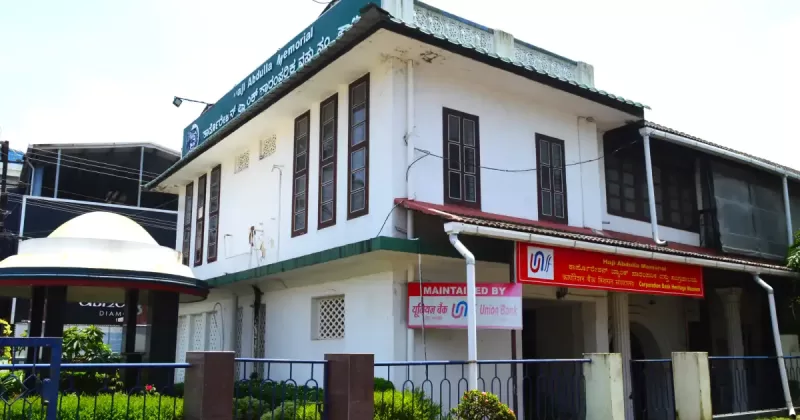
The earlier of the two 1906 banks opened in Udupi. On 12 March 1906, a small group of philanthropists led by Khan Bahadur Haji Abdulla Haji Kasim Saheb Bahadur started the Canara Banking Corporation (Udipi) Limited with Rs 5,000 in capital. It became Corporation Bank in 1972 and was nationalised in 1980.
On 1 July 1906, Ammembal Subba Rao Pai, a leading lawyer, founded the Canara Hindu Permanent Fund in Mangaluru. One report says its first office was a single room at Dongerkere, rented for Rs 120 a month, with 18 directors drawn from lawyers, businessmen and landowners. It became Canara Bank Limited in 1910 and was nationalised in 1969.
The 1920s and 1930s: three more
Karnataka Bank was founded on 18 February 1924 in Mangaluru by a group of professionals from different fields, with the stated intent of serving the underprivileged.
Syndicate Bank started in 1925 as the Canara Industrial and Banking Syndicate Limited, set up by Upendra Ananth Pai, Vaman Kudva and Dr T.M.A. Pai with a capital of Rs 8,000. Its first branch was in Udupi, and its head office was in Manipal. It took the name Syndicate Bank in 1963 or 1964, depending on the source.
Vijaya Bank was established on 23 October 1931 in Mangaluru by A.B. Shetty and a group of farmers, to help the farming community. It later grew under the leadership of Mulki Sunder Ram Shetty and was nationalised in the 1980s.
Five banks that began on the coast
| Bank | Founded and place | Reported founders | Status in 2026 |
|---|---|---|---|
| Corporation Bank | 12 March 1906, Udupi | Khan Bahadur Haji Abdulla Haji Kasim Saheb Bahadur and a group of philanthropists | Merged into Union Bank of India on 1 April 2020 |
| Canara Bank | 1 July 1906, Mangaluru | Ammembal Subba Rao Pai | Public sector bank with headquarters in Bengaluru; absorbed Syndicate Bank in 2020 |
| Karnataka Bank | 18 February 1924, Mangaluru | A group of professionals | Independent listed private bank; headquarters in Mangaluru (Kankanady) |
| Syndicate Bank | 1925, Udupi (head office in Manipal) | Upendra Ananth Pai, Vaman Kudva, T.M.A. Pai | Merged into Canara Bank on 1 April 2020 |
| Vijaya Bank | 23 October 1931, Mangaluru | A.B. Shetty and a group of farmers | Merged with Bank of Baroda on 1 April 2019 |
The idea that spread: saving a little every day
Syndicate Bank's best-known contribution is the Pigmy Deposit Scheme, begun in 1928. The bank's agents collected deposits from customers' doorsteps, starting from as little as two annas a day.
One analysis of the scheme argues that its logic was behavioural: many people would not walk to a bank to deposit small amounts regularly, so the bank sent the collector to them. The same account says it kept costs lower than regular savings and fixed deposits, and it won the loyalty of small savers.
The scale was real. One reference history says that by 1960, pigmy deposits made up 21 per cent of the bank's net deposits. Another says they still made up 15.6 per cent of its domestic deposits in 1997 to 98. The scheme was relaunched as Pigmy 2007, with the older version continuing as Pigmy 1928.
A handful of rice in 1906. Two annas a day in 1928.
What happened to the names
In April 2019, Vijaya Bank merged with Bank of Baroda, together with Dena Bank. A year later, on 1 April 2020, Corporation Bank merged with Union Bank of India and Syndicate Bank with Canara Bank. Reports at the time noted that the old coastal names would now live on mostly as memories.
A timeline from 1906 to 2020
| Date | Event | Basis |
|---|---|---|
| 12 Mar 1906 | Canara Banking Corporation (Udipi) Ltd starts in Udupi | Reports on Corporation Bank |
| 1 Jul 1906 | Canara Hindu Permanent Fund founded in Mangaluru | Several reports |
| 1910 | Becomes Canara Bank Limited | Reference histories |
| 18 Feb 1924 | Karnataka Bank founded in Mangaluru | Several reports |
| 1925 | Canara Industrial and Banking Syndicate set up | Reports (dates vary) |
| 1928 | Pigmy Deposit Scheme begins | Bank's own history |
| 23 Oct 1931 | Vijaya Bank established in Mangaluru | Several reports |
| 1 Apr 2019 | Vijaya Bank merges with Bank of Baroda | Reports |
| 1 Apr 2020 | Corporation Bank and Syndicate Bank merge into Union Bank and Canara Bank | Reports |
The one that is still local
Karnataka Bank is the coast's remaining home-grown bank. It kept its headquarters at Mahaveera Circle in Kankanady, Mangaluru, and marked its centenary on 18 February 2024 by opening a centenary building and two museums on its head office premises. It reported results as an independent listed bank in October 2026.
Why the "cradle" title needs a careful reading
The phrase "cradle of banking" is often attached to a list of seven banks. Two of them, Vysya Bank and State Bank of Mysore, did not begin on the coast, so the accurate coastal list is the five above. The five also began within a short distance: one commentary describes the early banks as all within about 50 km of Mangaluru and Udupi.
The headline "taught India how to save" is also a framing, not a measured fact. What the record supports is narrower and still remarkable: the coast produced banks designed for small savers and farmers, and one of them, Syndicate, turned a doorstep-collection idea into a model that other banks also adopted.
Your memories
Did your family hold a pigmy account, or know a collector who came to the door? Mangalore Diary would like to hear your memories. Please share them only if you are comfortable, and do not send photos of other people without their permission.
Read Next on Mangalore Diary
- Why Kankanady Became Important: The Rise of Mangalore's Most Strategic Locality https://mangalorediary.in/post/why-kankanady-became-important-the-rise-of-mangalores-most-strategic-locality
- Forgotten Railway History of Mangalore: The Tracks That Changed Coastal Karnataka https://mangalorediary.in/post/forgotten-railway-history-of-mangalore-the-tracks-that-changed-coastal-karnataka
- Migration Stories: How Goan Catholics, Konkani Merchants, Kerala Neighbours and Other Newcomers Shaped Mangaluru https://mangalorediary.in/post/migration-stories-goan-catholics-konkani-kerala-north-indian-shaped-mangaluru
- People of Mangalore: The Complete Guide to Coastal Karnataka's Culture, Languages, Communities and Festivals https://mangalorediary.in/post/people-of-mangalore
- Is Mangaluru Becoming Karnataka's Next Technology Hub? https://mangalorediary.in/post/is-mangaluru-becoming-karnatakas-next-technology-hub
- Events in Kankanady https://mangalorediary.in/events/mangaluru/kankanady





0 Comments
Leave a Comment