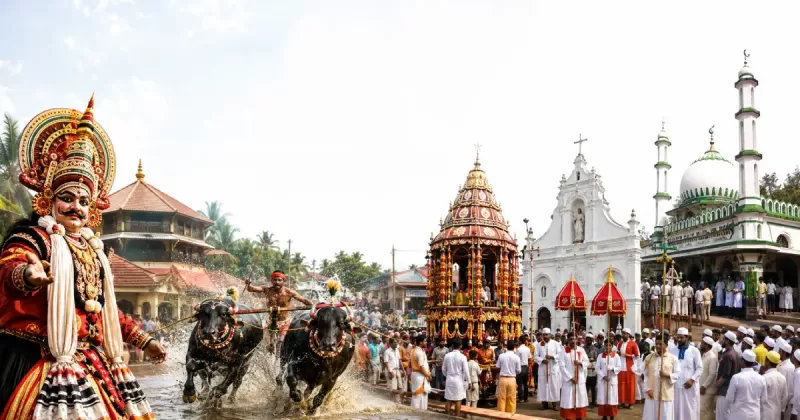
One city, six names, five major languages and a dozen communities living side by side — here is everything that makes the people of Mangalore who they are.
Ask someone what to call this city and the answer depends entirely on who you ask. A Tuluva will say Kudla. Someone from a Konkani-speaking household will say Kodial. A Beary Muslim family might say Maikala. In Kannada, it is Mangaluru — made the official English name too, in 2014. In Malayalam, spoken by many with roots just across the Kerala border, it becomes Mangalapuram. To the rest of the world, it has long simply been Mangalore.
No single name fully captures the city, and that is really the point. Mangalore's identity has never rested on one language, one community or one tradition. It has always been assembled — port by port, community by community, festival by festival — out of the many people who have called this stretch of the Arabian Sea coast home.
This guide brings all of that together: who the people of Mangalore are, the languages they speak, the communities that make up the city, the festivals that fill its calendar, and the places that carry its history.
A City Built By Trade, Not Conquest
Long before it appeared on any modern map, this coastline was already a working port. Arab traders came for spices. Portuguese ships followed for pepper and cashew. The British eventually made it the headquarters of the old South Canara district under the Madras Presidency, connecting it by rail and road to the rest of the subcontinent. Each wave of contact left something behind — a church, a mosque, a trading family, a loanword — without erasing what came before.
That layered history is why Mangalore today does not have a single dominant culture so much as several that have learned, over centuries, to share a coastline, a cuisine and a civic life.
Who Are the People of Mangalore?
Mangaloreans are not one ethnic group but a collection of communities historically rooted in the old South Canara region — what is now Dakshina Kannada and Udupi districts in Karnataka, extending into Kasaragod district in Kerala. The majority belong to the Tuluva ethnic group, native speakers of Tulu, but the city's social fabric includes several distinct communities that have lived here for generations.
Major Communities of Mangalore
| Community | Primary Language | Traditional Faith/Notes |
|---|---|---|
| Bunts | Tulu | Hindu; historically a landowning agrarian community |
| Billava | Tulu | Hindu; traditionally associated with toddy-tapping and Bhoota Kola traditions |
| Mogaveera | Tulu | Hindu; traditionally a fishing and coastal trading community |
| Devadiga, Kulala, Ganiga and other Tulu-speaking groups | Tulu | Hindu; various traditional occupational communities |
| Tulu, Shivalli, Havyaka, Kota and Sthanika Brahmins | Tulu/Kannada | Hindu; priestly and landowning communities |
| Goud Saraswat Brahmins (GSBs) | Konkani | Hindu; historically merchant and trading families |
| Mangalorean (Konkani) Catholics | Konkani | Christian; Latin Church, with roots tracing to Goan migration centuries ago |
| Beary (Byari) Muslims | Beary bashe | Islam; a Dravidian-language-speaking Muslim community distinct from Kannada or Urdu-speaking Muslims elsewhere in India |
| Jains | Tulu/Kannada | Jainism; long-settled trading and landowning families, notably around Moodbidri and Karkala |
| Konkani Muslims (Navayaths) | Konkani/Urdu | Islam; a smaller community with historical trade links |
This is not an exhaustive list — Mangalore's social fabric includes many more sub-communities, occupational groups and smaller religious denominations — but it captures the broad communities most visibly shaping the city's public life, festivals and institutions today.
Languages of Mangalore: One City, Many Tongues
Few Indian cities of Mangalore's size can claim the linguistic layering found here. According to the 2011 Census — the most recent detailed language data available for the city, since the 2011 round remains India's last completed census — Mangalore's linguistic makeup roughly breaks down as follows.
Languages Spoken in Mangalore (2011 Census, approximate share)
| Language | Approximate Share | Notes |
|---|---|---|
| Tulu | ~33–34% | The city's largest mother-tongue group; a Dravidian language with no single standardised script in everyday use |
| Konkani | ~14–16% | Spoken mainly by Goud Saraswat Brahmins and Mangalorean Catholics; the "Mangalorean Konkani" dialect carries Tulu and Malayalam influence |
| Kannada | ~15% | The official language of Karnataka and the medium of administration, schooling and most signage |
| Malayalam | ~6% | Reflecting Mangalore's proximity to Kerala and the Kasaragod border |
| Beary bashe | Included within "Others" (~13%) | Spoken by the Beary Muslim community; Dravidian in structure, written in Kannada script |
| English, Hindi, Urdu and others | Remainder | English remains widely used in education, business and signage; Urdu and Hindi are spoken by smaller resident and migrant populations |
Kannada is Karnataka's official language and the one used in schools, government offices and most official signage. But it is Tulu — spoken at home, in local markets, in folk theatre and in daily conversation — that most people mean when they talk about "the local language" of Mangalore. Notably, Tulu has a long oral and performance tradition (paddanas, Yakshagana, Bhoota Kola chants) but has historically been written down far less often than it is spoken, which is part of why community efforts like Tulu Wikipedia have mattered so much to the language's digital survival.
The City's Name, In Each of Its Languages
| # | Language | Name for Mangalore |
|---|---|---|
| 1 | Tulu | Kudla |
| 2 | Konkani | Kodial / Koḍiyāl |
| 3 | Beary | Maikala |
| 4 | Kannada | Mangaluru |
| 5 | Malayalam | Mangalapuram |
| 6 | English | Mangalore (Mangaluru made official in 2014) |
Faith and Community Life
Mangalore's religious make-up is as layered as its languages. Going by the 2011 Census — the most recent official religion-wise breakdown available for the city — Hindus form the majority, with sizeable Muslim and Christian populations and smaller Jain, Sikh and Buddhist communities. Different sources report slightly different figures depending on whether they cover the municipal corporation area or the wider urban agglomeration, but the broad picture is consistent: this is a city where Hindu temples, mosques and churches often sit within walking distance of each other, and where public festivals from different faiths draw visitors well beyond their own community.
Communal harmony in Mangalore has not always been without strain, and the city has, at times, seen tension along religious lines. But daily civic and cultural life — schools, markets, festivals, food — has long depended on cooperation across these communities, and much of what outsiders admire about Mangalore's culture (its cuisine, its festivals, its architecture) is the direct product of that coexistence.
Places That Carry Mangalore's Story
A city's people are best understood through the places they built and continue to gather in.
Temples: The Sri Mangaladevi Temple, believed to have given the city its name, remains central to Mangalore's Hindu religious life, especially during Navaratri. The Kadri Manjunatha Temple, with its bronze Lokeshvara idol and ancient stepped tank, is one of the region's oldest shrines. The Kudroli Sri Gokarnanatheshwara Temple, built in the early 20th century by social reformer Narayana Guru's followers, is known for its inclusive entry practices and its grand Dasara celebrations.
Churches: The Rosario Cathedral, with roots tracing back to 1568, and the Milagres Church, dating to the 17th century and home to the revered statue of Our Lady of Miracles, reflect the deep Portuguese-era and Konkani Catholic imprint on the city. St Aloysius Chapel is celebrated for its elaborate ceiling and wall frescoes, painted by the Italian Jesuit artist Antonio Moscheni.
Mosques and Dargahs: Mangalore's Beary Muslim community has its own network of historic mosques and dargahs across the old city and in areas such as Bunder and Ullal, many of which trace their origins to the city's centuries-old Arab trading links.
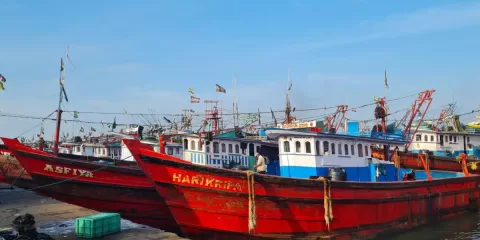
Everyday Landmarks: Beyond places of worship, Mangalore's identity also lives in its markets and shores — the pre-dawn hustle of the fish market, the working Mangalore Port, and beaches such as Panambur and Tannirbhavi that double as the city's social commons on weekends and during festivals like Karavali Utsav.
Festivals: The People's Calendar
If there is one thing that captures how many communities share this city, it is the sheer range of festivals on Mangalore's calendar — spread across the year and across faiths, often overlapping and drawing crowds well beyond their own community.
Major Festivals and Cultural Events in Mangalore
| Festival / Event | Community / Theme | Typical Season |
|---|---|---|
| Kambala | Traditional buffalo race in slush paddy fields, closely associated with Tuluva agrarian culture | November to April |
| Bhoota Kola | Ritual spirit worship and trance performance central to Tuluva folk religion | Year-round, more frequent in certain months |
| Aati / Aati Kalenja | Rituals, food and folk performance marking the Tulu monsoon month of Karkataka Masa | July–August |
| Naga Panchami | Worship of the serpent deity, observed widely across Hindu households | Early in the Hindu calendar year (July–August) |
| Mangaluru Dasara / Sharadotsava | Navaratri celebrations at Kudroli, Mangaladevi Temple and Sri Venkatramana Temple, including the Rathotsava (car festival) | September–October |
| Kodial Theru | Car festival of the Goud Saraswat Brahmin community at Sri Venkatramana Temple | Aligned with the Hindu festival calendar |
| Krishna Janmashtami / Mosaru Kudike | Celebration of Krishna's birth, observed across communities with the "curd-pot" tradition | August–September |
| Monti Fest | Nativity of Mary and harvest thanksgiving, central to the Mangalorean Catholic community | September |
| Milagres Feast | Feast honouring Our Lady of Miracles at Milagres Church | Aligned with the church calendar |
| Christmas and New Year | Widely celebrated across Mangalore's Christian community and beyond | December |
| Ganesh Chaturthi | Pandal celebrations and processions across the city | August–September |
| Ramzan / Eid celebrations | Observed by Mangalore's Muslim, including Beary, community | Aligned with the Islamic lunar calendar |
| Karavali Utsav | A multi-day cultural and coastal-heritage festival, traditionally held at Panambur Beach | December–January |
| Kudla Pelakai Parbha | Mangalore's jackfruit festival celebrating local produce and cuisine | Summer months |
Food As Shared Culture
No account of Mangalore's people is complete without its food — arguably the place where the city's many communities show up most visibly on a single table. Mangalorean fish curry, Kori Rotti (a Bunt and Mogaveera favourite), the Mangalore bun, Konkani-style Bangda fry, Beary-style biryani and seafood preparations, and the neer dosa served across the region all sit comfortably within the same city's food culture — often served at the same street corner, a few doors apart.
Notable People With Roots in Mangalore
Mangalore's people have gone on to shape fields as varied as cinema, journalism, comics, sport, social reform and business — many of whom Mangalore Diary has already profiled in depth.
- Rishab Shetty — the Kundapura-born actor-director whose work has carried Tulu Nadu's culture to a national audience
- Anant Pai — the Karkala-born chemical engineer who became India's "Uncle Pai," founder of Amar Chitra Katha
- Kamaladevi Chattopadhyay — the Mangalore-born freedom fighter and reformer who helped rebuild India's crafts movement
- Harekala Hajabba — the orange seller turned Padma Shri awardee who built a school in his village
- Kudmul Ranga Rao — a pioneering social reformer of Dakshina Kannada
- Dr Yenepoya Abdulla Kunhi — an education and healthcare visionary of modern Mangaluru
- Varanashi Subraya Bhat — the farmer-innovator who built institutions for other farmers
Beyond these, the wider Tulu Nadu region has produced figures such as Jnanpith Award-winning writer Shivaram Karanth, closely associated with Yakshagana and Tulu Nadu's literary heritage, among many others who have carried the region's name into national life.
Local Pride, Held Together By Small Things
Ask a Mangalorean what makes the city distinct and the answers rarely converge on one thing. Someone will mention the Kambala season. Someone else will bring up a specific church feast, or a Kambala buffalo owner they know personally, or the exact spot to get the best Kori Rotti. What holds it together is not sameness — it is the fact that so many different traditions have learned, over generations, to share a single coastal city without needing to become identical to each other.
That, more than any single language or landmark, is what "the people of Mangalore" really means.
Kudla, Kodial, Maikala, Mangaluru, Mangalapuram, Mangalore — one city, six names, six ways of belonging to it
FAQ
Who are the people of Mangalore called?
They are collectively called Mangaloreans, a term covering the diverse communities native to the historical South Canara region — now Dakshina Kannada and Udupi districts in Karnataka and Kasaragod district in Kerala.
What is the majority language spoken in Mangalore?
Tulu is the largest single mother-tongue group in Mangalore, spoken by roughly a third of the city's population as per the 2011 Census, though Kannada is the official administrative language of Karnataka.
What are the main religious communities in Mangalore?
Mangalore's population is majority Hindu, with sizeable Muslim (including the Beary community) and Christian (largely Mangalorean Catholic) populations, alongside smaller Jain, Sikh and Buddhist communities, as per the 2011 Census.
Why does Mangalore have so many different names?
Because each of the city's major language communities has its own historical name for it — Kudla in Tulu, Kodial in Konkani, Maikala in Beary bashe, Mangaluru in Kannada (made the official English name in 2014), Mangalapuram in Malayalam, and Mangalore in English.
What are the biggest festivals in Mangalore?
Major festivals include Kambala (buffalo racing), Mangaluru Dasara/Sharadotsava, Bhoota Kola, Aati Kalenja, Monti Fest, Karavali Utsav, Milagres Feast, Ganesh Chaturthi, Krishna Janmashtami/Mosaru Kudike, and Eid celebrations, spread across the calendar and across the city's religious and cultural communities.
Is Tulu an officially recognised language in India?
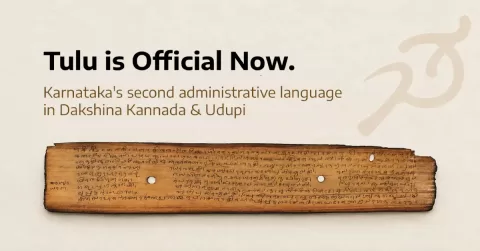
No. Despite being the mother tongue of the largest single language group in Mangalore, Tulu is not included in the Eighth Schedule of the Indian Constitution and is not an official state language, though it has a long oral, ritual and folk-performance tradition.
What is Beary bashe?
Beary bashe is a Dravidian language spoken by the Beary (Byari) Muslim community of coastal Karnataka and northern Kerala. It is closely related to Kannada and Malayalam, is written using the Kannada script, and has absorbed influences from Tulu, Malayalam and Urdu.


0 Comments
Leave a Comment