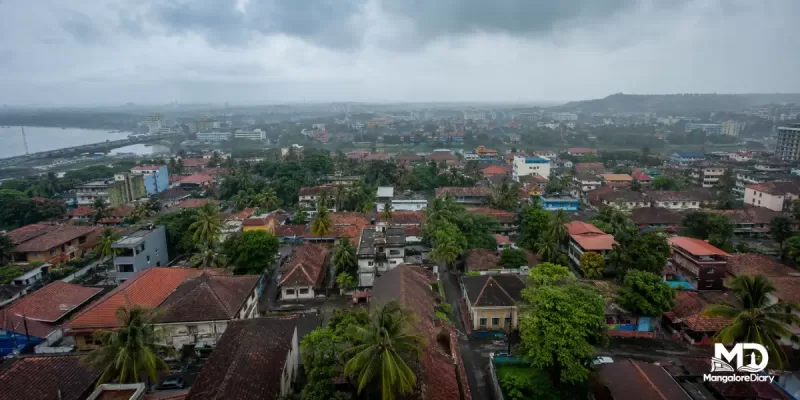
Look at any old photograph of Mangalore, Udupi, Kasaragod, or the Konkan coast and one feature immediately stands out: rows of red-tiled roofs stretching across the landscape.
For generations, these distinctive red roofs have shaped the identity of coastal Karnataka. They have protected homes from monsoon rains, cooled interiors during hot summers, and become one of the most recognizable symbols of the region.
Yet many people misunderstand their origins.
A common claim is that Mangalore Tiles were "invented" by a German missionary named Georg Plebst. The truth is more nuanced and far more interesting.
Clay roof tiles had existed for centuries across Europe and Asia. What Georg Plebst and the Basel Mission accomplished was something different: they established India's first industrial-scale interlocking tile factory in Mangalore and transformed a local roofing material into a globally recognized product.
Before Mangalore Tiles
Long before the arrival of European missionaries, clay roofing materials were already being used across India.
Traditional potters produced curved and semi-cylindrical clay tiles known locally as kavelu or country tiles. These roofs were common in many parts of the western coast.
However, traditional handmade tiles often varied in size and quality. Heavy monsoon rains, strong winds, and moisture demanded more durable roofing solutions.
This challenge would eventually lead to one of the most important industrial developments in the history of coastal Karnataka.

Who Was Georg Plebst?
Georg Plebst was a German missionary associated with the Basel Mission, a Protestant missionary organization based in Switzerland.
He arrived in India in the mid-19th century and initially worked in Mangalore on printing and industrial activities undertaken by the mission.
Plebst noticed two important things:
- The region possessed excellent clay deposits along the Nethravathi and Gurupura rivers.
- Local communities already had centuries of pottery-making knowledge.
Rather than replacing local skills, he combined indigenous craftsmanship with European industrial techniques.
This partnership would change the architectural identity of the western coast forever.

The Birth of India's Tile Industry
After studying ceramic manufacturing techniques in Europe, Plebst began experimenting with tile production in Mangalore.
The Basel Mission established a tile workshop at Jeppu.
By 1865, the workshop was producing interlocking roofing tiles using local clay from the riverbanks of the Nethravathi and Gurupura rivers.
This was a historic milestone.
The Jeppu factory became the first industrial-scale tile manufacturing facility in India.
Unlike traditional handmade roofing tiles, these new tiles were:
- More uniform in size
- More durable
- Better suited to heavy rainfall
- Easier to install
- More resistant to leakage
Their interlocking design was a major technological advancement for the period.

Why Were Mangalore Tiles Different?
The success of Mangalore Tiles was not due to a new invention of clay roofing.
Instead, it came from combining three advantages:
High-Quality Local Clay
The riverbanks around Mangalore contained clay ideally suited for tile production.
The iron-rich composition gave the tiles their famous reddish appearance.
European Manufacturing Techniques
Plebst adopted industrial methods inspired by European tile factories.
These techniques produced stronger and more consistent tiles than traditional handmade versions.
Interlocking Design
The interlocking system improved water resistance and stability, making the tiles ideal for regions with heavy monsoon rainfall.
This design became one of the defining characteristics of Mangalore Tiles.
The Industry Expands
The success of the Basel Mission factory inspired local entrepreneurs.
Several important tile factories soon emerged:
1865 : Basel Mission Tile Factory (Commonwealth Trust)
1868 : A. Albuquerque & Sons, founded by Pascal Albuquerque
1878 : Alvares Tile Factory, founded by Simon Alvares
1889 :Hammer Tiles
Early 1900s
Hamidiah Tile Works and King George Tiles
Over the following decades, Mangalore became the undisputed tile manufacturing capital of India.
By the early twentieth century, dozens of factories operated across the region.
How Mangalore Tiles Reached the World
The reputation of Mangalore Tiles spread far beyond South India.
They were exported across:
Sri Lanka | Myanmar | East Africa | The Middle East | Southeast Asia | Australia
During the British colonial period, Mangalore Tiles were often preferred for government buildings because of their durability and performance.
The name "Mangalore Tile" eventually became recognized internationally.
The Tiles That Defined Coastal Architecture
For more than a century, Mangalore Tiles shaped the architectural identity of the western coast.
From village homes and churches to schools and government buildings, red-tiled roofs became a common sight.
Their advantages were practical as well as aesthetic:
- Excellent rainwater drainage
- Natural ventilation
- Reduced indoor temperatures
- Long lifespan
- Easy replacement of damaged tiles
Even today, many heritage buildings continue to use original Mangalore Tiles.
Decline of a Great Industry
The rise of reinforced concrete construction after the mid-20th century gradually reduced demand.
Modern construction methods favored concrete slabs over sloping tiled roofs.
The industry also faced challenges such as:
- Rising labor costs
- Competition from alternative roofing materials
- Reduced availability of clay
- Environmental regulations on clay extraction
Many historic factories eventually shut down.
Why Mangalore Tiles Still Matter
Although the industry is smaller today, Mangalore Tiles remain an important part of the region's cultural identity.
Architects working on heritage conservation projects continue to use them.
Many homeowners also prefer tiled roofs for their beauty, thermal comfort, and connection to local traditions.
The red roof remains one of the strongest visual symbols of Coastal Karnataka.
The Truth About Mangalore Tiles
Georg Plebst did not invent clay roof tiles.
Clay roofing had existed for centuries before he arrived in India.
His real contribution was establishing India's first industrial tile factory in Mangalore and adapting European interlocking tile technology using local materials and local expertise.
That achievement helped create one of India's most successful building-material industries and gave Coastal Karnataka an architectural identity recognized around the world.
Today, every red-tiled roof across the coast stands as a reminder of that remarkable chapter in Mangalore's history.
Did You Know?
Mangalore Tiles Changed Roofs Across the World.
1. Mangalore produced India's first machine-made roof tiles
In 1865, the Basel Mission established a tile factory on the banks of the Nethravathi River, introducing industrial-scale tile manufacturing to India.
2. A German missionary helped create a global industry
German missionary Georg Plebst recognized the potential of local clay and helped launch what would become one of Coastal Karnataka's most famous industries.
3. Mangalore Tiles were exported far beyond India
The distinctive red tiles traveled from Mangalore's ports to Sri Lanka, Myanmar, East Africa, and other parts of the world, making them one of India's earliest internationally recognized industrial products.
4. The secret was hidden beneath Mangalore's soil
The rich clay deposits found near the Nethravathi and Gurupura rivers were ideal for producing strong, weather-resistant roofing tiles.
5. The iconic red roofs became a symbol of Coastal Karnataka
For generations, Mangalore Tiles shaped the architectural identity of homes, schools, churches, temples, and public buildings across the region.
6. The industry once employed thousands of people
At its peak, dozens of tile factories operated around Mangalore, creating jobs for local artisans, laborers, transport workers, and traders.
7. Mangalore Tiles are designed for heavy monsoon rains
Their interlocking design allows rainwater to drain efficiently, making them perfectly suited to the intense monsoon climate of the western coast.
8. Many historic buildings still use original Mangalore Tiles
More than a century later, countless heritage homes and institutions across Karnataka and Kerala continue to be protected by these durable clay tiles.
9. The name survived even where the tiles traveled
Even in regions far from Karnataka, clay roofing tiles are often still referred to as "Mangalore Tiles," a testament to the city's lasting influence on architecture.
10. Every red roof tells a story
What began as a local experiment with clay and craftsmanship evolved into a product that carried the name of Mangalore across continents and generations.
Quick Fact
If you've ever admired the sea of red-tiled roofs stretching across old Mangalore, you're looking at a living piece of industrial history that began over 160 years ago.





0 Comments
Leave a Comment