A port town of roughly 2 million people is today home to seven medical colleges and some of South India's most respected hospitals. The story of how that happened starts under a banyan tree in 1880, and runs through a barren hillock that a district collector's son refused to leave alone.
A Question Worth Asking Properly
Ask most Indians to name the country's medical education hubs, and answers like Delhi, Vellore, Bengaluru or Chennai come up first. Mangalore rarely makes the list in casual conversation — and yet Dakshina Kannada district, with a population of a little over two million, is home to at least seven MBBS-granting medical colleges: Kasturba Medical College (Mangalore campus), Father Muller Medical College, Yenepoya Medical College, A.J. Institute of Medical Sciences, Srinivas Institute of Medical Sciences, K.S. Hegde Medical Academy (Nitte), and KVG Medical College in Sullia — alongside dental, nursing, ayurveda, homeopathy and allied health colleges attached to several of the same trusts. For a district this size, that is an unusually dense cluster by any national standard.
This piece traces how that came to be — not as a single decision by a single institution, but as roughly a century and a half of overlapping choices that each, on their own, made sense at the time.
Chapter One: A Colonial-Era Head Start
The story does not begin with a grand plan. It begins with two separate, unconnected acts of care that happened to land in the same small port town.
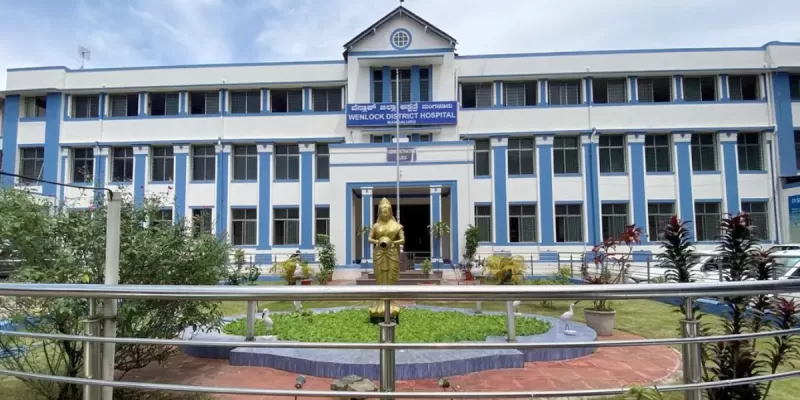
In 1848, the British-run Madras Presidency established Wenlock District Hospital in Mangalore, named after a governor of Madras. Around the same period, a sister facility for maternal and child healthcare — later renamed Lady Goschen Hospital — was also set up. Neither was founded with any ambition of making Mangalore a medical education centre; they were simply the standard colonial-era public hospital infrastructure any Presidency town of some administrative importance would have received.
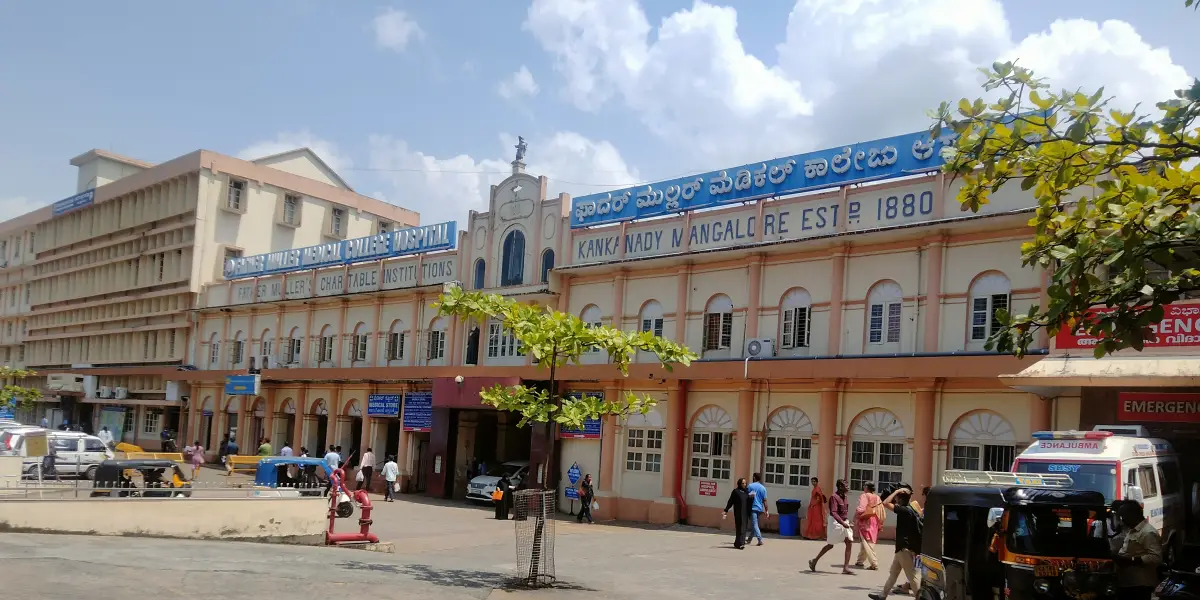
Then, in 1880, a German Jesuit missionary named Father Augustus Muller arrived in Mangalore and began treating the local community for free, reportedly starting out under a banyan tree with homeopathic remedies. What grew from that modest beginning became Father Muller Charitable Institutions — today a full hospital, medical college, and a dedicated leprosy care facility, one of the longest continuously running charitable healthcare institutions in the region.
By the time India became independent in 1947, then, Mangalore already had two things most Indian towns of its size did not: a functioning government district hospital with nearly a century of institutional history, and a large, well-regarded charitable hospital built on a mission of care for the poor rather than profit. Neither was a medical college yet. But both would matter enormously for what came next, because both offered something a new medical college would desperately need: a hospital already full of patients, in which students could actually learn
Chapter Two: One Man's Refusal to Wait for the Government
The single most consequential decision in this entire story belongs to one person: Dr T.M.A. Pai, a physician from a modest household in nearby Kallianpur, Udupi district.
In 1951, Pai began arguing for an idea that most people around him considered close to reckless: that India's severe post-independence shortage of medical colleges did not have to wait for the government to fix it. If enough students were willing to partly fund their own medical education, a self-financing private medical college could be built to supplement — not replace — the government's own efforts. It took him two years to convince sceptics and raise the necessary support. On 30 June 1953, Kasturba Medical College formally came into existence, India's first self-financing private medical college, and the first medical institution in the country built explicitly as a public-private partnership.
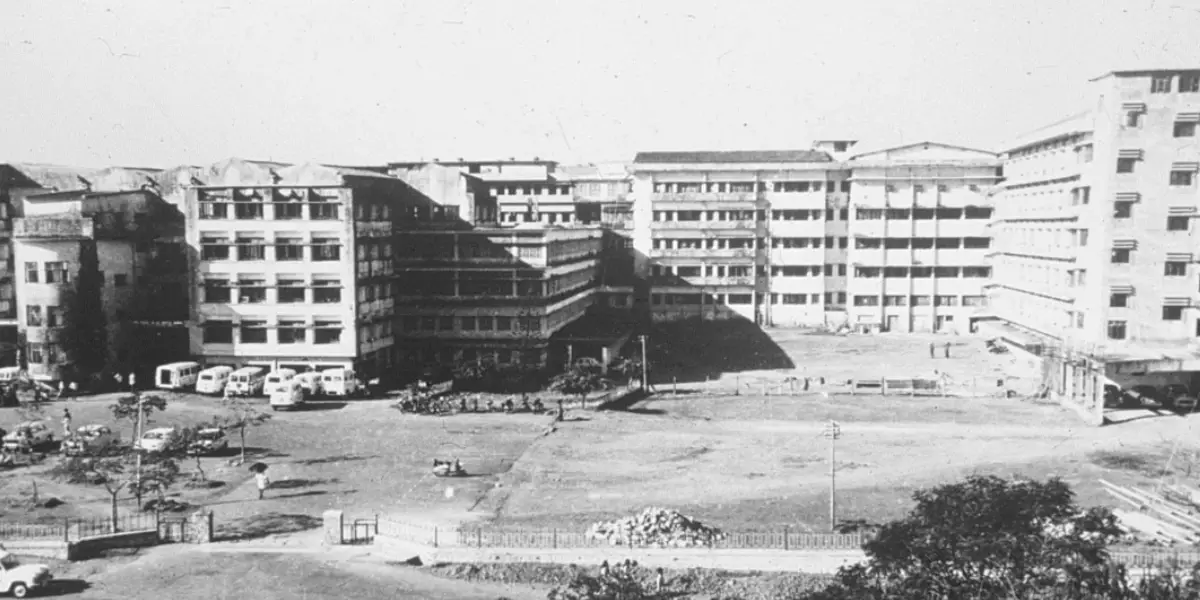
Here is the detail that ties this story directly back to Mangalore rather than to Manipal alone: KMC's pre-clinical section opened in Manipal, on what was then a largely barren hillock outside Udupi — but Manipal in 1953 had no hospital of its own. So from 1955 onward, KMC's own students travelled to Mangalore for their clinical training, learning medicine on real patients at the government's own Wenlock District Hospital. It would be another six years, until 1961, before Manipal got its own dedicated Kasturba Hospital — a modest 150-bed facility — and 1969 before Manipal's clinical programme became fully independent of Mangalore altogether.
In other words, for the first decade and a half of what is today one of India's largest private medical education conglomerates, Mangalore's own public hospital was the classroom. That arrangement became formalised into a long-term public-private partnership between KMC and the Karnataka government — one renewed as recently as 2017, for another 33 years, through 2050 — meaning Wenlock has now served as an active teaching hospital for roughly seventy years and counting.
An Ecosystem, Not Just an Institution
By 1993, KMC's Manipal and Mangalore campuses, together with associated dental colleges, were granted deemed-university status, forming what is today the Manipal Academy of Higher Education. What began as one physician's stubborn refusal to wait for government funding had, within four decades, become an entire academic ecosystem — one that trained thousands of doctors who did not simply graduate and leave. Many stayed in the region, or returned to it, to build their own clinics, nursing homes and hospitals across Dakshina Kannada and Udupi's smaller towns — a pattern our own taluk-by-taluk hospital research across this district has turned up repeatedly, from Puttur to Bantwal.
Chapter Three: Philanthropy Followed the Same Playbook
Once KMC had demonstrated that a self-financing medical college could work — academically, financially, and as a magnet for regional prestige — other local philanthropic trusts followed a strikingly similar template: identify a real gap in regional healthcare access, fund a hospital first, and build a teaching institution around it.
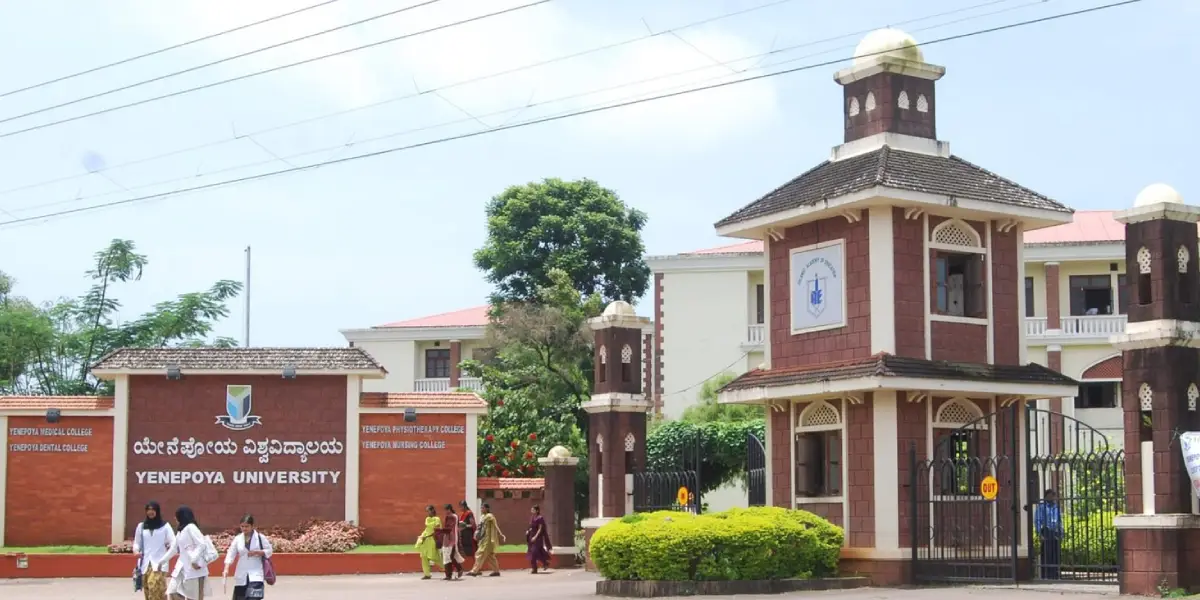
Dr A.J. Shetty, who had earlier founded the Laxmi Memorial Education Trust in 1991 in memory of his mother, opened A.J. Hospital & Research Centre in 2001, explicitly aimed at making high-quality healthcare affordable and accessible in coastal Karnataka; the hospital now anchors A.J. Institute of Medical Sciences. The Yenepoya Trust, linked to the Islamic Academy of Education, opened Yenepoya Medical College Hospital in 1999, building what is today a 1,100-plus-bed teaching facility and one of the region's largest simulation and clinical training centres. Justice K.S. Hegde Charitable Hospital, at Deralakatte, took its name and founding spirit from a former Chief Justice of India who devoted his retirement to rural upliftment in his native Nitte, and became the teaching hospital for what is now Nitte (Deemed to be University).
None of these were built by outside corporate hospital chains looking for a promising real-estate opportunity. Every one of them was founded by a local family, trust, or community institution with an existing stake in the region — a pattern that stands in fairly sharp contrast to how private healthcare has expanded in many other parts of India.
Chapter Four: What the Cluster Produces Now
The compounding effect of three institutions repeatedly reinforcing one another — colonial-era public hospitals, self-financing medical colleges, and community philanthropy — is a healthcare and medical-education density that is genuinely unusual for a district of Dakshina Kannada's size.
Today, the district's medical colleges alone train doctors across MBBS, BDS, nursing, physiotherapy, ayurveda, homeopathy and allied health sciences, drawing students from across India and, in several colleges' cases, from the Middle East and African nations as well — an early and ongoing form of medical-education "export" that predates the more recent, more widely discussed trend of Indian medical tourism. Kasturba Medical College Mangalore's own teaching hospital network today runs into the thousands of beds when its Manipal and Mangalore facilities are counted together; Yenepoya's hospital alone exceeds 1,100 beds; A.J. Hospital has grown from an initial 350 beds to around 810; and Wenlock itself, still a functioning government hospital seven decades into its role as a teaching site, has grown past 1,000 beds.
This is also, in a very literal sense, a self-perpetuating system. Doctors trained in Mangalore's medical colleges go on to staff Mangalore's own hospitals, or open their own smaller nursing homes and clinics across the district's taluks — a pattern our own hospital research turned up repeatedly while documenting Bantwal, Puttur, Belthangady and Sullia taluks individually, where numerous named private hospitals trace back to a single founder-physician who trained locally and chose to practise locally rather than move to a metro city.
A Question That Doesn't Have One Tidy Answer
It would be neat to say Mangalore became a medical hub because of one visionary, one institution, or one government policy. The historical record doesn't really support that kind of tidiness. What it supports instead is a slower, less dramatic explanation: an unusually early colonial-era hospital infrastructure gave the region a head start that most Indian towns its size did not get; a single physician's refusal to wait for government funding turned that head start into the country's first self-financing medical college; the college's own need for a working hospital tied its fortunes to Mangalore's public health system for decades; and a string of local trusts, each solving a specific access problem for their own community, kept adding to the cluster rather than starting somewhere else.
None of this was inevitable. It is worth remembering that Mangalore could easily have remained what it was before 1953 — a modest port town with one old government hospital and one charitable mission hospital, unremarkable by the standards of any other mid-sized Indian district. That it became something considerably more than that is a function of a specific, traceable set of decisions, made by specific people, most of whom simply saw a gap in front of them and built something to fill it.
Frequently Asked Questions
Why is Mangalore called a medical hub?
Mangalore (Dakshina Kannada district) has at least seven MBBS-granting medical colleges and several major teaching hospitals for a population of just over two million — a density that is unusual for an Indian district this size. This grew out of an early colonial-era hospital base (Wenlock District Hospital, 1848; Father Muller Hospital, 1880), followed by Dr T.M.A. Pai's 1953 founding of Kasturba Medical College, India's first self-financing private medical college, and decades of local philanthropic trusts building similar teaching hospitals afterward.
When did Mangalore's medical education history begin?
The city's public hospital infrastructure dates to 1848, with the founding of Wenlock District Hospital under the Madras Presidency. Its first medical college link came later, in 1953, when Kasturba Medical College's students began training at Wenlock from 1955 onward, since the college's Manipal campus did not yet have its own hospital.
How many medical colleges are there in Dakshina Kannada district?
At least seven MBBS-granting medical colleges currently operate in the district: Kasturba Medical College (Mangalore campus), Father Muller Medical College, Yenepoya Medical College, A.J. Institute of Medical Sciences, Srinivas Institute of Medical Sciences, K.S. Hegde Medical Academy (Nitte), and KVG Medical College in Sullia.
What is the oldest hospital in Mangalore?
Wenlock District Hospital, established in 1848, is the oldest hospital in Mangalore and one of the oldest in Karnataka. Father Muller Hospital, founded in 1880 by a Catholic missionary, is the oldest privately run hospital in the city.
Is Mangalore a hub for medical tourism?
Mangalore's medical colleges have long drawn students from across India and from the Middle East and African nations, functioning as a form of medical-education "export" for decades. Its major hospitals — KMC, Yenepoya, A.J. Hospital and others — also attract patients from neighbouring Kerala and beyond for specialised treatment, though Mangalore is better known as a medical education hub than as a dedicated medical-tourism destination in the way Chennai or Vellore are.




0 Comments
Leave a Comment