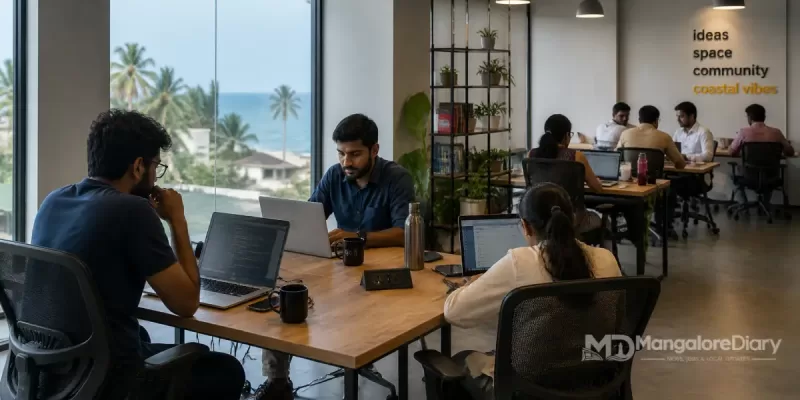
Every year, thousands of young people from Mangalore pack their bags.
Bangalore. Pune. Mumbai. Dubai. Canada.
The destinations change. But the reason stays the same — "Mangalore mein kya hai yaar? No jobs here."
And honestly? It's heartbreaking.
Because this is a city that produced India's biggest banks. A city with one of the highest literacy rates in the country. A city full of brilliant, hardworking young people.
And yet — most of them leave.
The question nobody is asking loudly enough is — does Mangalore have a job problem? Or does it have an imagination problem?
Let's talk about it. Seriously.
The Problem
Here's the reality on the ground.
Mangalore has good colleges. Plenty of them. Engineering, medicine, commerce, arts — students graduate every single year in thousands.
But after graduation — the options feel thin.
- Government jobs? Extremely competitive, very few seats.
- Private sector? Limited compared to Bangalore or Hyderabad.
- Family business? Not everyone has one.
- Start something new? "Risk hai bhai, ghar ka kharcha kaun utha'ega?"
So the default choice becomes — migrate.
And when the smart, educated youth leave — the city loses its best people. Businesses don't grow. New ideas don't start. The cycle continues.
But here's what I genuinely believe — Mangalore has everything it needs to create jobs. It's just not using it fully yet.
Let me explain.
Simple Breakdown — Where Can Jobs Actually Come From?
IT and Tech — It's Already Starting, Needs a Push
Mangalore already has a small but growing IT ecosystem.
Infosys, Cognizant, and a few tech companies have offices or presence here. MAHE (Manipal) nearby produces thousands of tech graduates every year.
But compared to Bangalore? It's still tiny.
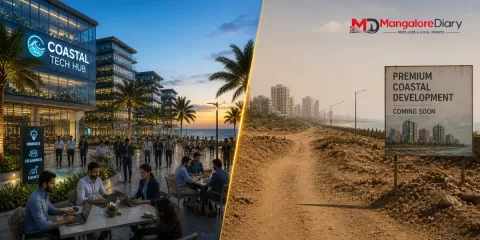
What's missing is not talent — it's infrastructure and intention. A proper tech park, co-working spaces, reliable high-speed internet across the city, and incentives for companies to set up here instead of Bangalore.
The cost of living in Mangalore is significantly lower. Office rents are a fraction of Bangalore. If companies were given strong reasons to come here — they would come.
The talent is already here. The setup just needs to happen.
Tourism — A Goldmine That's Barely Been Scratched
Mangalore has beaches, temples, heritage sites, Western Ghats at the doorstep, and one of the richest food cultures in India.
But tourism infrastructure? Honestly — embarrassing for a city this beautiful.
No proper tourist circuits. Very few quality budget stays. Poor signage at historical sites. Zero marketing outside Karnataka.
If Mangalore invested seriously in tourism — hotels, homestays, food tours, heritage walks, adventure tourism in the Ghats — it could easily create thousands of direct and indirect jobs.
Guides, drivers, cooks, homestay owners, boat operators, photographers, event managers — all local jobs, all staying in Mangalore.
Food Industry — The World is Ready for Mangalorean Cuisine
Kori Rotti. Neer Dosa. Bangude Pulimunchi. Kane Fry. Mangalorean Biryani.
The world is slowly discovering this cuisine — and going crazy for it.
There is a massive opportunity here for:
- Cloud kitchens delivering authentic Mangalorean food
- Packaged food products (curry masalas, ready-to-cook kits) sold online and exported
- Mangalorean food chains expanding to Bangalore, Mumbai, and beyond
- Cooking tourism and food experience events for visitors
Mangalorean food is a brand waiting to be built properly. The youth here can build it — right from this city.
Education Hub — Already Strong, Can Be Stronger
Mangalore and Manipal together form one of South India's strongest education corridors.
Kasturba Medical College, MIT Manipal, NITK Surathkal, St. Aloysius, SDM — these are serious institutions that attract students from across India and abroad.
Education is already creating jobs here — faculty positions, administrative roles, student services, accommodation, food, transport.
If Mangalore positioned itself aggressively as an "education and healthcare destination" — more institutions, more research centres, more medical tourism — the job multiplier effect would be massive.
The Port — An Underused Economic Engine
New Mangalore Port is one of the major ports on India's west coast.
It handles petroleum, fertilizers, iron ore, and LPG. Billions of rupees of trade passes through every year.
But how many local youth work in port-related industries? Logistics, shipping, import-export, warehousing, customs — these are well-paying sectors that Mangalore is sitting right next to.
Better vocational training, industry connections, and awareness among youth about port-sector careers could open up hundreds of decent-paying local jobs.
The NRI Connection — Use It Better
Dakshina Kannada sends some of the highest remittances per capita in India.
Crores of rupees come in from the Gulf every year — and most of it goes into gold, land, and fixed deposits.
What if even 10% of that NRI money was channelled into local startups, small businesses, or job-creating ventures?
NRI investment in Mangalore — done right — could fund restaurants, tech startups, tourism ventures, and manufacturing units that employ local youth.
The money is already here. It just needs direction.
🇮🇳 Real-Life Example
Meet Akshay. 26 years old. B.Com graduate from a Mangalore college.
He tried for government jobs for 2 years. Didn't crack it. Applied to Bangalore companies — got offers, but the rent alone would eat 40% of his salary.
So he stayed back and started a small cloud kitchen — Mangalorean food, online orders, delivery within the city.
Today — 18 months later — he employs 4 people. His monthly revenue crossed ₹2.5 lakh. He's talking to a Bangalore investor about expanding.
Akshay didn't wait for a company to give him a job. He created one — for himself and others.
There are hundreds of Akshays in Mangalore. They just need more support, more awareness, and more belief that it's possible here.
Actionable Tips
For Youth in Mangalore:
- Don't wait for the "perfect" government job — explore adjacent paths. Logistics, healthcare administration, digital marketing, food business — all have strong futures here.
- Learn one digital skill seriously — video editing, coding, graphic design, content writing. These are fully remote skills. You can earn Bangalore salaries while living in Mangalore.
- Look at NRI uncle-aunty network differently — they have capital and connections. A well-presented business idea to the right NRI investor can change your trajectory.
- Start small, start local — a tiffin service, a YouTube channel on Tulu culture, a homestay, a local tour guide service. Small starts lead to real businesses. ₹10,000 is enough to begin many of these.
For Local Government and Institutions:
- Create proper startup incubation centres at Mangalore University and city colleges
- Offer tax incentives for companies that open offices in Mangalore instead of Bangalore
- Develop vocational training focused on port logistics, healthcare, and hospitality
- Build proper tourist infrastructure — it's the fastest job creator for a city like this
For NRIs:
- Invest back home — not just in land, but in local businesses and startups
- Mentor young entrepreneurs — your Gulf or US experience is genuinely valuable to a 23-year-old starting up in Mangalore
- Network and connect — introduce Mangalorean startups to your professional contacts abroad
Conclusion
Mangalore does not have a talent problem.
It has a belief problem — the belief that good careers can only happen somewhere else.
But the city has ports, colleges, beaches, forests, food culture, an NRI network, and one of the most educated populations in India.
That is not a failing city. That is a city on the edge of something big — if it decides to bet on itself.
The youth of Mangalore are smart enough. Hardworking enough. Hungry enough.
They just need the city — its leaders, its investors, its institutions, and its community — to meet them halfway.
Mangalore can create jobs for its youth. The question is — will it choose to?
FAQ Section
Is Mangalore a good city to find a job in?
Mangalore has jobs — but they are concentrated in specific sectors like healthcare, education, banking, and retail. Compared to Bangalore, the job market is smaller. But the cost of living is also significantly lower, which means a ₹30,000 salary in Mangalore can feel like ₹50,000 in Bangalore. The city is growing, and new opportunities are coming — especially in tech, tourism, and food businesses.
Which sectors have the most job opportunities in Mangalore right now?
Currently, the strongest sectors are healthcare (due to multiple hospitals and medical colleges), banking and finance, education, port and logistics, retail, and construction. Emerging sectors include IT services, cloud kitchens and food businesses, tourism, and digital content creation.
Should Mangalorean youth migrate to Bangalore or stay back?
Honestly — it depends on your field and your goals. If you're in tech or corporate finance, Bangalore still offers more options right now. But if you're entrepreneurial, in healthcare, education, or looking at building something local — Mangalore has real advantages. Lower costs, strong community networks, and a quality of life that Bangalore simply cannot match.
Can NRI investment help create jobs in Mangalore?
Absolutely — and this is one of the biggest untapped opportunities. Dakshina Kannada receives massive NRI remittances every year. If even a fraction of that is directed into local startups, food businesses, homestays, and tech ventures — the job creation impact would be significant. A few NRI-funded ventures are already showing the way.
What skills should Mangalorean youth develop to stay competitive?
Digital skills are the most portable — coding, digital marketing, video production, UI/UX design, data analysis. These allow you to earn competitive salaries while working remotely from Mangalore itself. Beyond digital — skills in healthcare management, hospitality, logistics, and entrepreneurship are very relevant to Mangalore's specific economy.
Is Mangalore good for startups?
It is getting better. The ecosystem is still early-stage compared to Bangalore — but that also means less competition. Office space is cheap. Talent is available. And the community is tight-knit, which helps with word-of-mouth and local support. If you have a locally relevant business idea — Mangalore is actually a great place to start and test it.
What is the government doing to create jobs in Mangalore?
Various state government initiatives under Karnataka's industrial policy offer incentives for businesses setting up in tier-2 cities like Mangalore. The Smart City project has also brought some infrastructure development. However — most local entrepreneurs and observers feel that implementation needs to be faster and more startup-friendly. There's room for significant improvement.



0 Comments
Leave a Comment