R.K. Baliga: The Visionary Who Imagined India’s Silicon Future
The visionary who laid the foundation for Bengaluru’s rise as India’s technology capital.

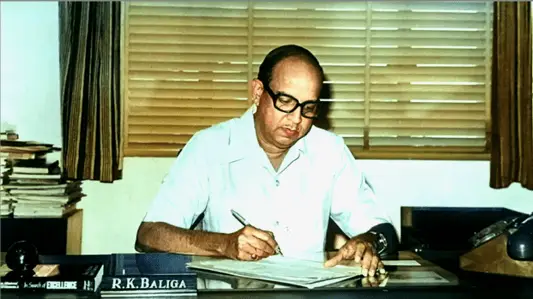
Before Bengaluru Became a Global Technology Hub
Long before Bengaluru earned global recognition as India’s technology capital, the city was known for its educational institutions, public sector industries and pleasant climate. The skyline of glass towers, software campuses and multinational research centres that defines Bengaluru today had not yet appeared.
Yet during those formative decades, one man saw possibilities that few could imagine.
Ram Krishna Baliga — widely known as R.K. Baliga — believed that India needed more than factories and government offices to build its future. He envisioned dedicated technology ecosystems where industry, infrastructure, innovation and talent could grow together.
That vision eventually became Electronic City, one of India’s most influential industrial and technology hubs.
Baliga did not chase headlines or personal glory. His work emerged from public service, engineering discipline and an unusual ability to anticipate economic change long before it became visible to others.
His story is not simply about founding a technology zone. It is about foresight, institution building and a commitment to national development that helped reshape Karnataka and contributed to India’s rise as a global technology power.
Early Life: Roots of a Nation Builder
R.K. Baliga was born on 10 May 1929 in coastal Karnataka.
He grew up during a period when India was undergoing profound social and political transformation. Education, discipline and civic responsibility formed an important part of his upbringing and shaped his outlook from an early age.
Unlike many who viewed engineering merely as a profession, Baliga saw technology as a tool for national progress.
His academic journey reflected both ambition and intellectual curiosity.
He pursued Electrical Engineering at the University of Mysore, building a strong technical foundation that would later influence his industrial vision. Those who knew him described a man with sharp analytical ability, calm leadership and a deep sense of purpose.
Engineering, for Baliga, was never isolated from society. Machines, systems and infrastructure mattered because they improved lives and strengthened nations.
This philosophy would remain central throughout his career.
Education Beyond Borders
Baliga’s pursuit of knowledge did not stop with his undergraduate studies.
He expanded his expertise through advanced engineering education, including studies associated with Annamalai University and the Indian Institute of Science (IISc), Bengaluru.
These institutions sharpened his technical understanding and exposed him to advanced industrial thinking.
But the most defining phase of his intellectual development came through international exposure.
At a time when overseas professional experience was rare, Baliga travelled to the United States, where he worked and interacted with leading industrial organisations.
This experience transformed his perspective.
He worked with companies such as:
- General Electric
- Westinghouse Electric
- Kaiser Engineers, California
These were not ordinary assignments.
America during that period represented one of the world’s most advanced industrial ecosystems. Manufacturing clusters, engineering innovation, private enterprise and research institutions operated in close coordination.
Baliga observed something that would stay with him permanently:
Technology leadership was not created by isolated companies.
It was built through connected ecosystems.
That insight became the seed of a historic idea.
A Lesson from America
Many professionals return from international assignments impressed by technology.
Baliga returned with a framework for transformation.
He studied how American industrial centres functioned and how infrastructure, policy support, research institutions and skilled manpower created powerful economic clusters.
The experience convinced him that India possessed abundant talent but lacked integrated industrial environments designed specifically for technological growth.
The question forming in his mind was simple yet revolutionary:
If Silicon Valley could emerge through planning, collaboration and vision, why could India not build something similar?
This was not imitation.
Baliga understood that India needed its own model, shaped by local realities and developmental priorities.
What fascinated him was the principle behind technological ecosystems — the deliberate creation of spaces where ideas, manufacturing and enterprise could thrive together.
Years before “innovation ecosystem” became fashionable language, Baliga was already thinking in those terms.
His observations abroad would eventually influence one of Karnataka’s most significant industrial developments.
The Making of a Vision
When Baliga returned to India, the national economy was still evolving.
Electronics remained a developing sector.
Infrastructure was limited.
Entrepreneurship faced procedural hurdles and industrial growth often moved slowly through administrative systems.
Most policymakers focused on immediate needs.
Baliga looked decades ahead.
He recognised that electronics and technology would become critical industries in the future global economy. He also believed Karnataka possessed the intellectual and geographic advantages necessary to lead that transformation.
This conviction shaped the next chapter of his career.
His vision extended beyond industrial expansion.
He imagined a coordinated technology environment where:
- Large industries could establish operations
- Small and medium enterprises could grow
- Infrastructure would be available from the beginning
- Research and engineering talent could be nurtured
- Employment and innovation could develop together
Such thinking was remarkably ahead of its time.
Baliga was not merely planning industrial land.
He was planning an ecosystem.
And that ecosystem would later become known across the world as Electronic City.
In His Own Spirit
One principle often associated with R.K. Baliga captured his approach to life and leadership:
"Try to help a lot of people — and expect nothing in return."
That philosophy reflected not only personal humility but also his understanding of public service.
His ambitions were never centred on personal recognition.
They were centred on building institutions that would outlast individuals.
From Engineering Leadership to Institution Building
Building Experience Through Public Service
R.K. Baliga’s professional journey was shaped by engineering excellence and administrative capability.
After returning to India with broader industrial exposure and a sharpened global perspective, he entered public service at a time when the country was investing heavily in strategic industries and state-supported industrial development.
Among the institutions that shaped his professional career was Bharat Electronics Limited (BEL), one of India’s most important public sector electronics enterprises.
For Baliga, BEL was more than a workplace.
It was an opportunity to understand the practical realities of industrial growth in India.
He worked closely with technology systems, manufacturing operations and organisational leadership, gaining insight into both the strengths and limitations of India’s industrial ecosystem.
His technical knowledge earned respect, but it was his ability to connect engineering with long-term planning that distinguished him.
Baliga understood that technology development required more than production facilities.
It required policy support, infrastructure, skilled manpower and institutions capable of sustaining growth.
This broader perspective gradually positioned him as not merely an engineer, but a strategic thinker and development planner.
KEONICS and the Turning Point
The defining chapter of Baliga’s public life emerged through his leadership at KEONICS — Karnataka State Electronics Development Corporation.
As Chairman and Managing Director, Baliga found himself in a role that matched his vision for Karnataka’s future.
The timing was significant.
India’s electronics industry was still in its early stages. Private technology investment remained limited, and specialised industrial infrastructure was almost non-existent.
Many regions viewed electronics as a niche sector.
Baliga saw it as the foundation of a future economy.
Under his leadership, KEONICS was not designed merely as an administrative body.
It became an enabling institution.
Baliga believed government should not function as an obstacle to enterprise. Instead, it should act as a facilitator capable of supporting innovation, investment and industrial growth.
This approach was uncommon for its time.
His thinking challenged conventional bureaucratic models.
He advocated simplified procedures, coordinated planning and proactive industrial support — principles that would later become standard practice in technology-driven economies.
Years before terms such as startup ecosystem, innovation corridor or single-window clearance became popular, Baliga was already applying similar concepts in practice.
His vision was grounded in a straightforward belief:
When talented people are given infrastructure, policy support and room to build, economic transformation becomes possible.
This belief would soon take physical form.
The Birth of Electronic City
By the 1970s, Bengaluru possessed several natural advantages.
The city had respected educational institutions, engineering talent, research culture and a relatively moderate climate attractive to professionals and industry alike.
Yet a major gap remained.
There was no dedicated ecosystem built specifically for electronics manufacturing and technology-driven enterprise.
Baliga identified this absence clearly.
He understood that industrial growth could not depend solely on scattered factories or isolated business activity. Technology industries required coordinated planning.
His answer was bold.
He proposed a dedicated electronics township — a specialised zone where technology companies could establish themselves with planned infrastructure and long-term support.
This proposal eventually evolved into Electronic City.
The idea itself was revolutionary.
Rather than waiting for industries to grow randomly and infrastructure to follow later, Baliga reversed the model.
He believed infrastructure should come first.
Roads, utilities, telecommunications, industrial plots and policy coordination needed to exist before large-scale investment could flourish.
Electronic City was therefore conceived not simply as industrial land, but as an integrated technology ecosystem.
Its planned framework included:
- Industrial infrastructure
- Reliable utilities
- Connectivity and transport access
- Space for large and medium enterprises
- Support for smaller entrepreneurs
- Long-term employment generation
- Research and technology-oriented growth
This approach reflected the ecosystem thinking Baliga had observed abroad and adapted for Indian realities.
He was not replicating Silicon Valley.
He was building Karnataka’s own technology model.
A Vision Far Ahead of Its Time
When Electronic City was first imagined, few could fully appreciate its future significance.
The project faced the same challenges that accompany most ambitious ideas — questions about demand, feasibility and long-term relevance.
But Baliga remained convinced.
He believed India’s future would increasingly depend on technology-driven industries.
His confidence came not from speculation but from observation.
He had seen how industrial clusters accelerated economic development.
He understood how ecosystems created opportunity.
And he recognised that Karnataka possessed the intellectual resources to lead this transition.
Electronic City, established near Hosur Road in Bengaluru, began as a carefully planned initiative with long horizons in mind.
What appeared modest in its early years carried extraordinary potential.
Baliga’s vision extended beyond immediate returns.
He was building for generations.
The One-Stop Philosophy
One of Baliga’s most influential contributions lay in his administrative thinking.
He recognised that entrepreneurs often faced delays caused by fragmented approvals and bureaucratic complexity.
Industrial ambition frequently slowed under procedural burdens.
Baliga believed this discouraged innovation.
To address the issue, he championed a coordinated support system frequently described as a single-window approach.
The concept was simple yet transformative.
Instead of forcing investors and entrepreneurs to navigate multiple agencies independently, institutional support should be integrated and streamlined.
This model encouraged confidence, accelerated project execution and improved industrial planning.
Today, simplified business approvals are widely accepted as essential to investment promotion.
Decades earlier, Baliga was already advocating similar principles.
His administrative reforms reflected practical wisdom rather than theory.
He understood that growth depends not only on ideas, but also on removing unnecessary barriers.
That philosophy helped shape Karnataka’s reputation as an industry-friendly destination.
More Than an Industrial Project
Electronic City was never meant to serve only large corporations.
Baliga imagined something broader.
He wanted technology development to generate opportunities across economic layers.
His vision included:
- Large industrial investments
- Medium-scale manufacturing
- Smaller enterprises and entrepreneurs
- Technical employment
- Skill development
- Research partnerships
- Regional economic growth
This inclusive thinking distinguished his approach.
He viewed industrialisation not as isolated corporate expansion but as ecosystem building capable of creating jobs, knowledge and prosperity.
That perspective would eventually help Bengaluru evolve into one of the world’s most recognised technology centres.
What began as a bold proposal on paper was slowly becoming a living economic engine.
And its impact was only beginning.
The Legacy of a Silent Architect
The Silicon Route That Changed Karnataka
Electronic City did not become a technology powerhouse overnight.
Its early years demanded patience, policy commitment and sustained belief in the future.
But the foundation laid through Baliga’s planning gradually began to reveal its strength.
As India’s electronics and technology sectors expanded, Electronic City emerged as one of the country’s most strategically important industrial destinations.
What had once appeared to some as an ambitious experiment became a magnet for investment and innovation.
Companies arrived.
Engineering talent followed.
Infrastructure expanded.
Employment opportunities multiplied.
Over time, the township evolved into a thriving technology ecosystem that would help define Bengaluru’s global identity.
Baliga often viewed development through what many later described as the “Silicon Route” — the idea that technology-driven industrial corridors could transform economies through coordinated growth.
He understood that industrial success was rarely accidental.
It emerged through preparation, planning and institutions capable of supporting enterprise over decades.
This philosophy shaped not only Electronic City but also Karnataka’s wider industrial outlook.
The state increasingly became associated with forward-looking policies, engineering talent and technological enterprise.
That reputation was built upon many contributions, but Baliga’s influence remained foundational.
Bengaluru’s Transformation into India’s Technology Capital
The rise of Bengaluru as India’s technology centre is frequently told through the story of software companies and global corporations.
Yet the deeper history began much earlier.
Before software campuses and multinational headquarters arrived, infrastructure had to exist.
Industrial confidence had to be created.
Investors needed assurance that systems, connectivity and governance could support long-term operations.
Electronic City provided that confidence.
Its planned structure allowed industries to grow within an organised environment rather than through fragmented expansion.
As technology industries expanded during the late twentieth century, Electronic City became home to major enterprises that contributed to India’s economic transformation.
The ripple effects reached far beyond Bengaluru.
The growth generated:
- Large-scale employment
- Engineering and technical careers
- Supplier ecosystems
- Research and innovation opportunities
- Urban and regional development
- International investment confidence
These developments helped position Karnataka as a centre for technology and knowledge industries.
The economic value generated over subsequent decades ran into billions of dollars.
Yet behind those numbers stood a much earlier act of imagination.
Baliga had recognised the future before it became visible.
His contribution reminds us that economic revolutions often begin with infrastructure decisions that attract little public attention at the time.
The city now celebrated as India’s Silicon Valley rests partly upon the foresight of leaders who prepared the ground long before the world arrived.
Leadership Without Self-Promotion
One of the most remarkable aspects of R.K. Baliga’s life was his quiet style of leadership.
He belonged to a generation of institution builders who rarely sought personal publicity.
Recognition was secondary.
Impact mattered more.
Baliga focused on systems rather than personalities.
He invested his energy in creating durable institutions capable of serving future generations.
This distinction is important.
Many projects become associated with charismatic public campaigns or political visibility.
Baliga’s work followed a different path.
His influence emerged through planning, persuasion and administrative execution.
Those who interacted with him often described a leader marked by:
- Professional integrity
- Technical depth
- Calm decision-making
- Strategic foresight
- Public-service commitment
- Personal humility
He did not present himself as a visionary in search of applause.
He worked as an engineer and administrator convinced that development required preparation and responsibility.
That quiet determination became one of his defining strengths.
Beyond Electronic City
Although Electronic City remains his most widely recognised contribution, Baliga’s influence extended beyond a single project.
His work encouraged a broader shift in industrial thinking within Karnataka.
He championed:
Technology as Economic Policy
Baliga understood that electronics and engineering were not niche sectors but engines capable of driving regional prosperity.
Government as Enabler
He argued that public institutions should support rather than obstruct enterprise.
Infrastructure-Led Growth
He believed that planned ecosystems attracted investment more effectively than fragmented industrial expansion.
Long-Term Development
Perhaps most importantly, Baliga worked with time horizons that stretched decades ahead.
This mindset distinguished him from many contemporaries focused only on immediate outcomes.
His ideas anticipated principles that later became central to economic development policy across India.
Today, industrial corridors, technology parks and integrated investment zones are widely accepted development tools.
Baliga championed similar thinking long before such models became mainstream.
A Legacy That Lives in Every Innovation
- Modern Bengaluru is a city of contrasts.
- Historic neighbourhoods stand alongside technology campuses.
- Research centres coexist with cultural traditions.
- Thousands of startups and global companies now operate across a city connected to international markets and ideas.
- Electronic City remains one of the strongest symbols of that transformation.
- Each day, engineers, developers, researchers and entrepreneurs travel through a landscape shaped by decisions made decades earlier.
- Many may never know the story of the man who helped create that possibility.
- Yet his influence remains embedded in the city itself.
- Roads, industries, employment networks and technological communities carry traces of his vision.
- This is the nature of enduring public contribution.
- Its success becomes so integrated into daily life that people eventually forget how improbable it once seemed.
- Baliga imagined a technology ecosystem when India was still defining its industrial future.
- He believed Karnataka could compete globally before global competition became a common aspiration.
- And he helped create conditions that allowed those ambitions to take root.
Final Reflections
- History often celebrates innovators who invent products or lead corporations.
- But societies are equally shaped by people who build institutions and prepare environments where innovation can flourish.
- R.K. Baliga belonged to that rare category.
- He was not merely an engineer or administrator.
- He was an architect of possibility.
- Electronic City stands today as more than an industrial zone.
- It is a living reminder that vision, when combined with planning and persistence, can reshape economies and alter the trajectory of regions.
- Baliga’s story deserves remembrance not only because of what he built, but because of how he thought.
- He looked beyond immediate limitations and trusted in long-term progress.
- That faith helped change Karnataka.
- And in many ways, it helped change India.
References
Official archival and historical reference:
R.K. Baliga Official Website
Editorial Note
This feature article is inspired by the documented history, archival material and legacy associated with R.K. Baliga and his contribution to Karnataka’s technology and industrial development.


0 Comments
Leave a Comment