Anant Pai: The Karkala-Born Chemical Engineer Who Became India's "Uncle Pai"
Orphaned at two, raised by a grandfather in coastal Karnataka, and trained as a chemical engineer — Anant Pai never set out to reinvent how Indian children met their own mythology. A single quiz show changed that, and gave the country Amar Chitra Katha and Tinkle.
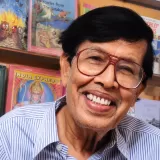
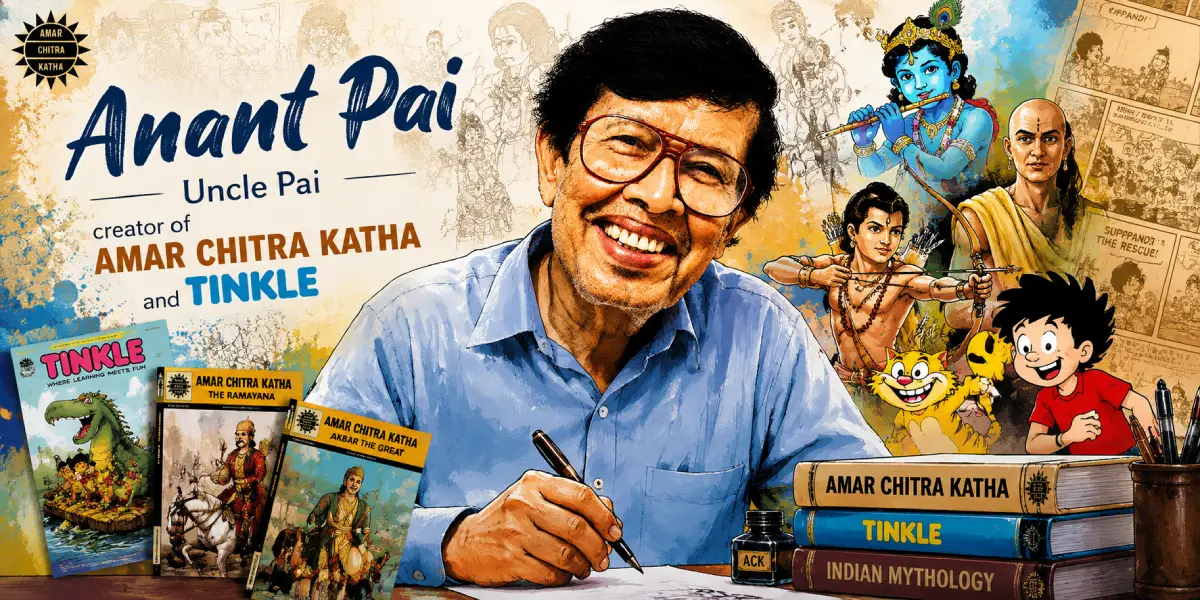
A Karkala Childhood That Started With Loss
Anant Pai was born on 17 September 1929 in Karkala, a small town in what was then the Madras Presidency's South Kanara district — today's Udupi district in coastal Karnataka — to Venkataraya and Susheela Pai, a Konkani-speaking Goud Saraswat Brahmin couple. He lost both his parents by the age of two, an almost unthinkable start for the man who would go on to become one of the most beloved storytellers Indian children have ever had.
His maternal grandfather raised him after that, until the grandfather's own death in 1944, when young Anant — by then a teenager — moved to Bombay. He enrolled at Orient School in Mahim along with his sister Savita, reportedly without speaking much English at the time, and went on to study at Wilson College before pursuing a dual degree in chemistry, physics and chemical engineering at the Institute of Chemical Technology (then known as UDCT), University of Bombay. It is worth noting that different accounts vary slightly on exactly when he moved to Bombay — some describing him leaving Karkala around age twelve, others tying the move more precisely to his grandfather's 1944 death, which would have made him around fifteen — and we have not been able to fully reconcile this small discrepancy.
From Chemical Engineer to Comics Publisher
Pai's early career had nothing to do with comics on the surface. He joined the books division of The Times of India, where he came to handle Indrajal Comics, the imprint responsible for introducing Indian readers to Western comic characters like The Phantom, Mandrake the Magician and Flash Gordon.
The turning point came, by Pai's own account, in February 1967, while he was in Delhi — one of the few Indian cities with television at the time. Watching a children's quiz show, he saw contestants answer questions about Greek mythology with ease, only to fall silent when asked a basic question about the Ramayana: who was Rama's mother. For a country where the Ramlila is performed for ten days every year in cities across the north, Pai found the gap startling enough to act on.
He proposed a comic series retelling Indian mythology, history and folklore to his employers at The Times Group. They turned him down. Pai left his job anyway, and after being rejected by several publishers, found a backer in G.L. Mirchandani of India Book House, who agreed to fund the venture that would become Amar Chitra Katha.
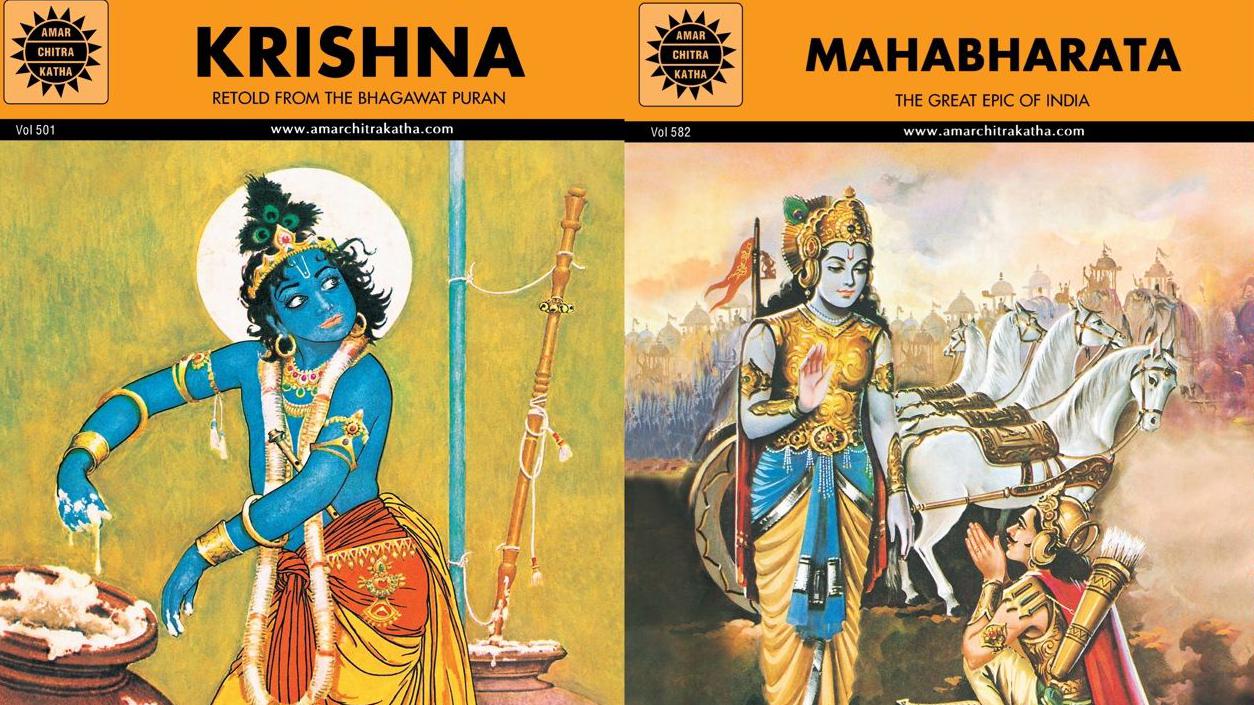 Amar Chitra Katha Krishna issue, the series' best-remembered early title
Two Origin Stories, Both Worth Telling Honestly
Here, the historical record genuinely forks, and we think a publication built on verification owes readers both versions rather than picking the tidier one.
The story most commonly told — including by Amar Chitra Katha itself — credits Anant Pai directly as the series' originator, beginning publication in 1967 in Mumbai, initially with ten retellings of Western fairy tales such as Cinderella, Jack and the Beanstalk and Pinocchio, published in Kannada. The now-famous "Krishna" issue, retelling stories from the Bhagavata Purana and widely remembered as ACK's true beginning, followed as the eleventh title in the catalogue, generally dated to 1969, and became the template for everything the series is remembered for today.
Outlook magazine, however, has published a different account, based on interviews with G.K. Ananthram, an India Book House salesman based in Bangalore. In this version, it was Ananthram who first proposed a mythology-based comic series to Mirchandani in 1965, securing roughly Rs 10,000 to produce it — in Kannada, not English — making those early Bangalore-produced Kannada comics, by Ananthram's account, the true first entries in what became the Amar Chitra Katha numbering system. Pai, in this telling, was brought in afterward from Indrajal Comics to build and run the English-language version that became the publishing phenomenon. Ananthram himself, in the same interview, credited Pai generously for building a strong team and brand even while insisting the original idea began in Bangalore.
Both accounts appear to agree on this much: whoever first proposed it, it was Anant Pai who built Amar Chitra Katha into what it became — its editorial voice, its research discipline, and its decades-long relationship with Indian readers were unmistakably his.
Building an Institution, One Title at a Time
Whichever origin story is emphasised, the growth that followed is not in dispute. Amar Chitra Katha grew from those early titles into one of India's largest-selling comic book series, eventually publishing more than 500 titles and selling upward of 100 million copies across roughly 20 to 38 languages, depending on which point in the company's history is being measured — different sources cite figures ranging from over 86 million copies and 440 titles (a mid-2010s snapshot) to more than 100 million copies and over 500 titles more recently.
In 1969, Pai founded Rang Rekha Features, India's first comic and cartoon syndicate, which he ran as managing director until selling it in 2000 to Color Chips, a Hyderabad-based animation studio. Under this syndicate, in November 1980, he launched Tinkle, a children's anthology magazine of comics, stories, jokes and educational content that would go on to introduce characters now etched into Indian childhood memory — Suppandi, the endearingly literal-minded servant boy; Shikari Shambu, the reluctant hunter; and Tantri the Mantri, the scheming royal advisor. Tinkle is reported to have crossed its 669th issue by mid-2017 and continues publishing today, decades after its founder's death.
It was this closeness with young readers — quizzing children on stage at events, handing out comics even to those who answered wrong, and building a genuine rapport across generations — that earned Pai the affectionate title by which most of India still remembers him: Uncle Pai.
Beyond Comics — A Belief in Personality Development
Pai's interests extended past storytelling into education more broadly. In August 1978, he founded the Partha Institute of Personality Development, which ran correspondence-based personality development courses for children and teenagers — a less-remembered but characteristic extension of the same instinct that drove Amar Chitra Katha: a belief that Indian children deserved better tools to understand themselves and their own heritage, not just imported ones.
A later venture, Chimpu Comics, launched in 1989 under Rang Rekha Features and included original Pai creations like Ramu and Shamu, Kapish, Little Raji and Fact Fantasy. Unlike his two flagship successes, Chimpu Comics did not find a lasting audience and was eventually discontinued.
A Private Life, Quietly Lived
In 1961, at the age of 31, Pai married Lalita, then 20. The couple, who remained childless, lived in an apartment in Prabhadevi, Mumbai, for the rest of his life. Lalita passed away in 2015, four years after her husband.
Anant Pai died of a heart attack on the evening of 24 February 2011, in Mumbai, while recovering from hip surgery made necessary by a fall down a staircase the week before. His last rites were performed that same night at Shivaji Park crematorium.
Recognition and Legacy
On what would have been his 82nd birthday, 17 September 2011, Google marked the occasion with a special comic-style Doodle on its Indian homepage, showing Pai surrounded by Suppandi, Shikari Shambu and other Tinkle characters. In February 2012, ACK Media released an Amar Chitra Katha title on Pai's own life, scripted by Tinkle assistant editor Gayathri Chandrasekaran and illustrated by Dilip Kadam, one of the artists behind many of ACK's best-known titles. A full biography, "Uncle Pai: A Biography" by Rajessh M. Iyer, followed in 2021.
Scholars have referred to Pai as the "Father of Indian Comics," crediting his work with giving generations of Indian children what one academic description called a route back to their own roots — a phrase that captures, as well as any single line can, what Amar Chitra Katha set out to do and largely succeeded at.
His legacy has also had to weather a harder chapter recently: on 1 October 2025, a fire at Amar Chitra Katha's main warehouse in Bhiwandi burned for four days, destroying over 600,000 units of inventory and the original hand-drawn artwork — known as "positives" — for roughly 200 of the earliest ACK titles, including Krishna, Rama and Shivaji Maharaj. The original physical artwork is gone permanently, though the company has confirmed the material was digitally archived beforehand, meaning the stories themselves, at least, survive.
The Takeaway
Anant Pai never trained to be a storyteller. He trained to be a chemical engineer, and by most conventional measures of the 1950s, that is exactly what he should have remained. Instead, a five-minute exchange on a children's quiz show convinced him that Indian kids deserved to know their own Rama as well as they knew Zeus — and he spent the rest of his working life making sure of it. For a boy who lost both parents before he could remember them, in a small town in coastal Karnataka, that is a considerable inheritance to have left behind for millions of children who never even knew his name until they called him Uncle.