Harekala Hajabba: The Orange Seller Who Built a School and Won the Padma Shri
How an Illiterate Fruit Vendor from Mangaluru's Harekala Village Quietly Rewrote the Story of Rural Education in Coastal Karnataka
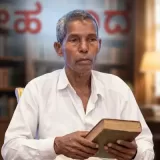
Some people change the world from positions of power. Harekala Hajabba did it from behind a basket of oranges.
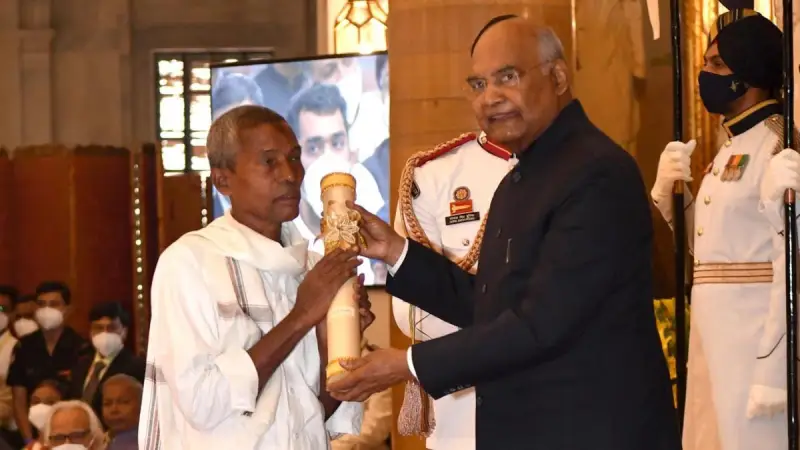
For more than four decades, this unassuming fruit vendor walked the streets of Mangaluru — selling oranges for small coins at the city's bus depot — never having set foot inside a classroom, never having read a single word. Yet today, his name appears in the syllabus of Mangalore University, his story was published by the BBC, and the President of India personally placed the Padma Shri around his neck.
Hajabba's story is not about overnight success or political connections. It is about what one person can accomplish when a single moment of embarrassment becomes a lifelong mission.
He belongs to the Beary Muslim community, a linguistic and cultural minority of coastal Karnataka whose language — Beary Bashe — bridges Tulu, Kannada, and Malayalam. From this community rooted in trade and resilience, Hajabba drew an extraordinary sense of purpose: that no child in his village should grow up unable to speak, unable to read, unable to answer a simple question.
Today, the school he built now stands as a Government Higher Secondary School in Harekala-Newpadpu, serving 175 underprivileged children. It began with 28 students seated in a mosque.
Quick Facts
| Full Name | Harekala Hajabba |
| Born | 17 October 1956 |
| Place of Birth | Harekala, Mangaluru, Dakshina Kannada |
| Profession | Fruit Vendor, Social Activist |
| Community | Beary Muslim |
| Known For | Building a village school using his orange-selling earnings |
| Title | Akshara Santa (Saint of Letters) |
| School Founded | 17 June 2000 (Dakshina Kannada Zilla Panchayat Higher Primary School) |
| Awards | CNN-IBN Real Heroes Award (2009), Rajyotsava Prashasti (2012), Padma Shri (2020) |
| Region | Coastal Karnataka / Tulunadu |
Early Life and Background
Harekala Hajabba was born on 17 October 1956 in the small village of Harekala, located near Mangaluru in Dakshina Kannada district. He grew up in a community where poverty was not an exception — it was simply how life was. Educational opportunities in the region were scarce, and for a family stretched thin, school was a luxury that could not be afforded.
Hajabba never attended school. Like many in his village, he grew up knowing only the Tulu and Beary languages — the dialects of his coastal world. Reading, writing, and arithmetic were not part of his childhood.
In his early years, he worked rolling bidis — small hand-rolled cigarettes — a common livelihood in coastal Karnataka at the time. The income was modest, barely enough to survive.
Fate intervened in the form of a flood. After losing his home in Harekala to a river flood, Hajabba moved to Mangaluru city. With the small savings he had accumulated from rolling bidis, he began a new chapter: selling oranges.
The work was simple — setting up near the Mangaluru Central Bus Stand, selling fruits to commuters and passersby. But from this small trade would grow one of the most remarkable stories in modern Karnataka.
Career and Public Journey
Hajabba began selling oranges at the Mangaluru bus depot in 1977 and continued doing so every single day for decades. Each morning he made a 23-kilometre journey from his village to the city, carrying his fruit basket. His daily earnings ranged between Rs 60 and Rs 150 — barely enough to feed a family of five.
The turning point in his public life came in 1990. A foreign tourist — accounts describe the couple as British — stopped at his stall and asked him in English, "How much for the oranges?"
Hajabba could not answer. He did not know English. He did not know Hindi. He could only stand in silence, unable to communicate the price of the fruit he had been selling for years.
That moment of helplessness cut deeply. "I was embarrassed that I could not tell the price of a fruit I had been selling for years," he later recalled. The shame was not just personal — it opened his eyes to something much larger. His entire village of Newpadpu had no school. The nearest school was seven kilometres away. Generations of children were growing up just as he had — without education, without voice, without options.
From that day, Hajabba made a silent decision. He would build a school.
Major Contributions
The School That Started in a Mosque
The path from decision to reality took a decade of persistence. Hajabba saved portions of his meagre daily earnings. He approached government officials, waited in queues, knocked on bureaucratic doors, and faced repeated indifference.
Villagers laughed at him. His own wife questioned why he was spending money on a school when their children were going to bed hungry. Officials dismissed him. But Hajabba kept selling oranges — and kept saving.
Finally, his approach to former MLA Late UT Fareed proved decisive. Fareed sanctioned construction support, and on 17 June 2000 — a date Hajabba remembers as "a Saturday" with deep gratitude — his dream formally began taking shape.
The school first operated out of the local community mosque. Then, with land donated by Hajabba himself (land he purchased using his savings), the government constructed a proper building. The Dharmasthala Rural Development Project, a charitable trust under Dr D. Veerendra Heggade of the famed Dharmasthala temple, provided the school's first teacher. Later staffing support came from the Mangalore Shadimahal organisation.
In 2001, construction was completed and Classes 1 through 5 began. By 2005, Class 6 was added. By 2010, the school had its first batch of Class 10 students appearing for board examinations.
The school — officially the Dakshina Kannada Zilla Panchayat Higher Primary School — today spreads across 1.33 acres and serves 175 students from Newpadpu and surrounding villages.
Giving Away His Prize Money
Hajabba did not stop at building one school. When the CNN-IBN Real Heroes Award came with a cash prize of Rs 5 lakh, he did not spend it on his family or on personal comforts. He used the entire amount to purchase additional land adjacent to the school — so the children could have a playground.
This is the man: an orange seller in his sixties, reinvesting award money into concrete and soil for children he would never directly teach.
Challenges and Struggles
Hajabba's journey was never smooth or celebrated in its early years.
The social environment of his village did not encourage ambition of this kind. An uneducated fruit vendor dreaming of founding a school was, by any conventional measure, a laughable idea. Neighbours were sceptical. Officials were unresponsive. Bureaucratic processes stretched his patience across years.
At home, the tension was real. His wife, struggling to feed five people on his thin earnings, could not understand why money was being diverted toward a village school. Three meals a day was not guaranteed — yet Hajabba was thinking about classrooms.
He navigated local politics to secure land approvals, pursued government recognition for each successive class level, and continued his daily 46-kilometre round trip to Mangaluru — selling oranges while carrying the weight of an unrealised dream.
There was no funding body, no NGO backing, no political patron in the early years. Just the quiet accumulation of coins and the slow grinding of determination.
Timeline of Key Milestones
| Year | |
| 1956 | Born in Harekala village, Mangaluru |
| 1977 | Begins selling oranges at Mangaluru bus depot |
| 1990 | Moment of embarrassment with foreign tourist; resolves to build a school |
| 2000 | School formally sanctioned; classes begin in community mosque on 17 June |
| 2001 | Government building constructed; Classes 1–5 officially begin |
| 2004 | Named Person of the Year by Kannada Prabha newspaper |
| 2005 | Classes extended to Class 6 |
| 2009 | Awarded CNN-IBN and Reliance Foundation 'Real Heroes' Award |
| 2010 | First Class 10 batch appears for board exams |
| 2012 | Awarded Rajyotsava Prashasti by the Government of Karnataka |
| 2012 | BBC publishes feature: "Unlettered fruit-seller's Indian education dream" |
| 2013 | Life story included in Mangalore University MA course syllabus |
| 2020 | Padma Shri announced by Government of India (4 January 2020 list) |
| 2021 | Padma Shri formally conferred by President Ram Nath Kovind on 8 November |
Legacy and Lasting Influence
Harekala Hajabba's legacy is not inscribed in marble or bronze — it lives in the lives of 175 children who now have a school where none existed before.
He is the first Padma Shri recipient from the Beary community, a recognition that carries meaning far beyond one man's honour. It signals that the contributions of coastal Karnataka's smaller linguistic communities are visible to the nation.
His life story has entered the formal educational canon. Mangalore University has included it in its MA syllabus, making the man who never sat in a classroom the subject of university study. The BBC covered him. State governments honoured him. And yet, even after the Padma Shri, Hajabba continued selling oranges at the same Mangaluru bus depot.
He told reporters he wants to use his future prize money to build more schools. Not to retire. Not to build a house. More schools.
The title that suits him best is the one his community gave him: Akshara Santa — the Saint of Letters. A man who could not read gave an entire village the ability to do so.
In Coastal Karnataka's long tradition of community builders — from temple trusts to education endowments by merchants of Tulunadu — Hajabba occupies a unique place. He had no temple wealth. He had no merchant surplus. He had only oranges, willpower, and a memory of shame that he refused to let be wasted.
For MangaloreDiary.in readers, Hajabba is more than a human-interest story. He is a measure of what Dakshina Kannada's ordinary people are capable of — and a reminder that the most transformative acts in a region's history are not always made by the powerful.
Lessons from Hajabba's Life
Hajabba never wrote a book. He never gave a TED talk. His classroom was a bus depot, and his teaching tool was a basket of oranges. Yet his life delivers lessons that no curriculum fully captures.
Shame can be fuel. The moment a foreign tourist exposed his inability to communicate was humiliating. Most people absorb that shame and move on. Hajabba converted it into a two-decade project. He did not blame the tourist, the language, or the system. He asked what he could do.
Purpose does not require credentials. Hajabba had no degree, no title, and no institutional backing. What he had was clarity — a single, specific thing that was wrong with his world, and a decision to fix it. Purpose does not wait for qualifications.
Small, consistent acts accumulate into monuments. He did not receive a large grant. He did not launch a fundraising campaign. He sold oranges — every morning, 23 kilometres from home — and saved a portion of Rs 60 to Rs 150 each day. Over years, those coins became a school. Consistency, compounded over time, is its own kind of power.
Ridicule is not a reason to stop. His neighbours laughed. His wife worried. Officials ignored him. Hajabba kept moving. He understood, instinctively, that the gap between a laughable idea and a celebrated achievement is simply time plus stubbornness.
Giving does not require surplus. The conventional logic of charity says: give after you have enough. Hajabba gave when he had almost nothing. He donated land he had purchased with his own meagre savings. He reinvested award money into the school rather than into his household. He demonstrated that generosity is a decision, not a financial condition.
Recognition should not change the work. After the Padma Shri, Hajabba returned to the bus depot. He did not retire, relocate, or leverage his fame for personal comfort. The award changed his name in public records. It did not change his morning.
For a region like Dakshina Kannada — where education has historically been prized, where community institutions from Dharmasthala to local mosques and churches have long anchored social life — Hajabba represents something specific: the ordinary citizen who does not wait for institutions to act.
Frequently Asked Questions
Who is Harekala Hajabba? Harekala Hajabba is a social activist and fruit vendor from Harekala village in Mangaluru, Dakshina Kannada, Karnataka. He is best known for building a government school in his village using earnings from selling oranges — despite having never attended school himself.
Why did Harekala Hajabba build a school? In 1990, Hajabba was unable to communicate with a foreign tourist who asked the price of his oranges in English. This moment of embarrassment made him acutely aware that his village had no school. He resolved to change that and spent the next decade saving money and pushing authorities to build one.
What is the Padma Shri awarded to Harekala Hajabba for? The Government of India awarded Harekala Hajabba the Padma Shri in 2020 under the Social Work category, recognising his extraordinary contribution to rural education in Dakshina Kannada.
What is the school built by Harekala Hajabba? The school is now officially called the Dakshina Kannada Zilla Panchayat Higher Secondary School, located in Harekala-Newpadpu village near Mangaluru. It opened in 2000 on land purchased and donated by Hajabba and currently serves 175 underprivileged students up to Class 10.
What does 'Akshara Santa' mean? 'Akshara Santa' is a Kannada phrase meaning 'Saint of Letters.' It is a title given to Harekala Hajabba in recognition of his lifelong mission to bring literacy and education to his village — remarkable because the man himself never learned to read or write.
Is Harekala Hajabba still selling oranges? Yes. Even after receiving the Padma Shri, Hajabba continued his work as an orange vendor at the Mangaluru bus depot — the same trade that funded the school and defined his life's purpose.
What language does Harekala Hajabba speak? Harekala Hajabba speaks Tulu and Beary Bashe — the two languages native to coastal Karnataka's Beary Muslim community. Beary Bashe is a distinct spoken language that draws from Tulu, Kannada, and Malayalam. He does not speak Hindi or English, which was central to the incident with the foreign tourist that inspired him to build the school.
References
Primary Sources — Government & Institutional
- Press Information Bureau, Government of India — "Padma Awards 2020 Announced" (January 25, 2020): https://pib.gov.in/newsite/PrintRelease.aspx?relid=197647
- The Hindu — "Full list of 2020 Padma awardees" (January 26, 2020): https://www.thehindu.com/news/national/full-list-of-2020-padma-awardees/article30656841.ece
Published Biography & Academic
- Ismath Pajeer — Harekala Hajabbara Jeevana Charitre (Life story of Harekala Hajabba) — published biography in Kannada
- Two Circles — "Harekala Hajabba's life as a lesson in Mangalore University syllabus" (July 9, 2013): https://twocircles.net/2013jul09/harekala_hajabbas_life_lesson_mangalore_university_syllabus.html
International Media
- BBC — "Unlettered fruit-seller's Indian education dream" (November 2012) — referenced via multiple secondary sources
National Media
- The Print — "For Harekala Hajabba, journey from orange cart to Padma Shri began with a foreigner's question" (November 14, 2021): https://theprint.in/feature/for-harekala-hajabba-journey-from-orange-cart-to-padma-shri-began-with-a-foreigners-question/765226/
- The Better India — "A wayside fruit vendor in rural Karnataka sold oranges for 10 years to build a village school" (October 26, 2021): https://thebetterindia.com/264497/viral-harekala-hajabba-padma-shri-karnataka-orange-seller-inspiring/
- Deccan Herald — "Kerala students fete Hajabba, scholarship announced": https://www.deccanherald.com/india/karnataka/kerala-students-fete-hajabba-scholarship-announced-667916.html
- Zee News — "Meet Padma Shri Harekala Hajabba, orange seller from Mangaluru who built a school with life's savings" (November 9, 2021): https://zeenews.india.com/india/meet-padma-shri-harekala-hajabba-orange-seller-from-mangaluru-who-built-a-school-with-lifes-savings-2408998.html
Regional & Local Media
- Daijiworld — "Mangaluru: Padma Shri award to be conferred on Harekala Hajabba" (January 25, 2020): https://www.daijiworld.com/news/newsDisplay.aspx?newsID=667225
- Daijiworld — "Mangalore: CNN-IBN 'Real Heroes' Award for Harekala Hajabba" (March 11, 2009): https://www.daijiworld.com/news/newsDisplay.aspx?newsID=57687
- Mangalorean.com — "Harekala Hajabba (65) to receive the Prestigious 'Padma Shri Award' on Nov 8 in New Delhi" (October 22, 2021): https://www.mangalorean.com/harekala-hajabba-65-to-receive-the-prestigious-padma-shri-award-on-nov-8-in-new-delhi/
Community & Cultural Sources
- BearyInfo — "Harekala Hajabba" (May 22, 2024): https://bearyinfo.com/beary/harekala-hajabba/
0 Comments
Leave a Comment