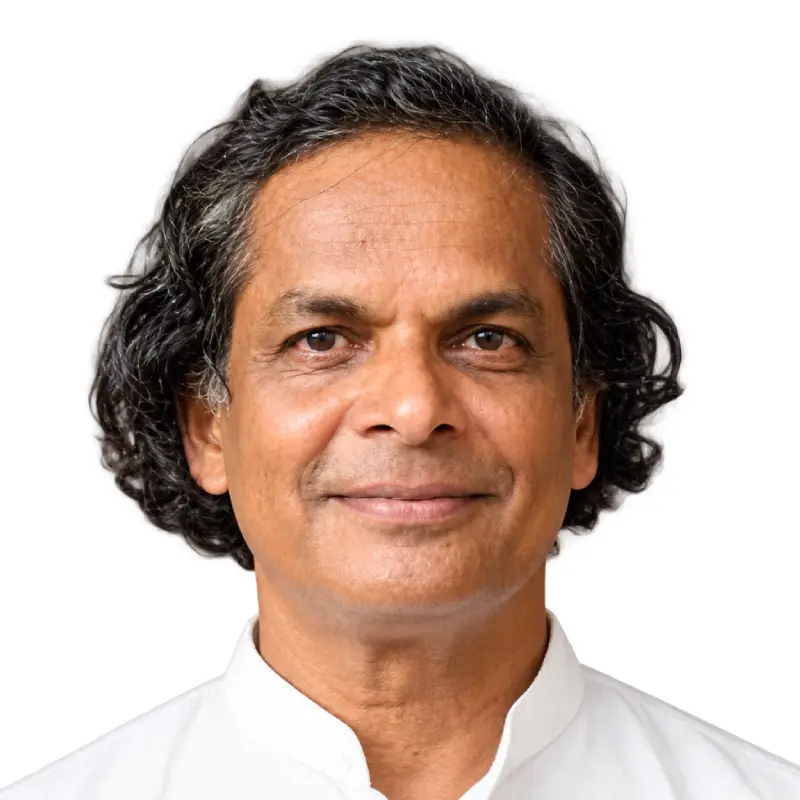
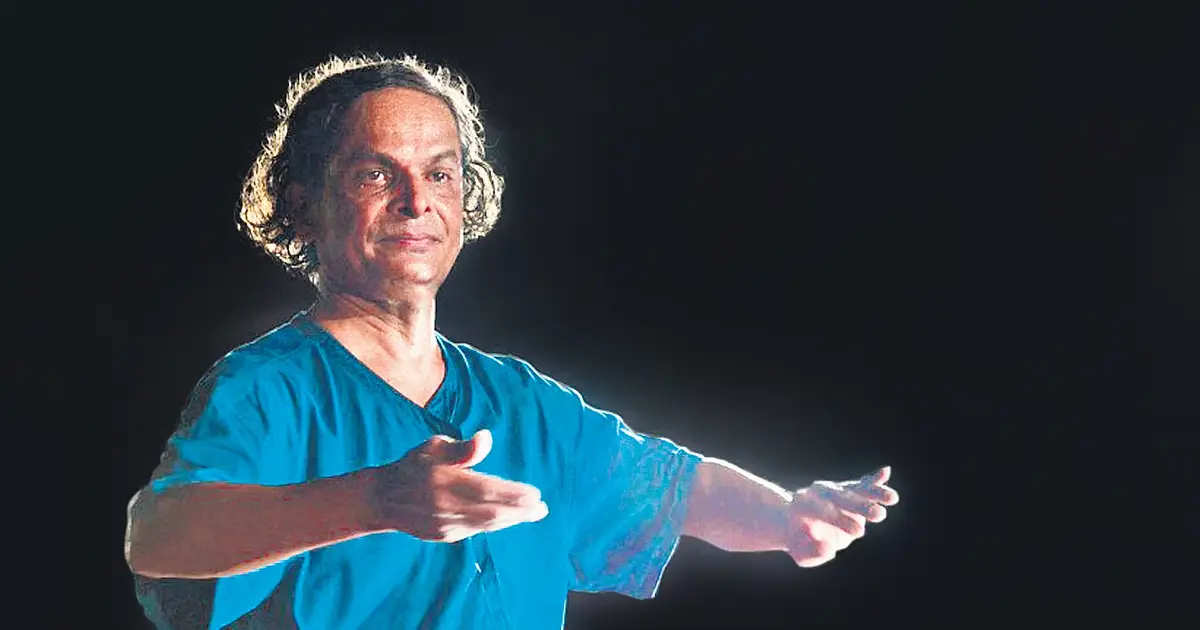
Sanjeeva Suvarna had just three years of formal schooling. That is not the beginning most guru-level artists in any classical Indian performing art can claim. But sixty years after he first picked up the tala and the chande as a village boy in Bannanje, near Udupi, he is one of the most respected names in Yakshagana — a guru whose students now teach the next generation, and a performer whose feet have carried this coastal art form to stages in Europe, Russia and New York.
Born on September 12, 1955, Sanjeeva Suvarna turns 71 this month. What makes his story worth telling isn't simply the years — it is that at an age when many performing artists have long since stepped back, he is still associated with active teaching at Udupi's Yakshagana Kendra, still performing, and still, as recently as 2023, being recognised with new honours.
A Village Boy Raised Into an Art Form
Sanjeeva Suvarna was brought up by Bhagawath Bannanje Narayana Shetty, a well-known figure in the Yakshagana world, who first initiated the young boy into the art. With only up to third-standard formal schooling, Sanjeeva instead built his education around tala (rhythm) and chande (a traditional double-headed drum central to Yakshagana), learning both from Narayana Shetty. His footwork — the physical vocabulary that every Yakshagana artist must master — was shaped under the guidance of Margoli Govinda Serigara, a celebrated female-role (streevesha) performer of an earlier generation.
In 1972, at a stage when most of his peers would have still been in school, Sanjeeva joined the newly formed Yakshagana Kendra in Udupi as a part-time night student. The Kendra, run out of Mahatma Gandhi Memorial (MGM) College, had been set up under the initiative of the college's then principal, Prof. K.S. Haridasa Bhat, with the involvement of the celebrated Kannada writer and Yakshagana reformer Dr K. Shivaram Karanth. There, Sanjeeva trained under respected gurus B. Veerabhadra Naik, Hiriyadka Gopala Rao and Nilavara Ramakrishnayya.
By 1973–74, he had become a regular student at the Kendra. In 1975, when Veerabhadra Naik left to join the professional troupe Saligrama Mela, he took two of his most promising students with him — Rama Nairi and Sanjeeva Suvarna. That was the moment Sanjeeva's training turned into a professional career.
A Chande Player Who Ended Up Touring the World
What followed reads less like a typical rural artist's biography and more like a global touring career.
Between 1979 and 1980, celebrated theatre director B.V. Karanth — then director of the National School of Drama, and a different Karanth from the Yakshagana reformer Dr K. Shivaram Karanth — brought Sanjeeva and fellow artist Manjunatha Prabhu of Pethri to Delhi. There, the two trained NSD students in Yakshagana-style movement, which B.V. Karanth incorporated into his production of "Barnam Van," a Hindi adaptation of Shakespeare's Macbeth. Sanjeeva trained the students in footwork and played chande for the production, then toured across India with the troupe for the show's run.
In 1982, he joined celebrated Bharatanatyam and Kathakali exponent Guru Maya Rao's group on a tour of Europe. Soon after, he joined the troupe of Dr K. Shivaram Karanth himself, touring Italy, France, Germany and Russia as a chande artist — including performances of "Yaksharanga," Karanth's experimental, ballet-influenced reimagining of Yakshagana, which condensed the traditional all-night performance format into shorter, stage-friendly productions for global audiences.
Two decades later, in 2002, Sanjeeva was invited to New York along with fellow artist S.A. Krishnayya of Udupi's Regional Resource Centre, to take part in a theatrical production blending puppetry and live performance. In it, Sanjeeva played the role of Krishna in a Gitopadesha sequence — a rare instance of a Yakshagana specialist crossing over into an entirely different performance tradition on an international stage.
Milestones in Bannanje Sanjeeva Suvarna's Career
| Year(s) | Milestone |
| 1972 | Joins Yakshagana Kendra, Udupi, as a part-time night student |
| 1973–74 | Becomes a regular, full-time student at the Kendra |
| 1975 | Joins professional troupe Saligrama Mela under Guru B. Veerabhadra Naik |
| 1979–80 | Trains National School of Drama students in Delhi for B.V. Karanth's "Barnam Van" |
| 1982 | Tours Europe with Guru Maya Rao's dance troupe |
| Post-1982 | Joins Dr K. Shivaram Karanth's troupe; tours Italy, France, Germany and Russia with "Yaksharanga" |
| 2002 | Invited to New York for a puppetry-theatre production, plays Krishna in a Gitopadesha sequence |
| 2018 | Felicitated at Ajjarakadu Town Hall, Udupi, described by dancer Kalamandalam Usha Datar as having performed in more than 52 countries |
| 2019 | Yakshagana Kendra, where he teaches, receives the "Kireeta Prashasti" |
| 2023 (announced 2024) | Selected for the Karnataka Yakshagana Academy's Parthi Subba Award |
A Specialist in Female Roles, in an Art Form Performed Entirely by Men
One detail sets Sanjeeva Suvarna apart even among Yakshagana's decorated names: he built much of his reputation as a streevesha artist — a performer of female roles — in a tradition where, historically, all roles, male and female, were played by men.
Across his career, Sanjeeva has portrayed some of Yakshagana literature's best-known female characters: Damayanthi in "Nala Damayanthi," Chandramathi in "Sathya Harishchandra," Mohini in "Rukmangada Mohini," Devayani in "Kacha Devayani," Shakuntale in "Abhijnana Shakunthala," Seetha in multiple productions, Kunthi in "Karna Kunthi," Sairandhri in "Keechaka Vadhe," and Mandodhari in "Mahasathi Mandodhari," among many others. It is this body of work that has, in tribute circles, earned him association with the title "an authority on Yakshagana of the northern style" — referring to Badagu Tittu, one of the two major regional styles of the art form, alongside Tenku Tittu in the south.
 Bannanje Sanjeeva Suvarna performs with the Koraga community in Udupi Photo | Express
Teacher, Director, Institution-Builder
Sanjeeva Suvarna's role did not stop at performance. Having trained under Dr K. Shivaram Karanth's choreographic style for close to two decades across his various collaborations, he went on to direct new Yakshagana productions in that same tradition — passing on not just steps and rhythms, but an entire approach to staging the art form.
Today, he continues to be associated with the Yakshagana Kendra at MGM College, Udupi, the same institution where his own formal training began in 1972 — a full-circle association spanning more than five decades. The Kendra, one of the more structured and long-running Yakshagana training schools in the region, follows a residential gurukula model, training students not just in dance and music but in make-up, costume design and stagecraft. In 2019, the Kendra was honoured with the "Kireeta Prashasti" by a Bengaluru-based cultural organisation.
Recognition That Has Kept Coming
Sanjeeva Suvarna's honours, according to tribute and felicitation records, include the Karnataka Janapada and Yakshagana Academy Award, the Karnataka Rajya Prashasti, the Karnataka Tulu Sahitya Academy Award and its Gaurava Prashasti, and the Udupi Jilla Prashasti, among others accumulated over a career spanning five decades.
The most significant recent recognition came in September 2024, when the Karnataka Yakshagana Academy announced that Sanjeeva Suvarna had been selected for the prestigious Parthi Subba Award for the year 2023 — one of the highest honours the Academy confers, carrying a cash prize of Rs 1 lakh and a citation. Academy president Dr Tallur Shivaram Shetty made the announcement at a press meet in Udupi, with the award presented at a ceremony in Mangaluru later that year.
At a felicitation programme organised in Udupi in 2018 by the Yakshagana Kalaranga and a dedicated felicitation committee, noted dancer Kalamandalam Usha Datar described Sanjeeva Suvarna as a cultural harbinger of coastal Karnataka, noting that he had performed and taught Yakshagana in more than 52 countries over his career — underlining just how far this particular art form, rooted so specifically in this coastline, has travelled through the efforts of artists like him.
Still Reaching New Stages
Most careers built on a physically demanding stage art form wind down well before an artist turns 70. Sanjeeva Suvarna's has not — not the teaching, not the institutional association with the Kendra where it all began, and evidently not the recognition, with a major Academy honour arriving as recently as 2023.
For an art form like Yakshagana, dependent as it is on gurus who can pass down not just choreography but the accumulated judgement of decades on stage, that kind of continuity matters. A boy from Bannanje who never had more than three years of formal schooling ended up training students at India's National School of Drama, touring with troupes across Europe and Russia, playing Krishna on a New York stage, and is still, at 70, walking into the same Udupi institution where his own training began — not to reminisce, but to keep working.
That, more than any single award, is what "still reaching new stages" looks like in practice.