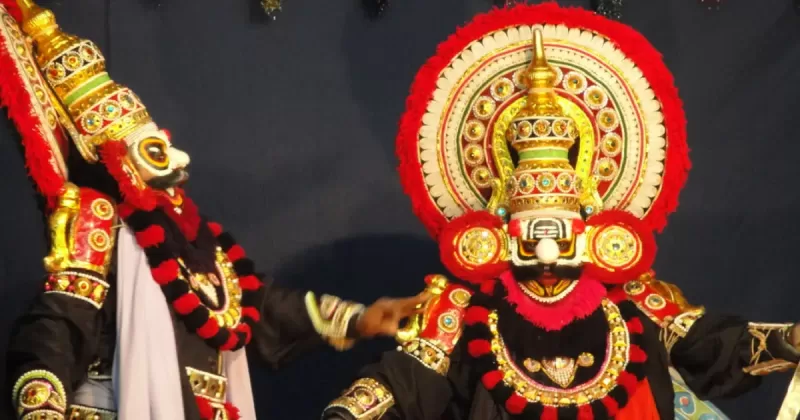
Behind every night-long Yakshagana performance in Dakshina Kannada is a quieter, decades-long effort by scholars, teachers and institutions working to document, teach and protect the art form.
Ask anyone from Namma Kudla, as Mangaluru is affectionately called in Tulu, what makes the city's nights different, and Yakshagana usually comes up. It is theatre that refuses to be short: performances traditionally run from dusk to dawn, built on music, elaborate costume, unscripted dialogue and dance. What outsiders often miss is that this art form survives not by accident, but because a small community of scholars, teachers and institutions have spent lifetimes making sure it does.
What Exactly Is Yakshagana?
For readers encountering the word for the first time: Yakshagana is a centuries-old folk theatre form found mainly along the coast of Karnataka, particularly in Dakshina Kannada, Udupi and Uttara Kannada districts. It combines a live orchestra, a Bhagavata (narrator-singer), elaborate costumes and improvised dialogue between performers who play mythological characters, usually drawn from the Mahabharata, Ramayana and Puranas.
The art form has two broad regional styles. Tenkutittu, the "southern style," is practised from Mulki down to Kasaragod, including Mangaluru, and is known for its dramatic, demon-like Rakshasa costumes and dhigina, the performer's signature spinning leap. Badagutittu, the "northern style," is found from Udupi up to Uttara Kannada, and was shaped in its modern form by the reformist efforts of writer and Jnanpith laureate Dr. Shivaram Karanth at his Yakshagana Mandira in Saligrama.
The Scholar Who Lives Inside the Art
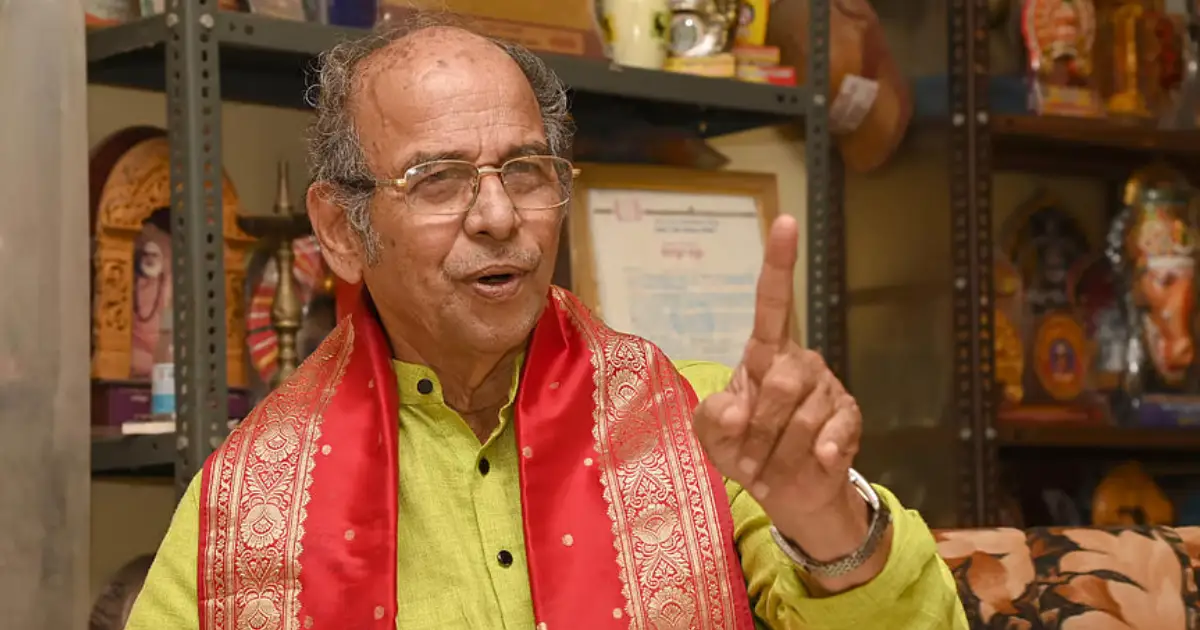
If one name comes up repeatedly when people in Mangaluru talk about who has kept Yakshagana intellectually alive, it is Dr. M. Prabhakar Joshi.
Joshi was trained in Tenkutittu Yakshagana early in life, learning the maddale, a percussion instrument central to the form, from his own grandfather, Anirudha Bhat. His formative years were shaped by amateur Yakshagana institutions such as Mala Parashurama Yakshagana Sangha, Venkataramana Yakshagana Sangha and Anantashayana Yakshagana Sangha, community-run troupes that still function as informal training grounds across the coast.
By profession, Joshi taught commerce at Besant Women's College, Mangaluru. By calling, he became what admirers describe as an insider and an outsider to Yakshagana at once, capable of performing Talamaddale (the seated, dialogue-only form of Yakshagana) as an arthadhari, or dialogue artiste, while also writing scholarly criticism about it. His doctoral thesis examined "Krishna Sandhana," a popular Yakshagana prasanga (script) based on the Udyoga Parva of the Mahabharata, tracing how its songs became so embedded in local life that lines from it turned into everyday idioms in Dakshina Kannada.
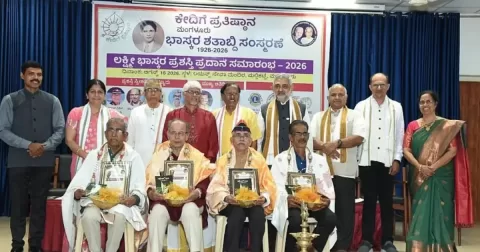
Joshi's contributions were formally recognised with the Balipa Award, and he has served as co-founder, director and chief editor of a dedicated cultural portal documenting Coastal Karnataka's Yakshagana heritage, one of the few sustained efforts to record the art form for readers and researchers beyond the region.
To be called a scholar of Yakshagana, one must have in-depth knowledge of philosophy, music, folk tradition and poetry all at once — it is never just about the stage
An Institution Built Around the Art
Scholarship around Yakshagana is not only carried by individuals. Mangalore University, which serves Dakshina Kannada, Udupi and Kodagu districts, houses the Dr. P. Dayananda Pai & Sri P. Sathish Pai Yakshagana Adhyayana Kendra, a dedicated study centre established through a one-crore-rupee endowment from the Pai family trust.
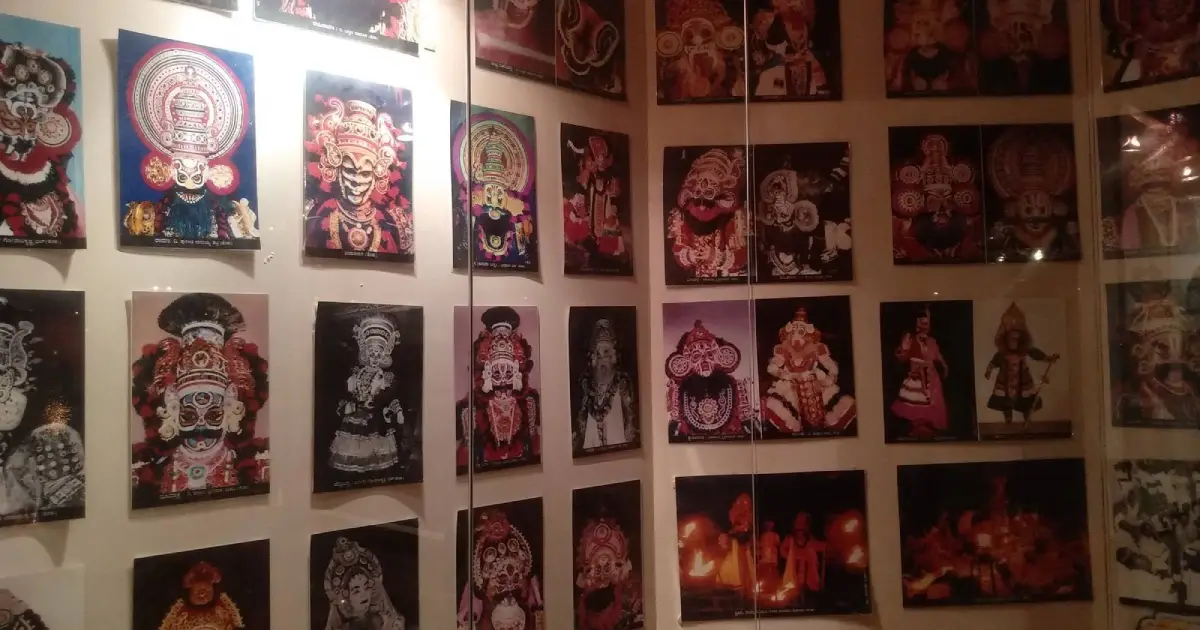
The centre operates out of the Yakshagana Kala Mandir, a hall with a theatre stage that seats up to 750 people, alongside the Yakshamangala Video Centre, which archives documentaries and recorded performances. Its mandate covers documentation, promotion, training, performance experiments and publication, spanning both the Tenkutittu and Badagutittu styles, an acknowledgement that preserving Yakshagana requires more than passionate individuals; it needs institutional memory.
The Voices Still Speaking Up for the Art
Even as formal institutions have grown, some of the strongest warnings about what could be lost still come from veteran practitioners themselves. Yakshagana scholar and artiste Bellige Narayana Maniyani, reflecting on how the southern and northern performance styles have diverged over decades, has cautioned that the loss of Yakshagana's traditional elements would be "a permanent cultural loss," a reminder that scholarship in this space is as much about vigilance as it is about celebration.
The region has also lost, and continues to remember, performers whose oratory shaped how Yakshagana is understood today. Siddakatte Chennappa Shetty, from Bantwal in the Mangaluru taluk, trained at Yakshagana Kendra Dharmasthala and became known across coastal Karnataka for his skill in Talamaddale oratory before his passing in 2014. Artistes like him are why the tradition of arthadhari performance, the sharp, improvised dialogue at the heart of Talamaddale, has something to draw from even today.
Why This Quiet Work Matters
None of this scholarship happens on a stage with lights and applause. It happens in classrooms, in doctoral theses, in endowed study centres, and in amateur sanghas that meet in neighbourhood halls long after the audience for a Yakshagana Mela has gone home. For an art form that is, by Mangalore University's own account, more than eight hundred years old, that quieter work may matter just as much as the performance itself.
For a city that calls itself Namma Kudla with real affection, Yakshagana's living legends are a reminder that culture survives not because it is admired from a distance, but because someone, generation after generation, chooses to study it, teach it and write it down.
| Style | Region | Known For |
|---|---|---|
| Tenkutittu | Mulki to Kasaragod (including Mangaluru) | Extravagant Rakshasa costumes, dhigina spinning leaps, Kerala-style maddalam |
| Badagutittu | Udupi to Uttara Kannada | Shorter, modernised form shaped by Dr. Shivaram Karanth's reforms |
Frequently asked questions
What is Yakshagana?
Yakshagana is a traditional folk theatre form of coastal Karnataka, combining live music, elaborate costume, dance and improvised dialogue, traditionally performed through the night and based mainly on stories from the Mahabharata, Ramayana and Puranas.
What does "Namma Kudla" mean?
"Namma Kudla" is Tulu for "our Mangaluru," an affectionate local nickname for the city of Mangaluru.
Who is Dr. M. Prabhakar Joshi?
Dr. M. Prabhakar Joshi is a Mangaluru-based Yakshagana scholar, performer and critic, trained in the Tenkutittu style from childhood. He taught commerce at Besant Women's College, Mangaluru, wrote his doctoral thesis on the Yakshagana prasanga "Krishna Sandhana," received the Balipa Award, and has led a cultural portal documenting Coastal Karnataka's Yakshagana heritage.
What is the difference between Tenkutittu and Badagutittu Yakshagana?
Tenkutittu, practised from Mulki to Kasaragod (including Mangaluru), is known for dramatic demon costumes and spinning leaps called dhigina. Badagutittu, found from Udupi to Uttara Kannada, is a shorter, modernised style shaped largely by Dr. Shivaram Karanth's reforms.
Is there an institution dedicated to studying Yakshagana?
Yes. Mangalore University runs the Dr. P. Dayananda Pai & Sri P. Sathish Pai Yakshagana Adhyayana Kendra, a study centre focused on documentation, training, performance and publication related to Yakshagana, housed in the Yakshagana Kala Mandir on campus.
What is Talamaddale?
Talamaddale is a seated, dialogue-driven form of Yakshagana performed without costume or dance, where performers called arthadharis engage in improvised argument and debate.
How old is Yakshagana as an art form?
According to Mangalore University's own Yakshagana study centre, the tradition has a documented history of more than eight hundred years in coastal Karnataka.

0 Comments
Leave a Comment