Sir Benegal Narsing Rau: The Mangaluru Man Who Helped Shape India's Constitution
Long before Republic Day made his work permanent, a Mangalore-born civil servant quietly wrote the first draft of the document that would govern independent India.
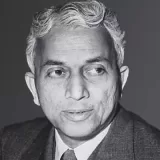
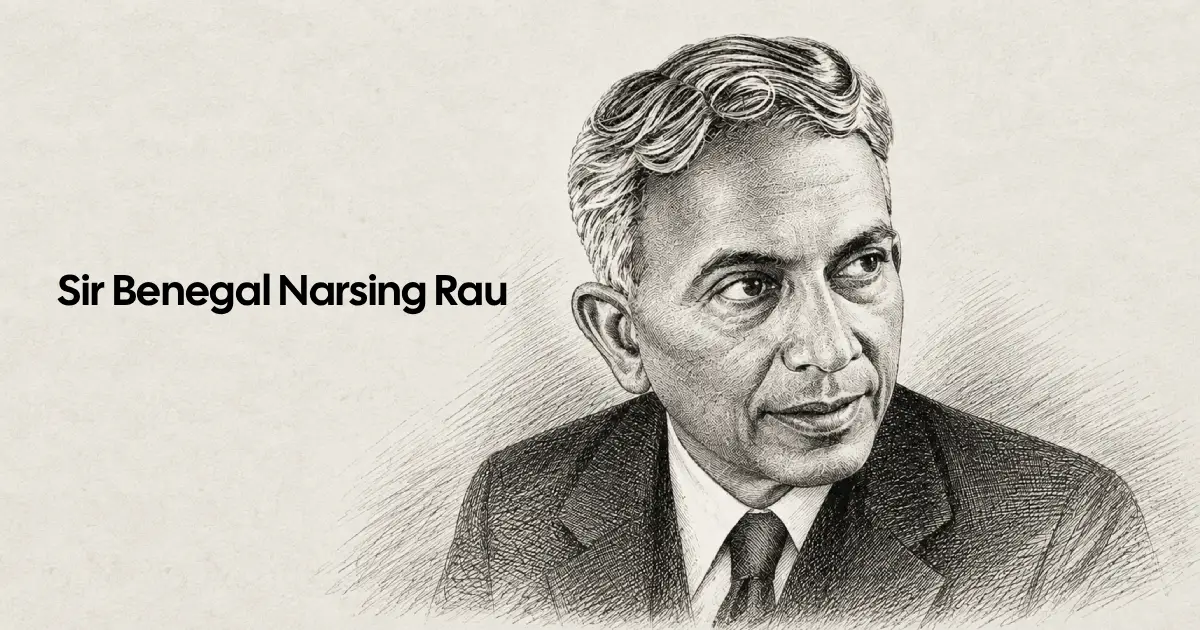
Every Republic Day, the names that get repeated are the same: Dr. B.R. Ambedkar, Jawaharlal Nehru, Sardar Vallabhbhai Patel. One name that almost never comes up, despite writing the document's original draft before the Drafting Committee ever touched it, belongs to a doctor's son from Mangalore.
His name was Sir Benegal Narsing Rau.
A Mangalore Childhood Built on Academic Records
Rau was born in Mangalore on February 26, 1887, into a Konkani-speaking Chitrapur Saraswat Brahmin family whose surname traced back to Benegal, a small village between Karkala and Mangalore. His father, Benegal Raghavendra Rau, was a respected doctor in the city, and the household he grew up in placed a premium on education that shaped all four Benegal brothers.
Rau's own academic record started early and rarely faltered. He studied at Canara High School, Mangaluru, matriculating in 1901 after topping the list of students across the entire Madras Presidency, a region that then stretched well beyond present-day Karnataka. He went on to Presidency College, Madras, graduating from the University of Madras in 1905 with a triple first-class in English, Physics and Sanskrit, followed by a first-class in Mathematics the year after.
A scholarship took him to Trinity College, Cambridge, where he sat for the Mathematics Tripos in 1909, alongside a contemporary named Jawaharlal Nehru. He returned to India and cleared the Indian Civil Service examination, joining in 1910 and being posted to the Bengal cadre.
From Judge to Constitutional Architect
Rau's early career followed the well-worn path of a capable ICS officer: postings as a judicial officer, a stint as a judge in Burma, and eventually a hand in revising the entire Indian statutory code between 1935 and 1937, work significant enough to see him knighted in 1938. He was made a judge of the Bengal High Court in Calcutta in 1939, a position he held until 1944, before briefly serving as Minister (effectively Prime Minister) of the princely state of Jammu and Kashmir between 1944 and 1945.
It was his next assignment that would define his legacy. Having worked as a secretary in the Governor-General's office on constitutional reform issues, Rau was appointed Constitutional Advisor to the Constituent Assembly of India in 1946, and set up the Constitutional Assembly Secretariat that July.
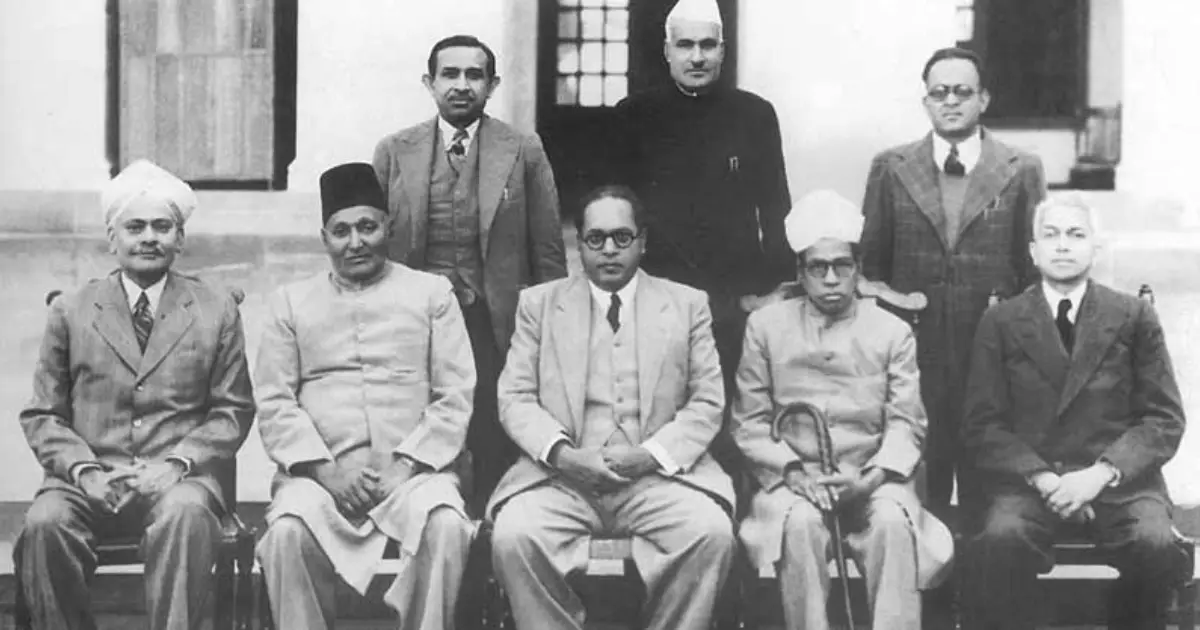 Constituent Assembly of India in session during the drafting of the Constitution
Sir Benegal Narsing Rau — Career Timeline
| Year(s) | Role or Milestone |
| 1901 | Matriculated from Canara High School, Mangalore, topping the Madras Presidency |
| 1909 | Completed Mathematics Tripos at Trinity College, Cambridge |
| 1910 | Joined the Indian Civil Service, posted to the Bengal cadre |
| 1935–1937 | Revised the entire Indian statutory code |
| 1938 | Knighted |
| 1939–1944 | Judge, Bengal High Court, Calcutta |
| 1944–1945 | Minister (Prime Minister) of Jammu and Kashmir |
| 1946 | Appointed Constitutional Advisor to the Constituent Assembly of India |
| 1947 | Helped draft the Constitution of Burma (Myanmar) |
| 1948–1952 | Permanent Representative of India to the United Nations |
| 1950–1952 | India's representative on the UN Security Council; President of the Council, June–July 1950 and March–April 1951 |
| 1952–1953 | Judge, International Court of Justice, The Hague |
| 1953 | Died in Zürich, Switzerland, on November 30, while still serving as an ICJ judge |
The Man Who Wrote the First Draft
Rau was never a formal member of the seven-person Drafting Committee chaired by Dr. B.R. Ambedkar. Yet the general architecture of the Constitution, its broad democratic framework and its original draft text, was prepared under his direction before the Drafting Committee began its work of refinement and debate.
As Constitutional Advisor, Rau's task went beyond legal drafting. It meant synthesising competing legal traditions, political compromises and cultural realities of a newly independent, deeply diverse country into language precise enough to govern it. He is widely credited with drawing on comparative constitutional law from multiple democracies to inform the framework he proposed, work that fed directly into debates the Drafting Committee would later have over subjects like fundamental rights, directive principles and judicial review.
"He was neither a politician seeking credit nor a lawmaker casting votes, only the person whose draft gave the Assembly something concrete to argue over, amend and ultimately adopt."
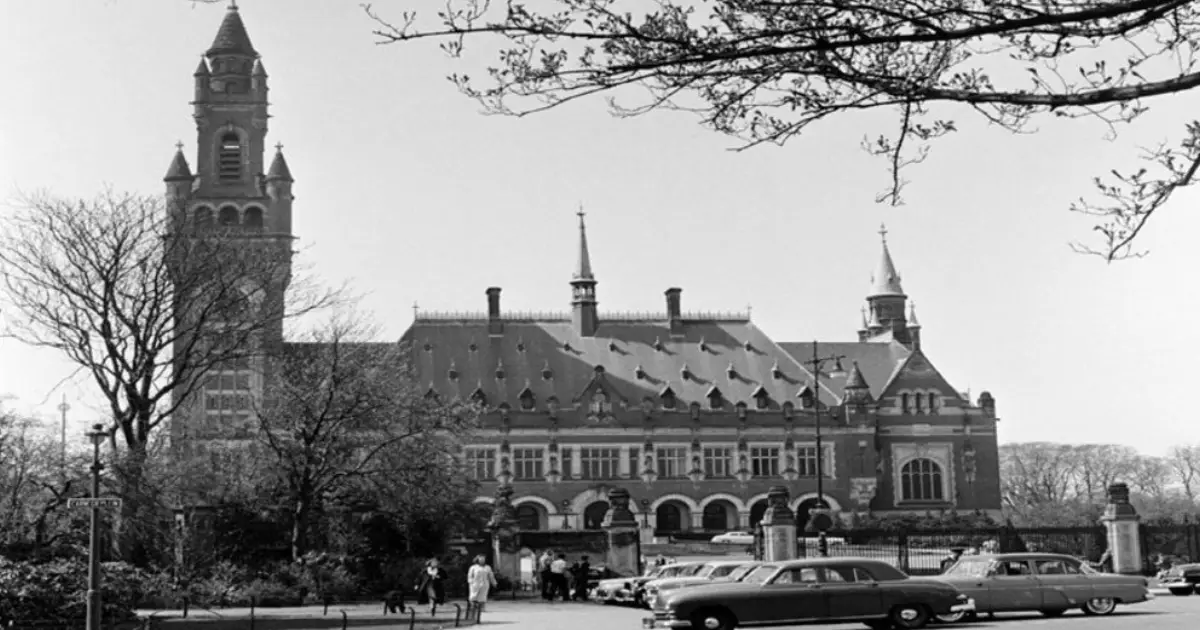 International Court of Justice building at The Hague, where Rau served as judge
A Life That Outgrew One Country's Constitution
Rau's constitutional expertise did not stop at India's borders. In 1947, the same broad period in which he was shaping India's founding document, he also helped draft the Constitution of Burma (Myanmar), a rare instance of one jurist's direct hand in founding the legal frameworks of two newly independent nations in the same decade.
After India's Constitution was adopted, Rau moved fully into international diplomacy and law. He served as India's Permanent Representative to the United Nations from March 1948 to 1952, and represented India on the UN Security Council between 1950 and 1952, presiding over the Council in June–July 1950, the period in which it recommended armed assistance to South Korea, and again in March–April 1951. He later served on the Korean War ceasefire commission and was, at one point, considered a candidate for UN Secretary-General.
His final role was among the most prestigious in international law: judge of the International Court of Justice at The Hague, a position he held from February 1952 until his death in Zürich, Switzerland, on November 30, 1953.
A Family That Shaped a Nation Beyond Him
Rau's own achievements sit inside an unusually accomplished family. His brother Benegal Rama Rau served as the fourth Governor of the Reserve Bank of India, from 1949 to 1957, one of the longest tenures in the role. Another brother, B. Shiva Rau, was a journalist who authored an account of the Constitution's framing, sat in the Constituent Assembly himself, later served in the Lok Sabha and Rajya Sabha, and was awarded the Padma Bhushan. A third brother, Benegal Sanjiv Rau, served as Dean of Benares University.
For a single Mangalore household to produce a chief architect of the Constitution, a long-serving RBI Governor and a Constituent Assembly member and Padma Bhushan awardee is the kind of fact that, once known, is difficult to forget, and yet remains largely unknown even within the city that produced it.
Why Mangaluru Should Remember Him
Sir Benegal Narsing Rau died more than seventy years ago, in a country far from the city where he topped his matriculation exams. No Constitution Day speech is complete without Ambedkar's name, and rightly so. But the document those speeches celebrate had a first draft, and that draft came from a Mangalore doctor's son who spent a career moving quietly between courtrooms, conference rooms and constitutional commissions, doing the difficult, unglamorous work of getting the words right before anyone else had to agree on them.
That, perhaps, is worth remembering the next time someone asks what Mangaluru has given India.
FAQ
Who was Sir Benegal Narsing Rau?
Sir Benegal Narsing Rau (1887–1953) was an Indian civil servant, jurist, diplomat and statesman from Mangalore who served as Constitutional Advisor to India's Constituent Assembly and prepared the original draft of the Indian Constitution.
Was B.N. Rau born in Mangaluru?
Most sources, including LiveLaw, Wikipedia and multiple biographical accounts, state he was born in Mangalore on February 26, 1887. Encyclopaedia Britannica notes some ambiguity, listing his birthplace as "Karkala or Mangalore."
What exactly did B.N. Rau do for the Indian Constitution?
As Constitutional Advisor, he set up the Constituent Assembly's secretariat in 1946 and prepared the original draft and broad democratic framework of the Constitution, which the Drafting Committee, chaired by Dr. B.R. Ambedkar, then debated and refined.
Was B.N. Rau a member of the Drafting Committee?
No. He was not a formal member of the seven-person Drafting Committee, though his groundwork as Constitutional Advisor directly shaped the draft the Committee worked from.
What did B.N. Rau do after India's Constitution was adopted?
He served as India's Permanent Representative to the United Nations (1948–1952), represented India on the UN Security Council, presided over the Council on two occasions, and later served as a judge of the International Court of Justice at The Hague from 1952 until his death in 1953.
Did B.N. Rau help draft any other country's constitution?
Yes. In 1947, he also assisted in drafting the Constitution of Burma (Myanmar).
Is B.N. Rau related to any other well-known Indian public figures?
Yes. His brother Benegal Rama Rau served as the fourth Governor of the Reserve Bank of India (1949–1957), and another brother, B. Shiva Rau, was a journalist, Constituent Assembly member, and Padma Bhushan awardee.
This article is a historical profile compiled from publicly available encyclopaedic, journalistic and biographical sources. Minor discrepancies exist across sources on certain dates and details, as noted in the Editorial Verification Note below; readers relying on this content for academic or legal citation purposes should cross-check against primary historical records.