Rishab Shetty: The Kundapura Boy Who Sold Water Cans Before He Sold Out Cinema Halls
He grew up performing Yakshagana in his hometown, sold water cans and worked hotel jobs to survive his early Bengaluru years, and went on to write, direct and act his way to a National Film Award — twice over — for stories rooted entirely in his own coastal Karnataka soil.

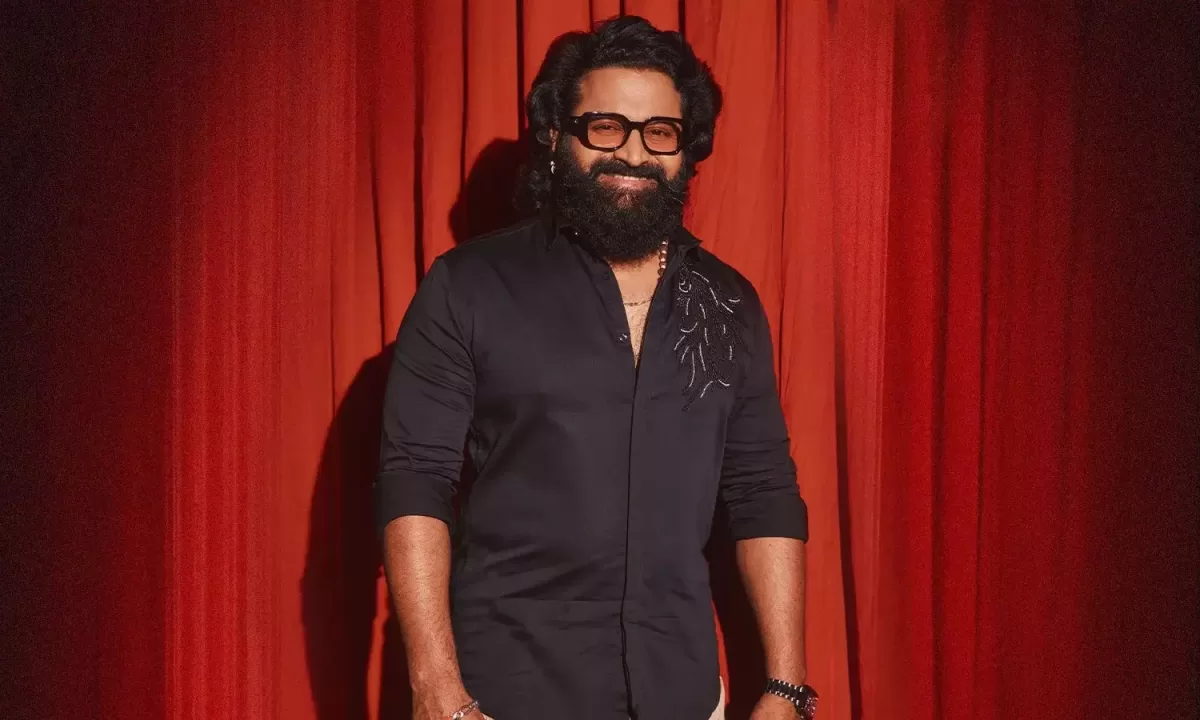
A Kundapura Childhood Spent Between School and Yakshagana Stages
Rishab Shetty was born Prashanth Shetty on 7 July 1983, in Keradi village in Kundapura taluk, Udupi district, into a Bunt family. His father worked as an astrologer and his mother was a homemaker — a modest, culturally rooted household in a part of Karnataka where Yakshagana, the region's centuries-old theatre-and-dance tradition, is less a hobby than a shared inheritance.
He leaned into that inheritance early. While still in the sixth standard, Shetty joined the Durga Parameshwari Yuvaka Sangha in his hometown and began performing as a Yakshagana artist, long before he had any concrete plan of acting professionally. After completing his schooling in Kundapura, he moved to Bengaluru to pursue a Bachelor of Commerce degree at Vijaya College, where he joined the college theatre group, Ranga Sourabha, and went on to win the best actor award for the title role in the play Ghashiram Kotwal at a national-level theatre competition.
Water Cans, Hotel Shifts, and a Diploma in Film Direction
The path from a college theatre trophy to an actual film career was neither quick nor comfortable. By his own account, given years later to The News Minute, Shetty took on odd jobs to survive in Bengaluru while trying to break into the industry — including selling water cans and working at a hotel — before he could support himself through acting or filmmaking alone. He eventually earned a Diploma in Film Direction from the Government Film and Television Institute, Bengaluru, giving him formal grounding to go alongside his theatre background.
He made his acting debut in Tuglak (2012), and followed it with roles in films like Ulidavaru Kandanthe (2014). His first work as a director came with Ricky (2015), before he found his real breakthrough the following year with Kirik Party (2016), a coming-of-age comedy-drama that became both a critical and commercial success and won him the SIIMA Award for Best Director.
A Director Who Kept Choosing Coastal Karnataka as His Subject
What set Shetty apart from many of his contemporaries in Kannada cinema was not just range, but a consistent instinct to set his stories in the world he grew up in — coastal Karnataka's landscapes, dialects and folk-religious practices — rather than chasing more conventional commercial settings.
That instinct paid off unusually well in 2018, with Sarkari Hi. Pra. Shaale, Kasaragodu, Koduge: Ramanna Rai, a film about a government primary school on the Karnataka-Kerala border, which won him the National Film Award for Best Children's Film at the 66th National Film Awards. As an actor, he also took on the lead role in Bell Bottom (2019), a retro-styled comedy-thriller, and delivered a widely praised, harder-edged performance as a gangster in Garuda Gamana Vrishabha Vahana (2021), a film that went on to acquire something close to cult status among Kannada audiences.
Kantara — A Village Story That Became a National Phenomenon
Nothing in Shetty's earlier career, however, prepared the industry for what Kantara (2022) would become. Written, directed by, and starring Shetty, produced by Hombale Films — the studio behind the KGF franchise — Kantara told a story set in a fictional coastal Karnataka village, built around Bhoota Kola (spirit worship) and Daivaradhane (deity worship) traditions, land rights, and the tension between a local tribal community and a feudal landlord.
The film was a genuine phenomenon. It grossed more than $50 million worldwide, ran in Indian theatres for over one hundred days, and became the second-highest-grossing Kannada film of all time at that point. Its success carried Shetty to the National Film Award for Best Actor and the IFFI Special Jury Award in 2023, cementing him as one of the defining voices to emerge from regional Indian cinema in recent years.
An Honest Look at the Controversy Kantara Also Sparked
A profile that only tells the triumphant half of this story would not be doing its job. Kantara's success also pulled it into two genuine, well-documented controversies, and we think coastal Karnataka readers in particular deserve both sides stated plainly rather than smoothed over.
The first was over the film's song "Varaha Roopam." The Kerala-based band Thaikkudam Bridge alleged it closely copied their own song, "Navarasam," and secured a temporary removal of the track from the film's Amazon Prime release. A Kozhikode district court later dismissed the band's petition for lack of jurisdiction, and the song was restored to the streaming version.
The second, more substantive debate concerned Shetty's own comments about Bhoota Kola itself. In an interview with the Tamil channel Cinema Vikatan, Shetty described the tradition — and its central spirit-deity Panjurli, depicted in the film — as part of Hindu culture. Kannada actor and activist Chetan Kumar Ahimsa publicly disagreed, arguing that Bhoota Kola belongs to Tulu Adivasi and Bahujan traditions that predate Vedic Brahminical Hinduism, and that folding it into a single "Hindu" framing risked erasing that distinct lineage. Tulu culture scholars interviewed by The Quint broadly supported the view that Bhoota Kola's origins and practice are not straightforwardly part of Brahminical Hinduism, while acknowledging that many practitioners themselves, across different communities in the region, describe their own relationship to the tradition in a range of ways. We are presenting this as the genuine, unresolved debate that it is, rather than taking a side on it.
Kantara: Chapter 1 — An Even Bigger Second Chapter
If there was any doubt that Kantara's success was a one-off, Shetty answered it decisively with Kantara: A Legend – Chapter 1, released on 2 October 2025. Set nearly a thousand years before the events of the original film, the prequel was written and directed by Shetty, who also starred alongside Jayaram, Rukmini Vasanth and Gulshan Devaiah, with music by B. Ajaneesh Loknath.
Made on a reported budget of around ₹125 crore, the film opened to what trade reports described as blockbuster advance sales, crossing ₹200 crore worldwide within its first four days and briefly running ahead of KGF: Chapter 1's total domestic collections before eventually settling, per Wikipedia's tracked figures, in a final box-office range of ₹850–900 crore — making it, by some measures, the highest-grossing Kannada film ever, ahead of the original Kantara's own ₹310 crore lifetime total. Its closing-ceremony moment at the International Film Festival of India (IFFI) 2025 in Goa also generated headlines of its own, after Bollywood actor Ranveer Singh's on-stage imitation of the film's climactic Daiva sequence drew public criticism and a police complaint for allegedly mischaracterising the deity depicted — a controversy that, notably, centred on Singh's conduct rather than anything Shetty himself said or did.
Life Away from the Camera
Rishab Shetty married Pragati Shetty, a software engineer who has also worked as a costume designer on some Kannada films, in 2017. The couple have two children.
The Takeaway
There is a version of Rishab Shetty's career that reads like a straightforward success story — water-can seller to National Award winner, small-town Yakshagana performer to the director of one of Indian cinema's biggest recent blockbusters. That version is true, but it leaves out the more interesting part: that he built that success almost entirely by refusing to leave Kundapura and Dakshina Kannada's stories, rituals and dialects behind, insisting instead that the rest of India come to them. Whatever one makes of the debates Kantara has stirred along the way, that particular bet — on the value of telling coastal Karnataka's own stories, in its own idiom — has paid off for Kannada cinema in a way few could have predicted back when Shetty was still selling water cans in Bengaluru.