Dr. B. M. Hegde: Cardiologist, Educator and Debated Voice
A former Manipal vice-chancellor and Padma Vibhushan awardee whose humane-care message sits beside contested medical claims.
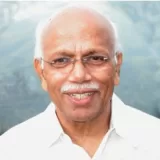
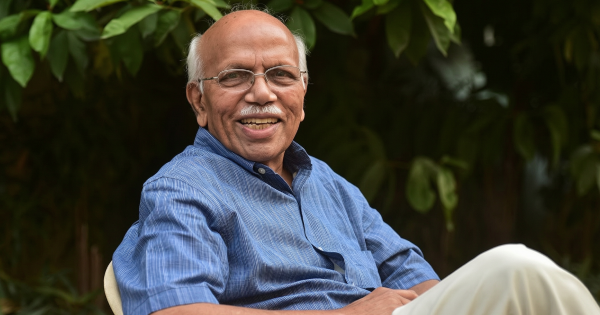
Dr. B. M. Hegde (Belle Monappa Hegde), born near Udupi on 18 August 1938, is a Mangaluru-based cardiologist, former Manipal Academy of Higher Education vice-chancellor and Padma Vibhushan awardee. Across decades as a professor and author, he championed bedside care while drawing sustained scientific criticism for his claims on statins, homeopathy and quantum healing.
Early life in Pangala and medical training
Belle Monappa Hegde was born on 18 August 1938 in Pangala, a village near Udupi. In a 2017 interview with Daijiworld, he recalled studying at home for five years in a village where school lay far away, before completing his SSLC at Board High School in Hiriyadka and his intermediate studies at MGM College in Udupi.
Although drawn to mathematics, he chose biology on a school headmaster's advice and entered Stanley Medical College in Madras, earning his MBBS in 1960 with a gold medal from Madras University. He completed his MD at King George's Medical College, University of Lucknow, in 1964, before training in Britain, where his published biodata records an MRCP in 1969 and subsequent fellowships of the Royal Colleges of Physicians in London, Glasgow, Edinburgh and Dublin.
Teaching at Kasturba Medical College and leading Manipal
Much of his working life was anchored at Kasturba Medical College in Mangalore, an institution central to how Mangaluru became an unlikely medical hub. Over the 1990s he served there as professor, principal and dean before moving into university leadership at Manipal Academy of Higher Education (MAHE).
According to his published biodata and press accounts, he served as pro vice-chancellor of MAHE from January 1998 and as vice-chancellor from 18 June 1999 to 30 August 2003. Karnataka conferred the Rajyotsava Award on him in 1997, and on 30 June 2000 the Medical Council of India named him among the 1999 recipients of the Dr. B. C. Roy National Award in the category of eminent medical teacher.
Press profiles and his biodata also note visiting roles abroad, including visiting professor of cardiology at the University of London from 1982 to 2009 and affiliate professor of human health at the University of Northern Colorado from 2002. Within India, he chaired an expert committee of the Bihar State Health Society in 2006, served as co-chairman of the TAG-VHS Diabetes Research Centre in Chennai, and sat on the board of Zydus Wellness as an independent director until resigning in October 2016.
The two Padma honours and public life in Mangaluru
India awarded Hegde the Padma Bhushan in 2010, presented by President Pratibha Patil in New Delhi that April. On 25 January 2021, the Union government named him for the Padma Vibhushan, the country's second-highest civilian honour, which President Ram Nath Kovind conferred on 9 November 2021.
In Mangaluru, his longest-running civic role has been as chairman of the Mangaluru Kendra of Bharatiya Vidya Bhavan, where the centre's official directory still lists him alongside events such as Bhavanotsava in November 2024.
Did you know. Bharatiya Vidya Bhavan's Mangaluru Kendra at Pandeshwar began on 19 July 1971 and moved into its own premises in February 1979.
Through the Bhavan and other publishers, he has written more than 30 books in English and Kannada, including Holistic Living, Hypertension: Assorted Topics and What Doctors Don't Get to Study in Medical School. He also founded and edits the Journal of the Science of Healing Outcomes, and in June 2026 was named on the jury for the 30th National Mahaveer Awards.
| Year | Milestone |
| 1938 | Born on 18 August in Pangala, near Udupi |
| 1960 | Earned MBBS from Stanley Medical College, Madras |
| 1997 | Received the Karnataka Rajyotsava Award |
| 1999–2003 | Served as Vice-Chancellor of Manipal Academy of Higher Education |
| 2000 | Named 1999 Dr. B. C. Roy National Awardee (eminent medical teacher) |
| 2010 | Conferred the Padma Bhushan |
| 2021 | Conferred the Padma Vibhushan on 9 November |
What Dr. B. M. Hegde argued on care and medicines
Outside hospital wards and university administration, Hegde built a wide following as a public speaker who argued that modern medicine had grown overly commercialised. In books, columns and lectures, he contended that inexpensive bedside medicine practised by an empathetic physician mattered more than routine testing or heavy prescribing.
In his 2017 Daijiworld interview, he urged people to avoid tobacco and alcohol, eat modest traditional food and stay active through daily labour rather than relying on pills. After suffering a mild stroke in May 2017 in Dharmasthala and being rushed to hospital in Mangaluru, he explicitly separated crisis treatment from daily prevention, noting that modern medicine remained essential in an emergency.
I have always welcomed criticism as it improves our knowledge. — Dr. B. M. Hegde, Daijiworld, 2017
His recurring public positions centre on three themes:
- Scepticism toward long-term preventive medications, particularly cholesterol-lowering statins
- Support for homeopathy and lifestyle-based prevention for common, non-emergency ailments
- Claims that mind-body consciousness can trigger self-healing, which he called "quantum healing"
Where his claims and clinical evidence diverge
While Hegde's critique of unnecessary procedures drew sympathetic audiences, several of his specific medical assertions directly contradict large clinical trials and scientific consensus. Even as The News Minute reported his Padma Vibhushan announcement in January 2021, it noted that he had often been accused of propagating pseudoscience.
| Topic | Dr. B. M. Hegde's stated position | Evidence reviews and scientific response |
| Statins and cholesterol | In a November 2013 Moneylife column, he called cholesterol and statins "the biggest medical fraud of the century" and claimed cholesterol-lowering drugs raised overall deaths. | Meta-analyses by the Cholesterol Treatment Trialists' Collaborators in The Lancet (90,056 participants across 14 trials in 2005; 27 trials in 2012) found statins reduced major vascular events by roughly one-fifth per 1 mmol/L LDL drop, lowered all-cause mortality and showed no increase in cancer. |
| Homeopathy | In a January 2012 Moneylife article, he wrote that homeopathy was as scientific as modern medicine and claimed most modern drugs were worse than placebos. | Australia's National Health and Medical Research Council reported in March 2015 that there are no health conditions with reliable evidence that homeopathy is effective, advising against its use for serious or chronic conditions. |
| Quantum healing | In a September 2015 The Hindu essay, he argued that volition and consciousness could drive "auto-healing, akin to quantum healing" to rebuild damaged tissue. | Mainstream physicists and medical researchers dismiss quantum healing as unsupported by evidence; in February 2019, IIT Madras research scholars protested his lecture with placards calling him a proponent of "pseudo-science and quackery." |
Public institutions have also placed formal caveats on his talks. After his May 2018 TEDxGlobalAcademy talk, Change is life, TED attached an editorial note advising viewers not to treat the talk as medical advice and stating that it contained sweeping generalisations and medical fallacies lacking legitimate scientific support. Responding to the February 2019 protest at IIT Madras, Hegde told Press Trust of India that the protest only indicated how much the protesters knew about science.
How coastal Karnataka remembers the career
In Udupi and Mangaluru, Dr. B. M. Hegde remains a familiar name across medical alumni networks and cultural programmes at Bharatiya Vidya Bhavan, sitting alongside other figures who shaped regional health and education institutions such as Dr. Yenepoya Abdulla Kunhi.
The public record holds two distinct halves side by side: decades of recognised teaching, administration and national awards on one hand, and widely rejected claims on statins, homeopathy and quantum healing on the other. Readers weighing his ideas are best served by pairing a healthy scepticism of over-treatment with direct guidance from their own qualified physician on any diagnosis or prescription.
Questions readers ask
Who is Dr. B. M. Hegde?
Dr. Belle Monappa Hegde, born on 18 August 1938 near Udupi, is an Indian cardiologist, medical educator and author based in Mangaluru. He served as vice-chancellor of Manipal Academy of Higher Education from 1999 to 2003 and chairs the Mangaluru Kendra of Bharatiya Vidya Bhavan.
Where did Dr. B. M. Hegde study and teach medicine?
He earned his MBBS from Stanley Medical College, Madras, in 1960 and his MD from King George's Medical College, Lucknow, in 1964. He spent most of his teaching career at Kasturba Medical College in Mangalore as professor, principal and dean before becoming vice-chancellor in Manipal.
When did Dr. B. M. Hegde receive the Padma Bhushan and Padma Vibhushan?
He received the Padma Bhushan in 2010 and was selected for the Padma Vibhushan on 25 January 2021, which President Ram Nath Kovind conferred on 9 November 2021. Earlier, he received the Karnataka Rajyotsava Award in 1997 and the 1999 Dr. B. C. Roy National Award in 2000.
What is Dr. B. M. Hegde's connection to Bharatiya Vidya Bhavan in Mangaluru?
He is the chairman of Bharatiya Vidya Bhavan's Mangaluru Kendra at Pandeshwar. He has also published several health and public-speaking books through the Bhavan, including Holistic Living and Hypertension: Assorted Topics.
Why are Dr. B. M. Hegde's medical views disputed by scientists?
Scientists and medical bodies dispute his claims that statins do not save lives, that homeopathy matches or outperforms modern drugs, and that "quantum healing" repairs damaged organs. Large meta-analyses in The Lancet, a 2015 Australian NHMRC review and a formal TED editorial notice all contradict those positions.
Read next on Mangalore Diary
- Why Mangalore Became India's Unlikely Medical Hub
- Dr. Yenepoya Abdulla Kunhi: The Visionary Who Helped Shape Mangaluru's Education and Healthcare
- U. Srinivas Mallya: The Freedom Fighter Remembered as the Architect of Modern Dakshina Kannada
- Sir Benegal Narsing Rau: The Mangaluru Man Who Helped Shape India's Constitution
This profile is biographical journalism, not medical advice; consult a qualified doctor before making any decision about prescribed treatment. Early schooling years, medical degree dates after MBBS and certain overseas fellowships rely on Dr. B. M. Hegde's published biodata and interviews and could not all be independently confirmed.
References
- Dr. B. M. Hegde — "Biodata" (accessed 27 Nov 2026)
- Daijiworld — "Mangaluru: Exclusive - Dr B M Hegde on life, Ayurveda, alcohol, and politics" (29 Aug 2017)
- The Times of India — "Karnataka: Dr Belle Monappa Hegde gets Padma Vibhushan" (25 Jan 2021)
- The Times of India — "Cardiologist Dr B M Hegde conferred Padma Vibhushan" (9 Nov 2021)
- The Tribune — "BC Roy award for PGI doctor" (1 Jul 2000)
- Mangalore Today — "Dr B M Hegde receives Padma Bhushan award" (8 Apr 2010)
- Bharatiya Vidya Bhavan — "Mangaluru Kendra Details" (accessed 27 Nov 2026)
- Chennaionline — "Bhagwan Mahaveer Foundation Invites Nominations from Tamil Nadu for the 30th National Mahaveer Awards" (30 Jun 2026)
- The News Minute — "Karnataka cardiologist Dr BM Hegde awarded Padma Vibhushan" (25 Jan 2021)
- Business Standard (PTI) — "IIT-Madras scholars protest inviting B M Hegde for lecture" (5 Feb 2019)
- TEDx Talks (YouTube) — "Change is life | Dr. B M HEGDE | TEDxGlobalAcademy" (23 May 2018)
- Moneylife, B. M. Hegde — "Homeopathy—science or fraud?" (4 Jan 2012)
- Moneylife, B. M. Hegde — "Heart attack: Cholesterol and statins are the biggest medical fraud of the century" (20 Nov 2013)
- The Hindu, B. M. Hegde — "Some thoughts on 'quantum healing'" (15 Sep 2015)
- Cholesterol Treatment Trialists' (CTT) Collaborators, The Lancet — "The effects of lowering LDL cholesterol with statin therapy in people at low risk of vascular disease: meta-analysis of individual data from 27 randomised trials" (11 Aug 2012)
- National Health and Medical Research Council (NHMRC) — "NHMRC information paper: evidence on the effectiveness of homeopathy for treating health conditions" (11 Mar 2015)

0 Comments
Leave a Comment