There are dishes you eat to fill your stomach.
And then there are dishes that make you close your eyes for a second after the first bite.
Kori Rotti is the second type.
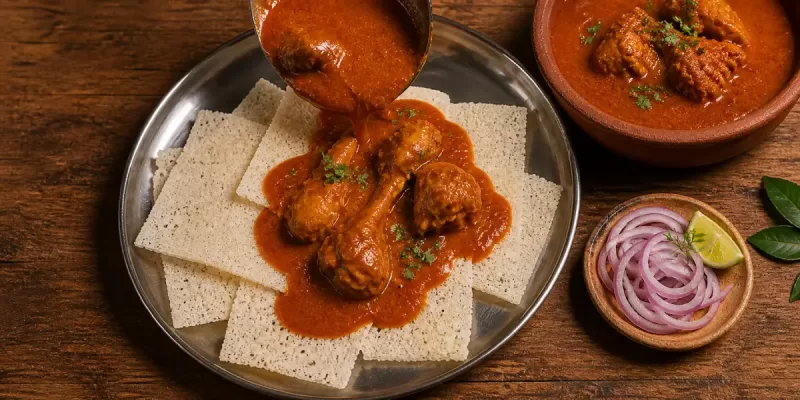
If you've ever sat at a Mangalorean wedding, a GSB feast, or even a simple Sunday lunch at a Bunts household — you know exactly what I'm talking about. That crispy, paper-thin rice wafer slowly soaking up that deep red, coconut-based chicken curry... bro. Nothing else comes close.
But here's what most people don't ask — where did this dish even come from? Why is it so specific to Mangaluru? And why do Mangaloreans get slightly emotional when they eat it away from home?
Let's find out.
The Problem
Most food we eat today has a story behind it.
But we never ask. We just eat, enjoy, and move on.
Kori Rotti is not just a dish. It is a cultural identity of coastal Karnataka. It tells you about the people, the geography, the traditions, and the pride of this region.
And yet — most young people in Mangaluru itself don't know the full story behind it.
So today, let's sit down with a plate of Kori Rotti — and really understand it.
The Full Story — From History to Your Plate
First — What Exactly IS Kori Rotti?
Simple breakdown:
- Kori = Chicken in Tulu language
- Rotti = A crispy, dry, paper-thin wafer made from boiled and sun-dried rice batter
- The dish = Spicy coconut-based chicken curry poured generously over these crispy rice wafers
That's it. That's the dish.
But the magic is in HOW it's eaten — the curry slowly softens the rotti from the outside, but the inside stays slightly crispy. Every bite has a different texture. One moment crispy, next moment soft and soaked in curry.
No other dish in India does this. This combination is 100% unique to Tulu Nadu.
Where Did It Come From?
Kori Rotti has its roots deep in the Bunt community of coastal Karnataka.
The Bunts are a warrior-landowner community who have lived in this region for centuries. They were known for their paddy farming, their strong community bonds, and their love for good, hearty food.
Rice was the main crop. Coconut was everywhere. Chicken was easily available. And the Tulu Nadu coastline gave them spices in abundance — red chillies, coriander, pepper, and more.
So Kori Rotti was essentially born from what the land gave them.
The Rotti was a smart, practical invention — leftover rice batter was spread thin, sun-dried, and stored. It could last for weeks without spoiling. No fridge needed. Pure jungle engineering.
When guests came, or during festivals and weddings — you'd make the chicken curry fresh, pull out the stored rotti, and you had a feast ready in no time.
That's the origin. Simple, practical, and delicious.
What Makes the Curry So Special?
The Kori (chicken) curry in Kori Rotti is not your regular chicken curry.
It's made with:
- Fresh grated coconut — roasted until dark brown (this is the key step most people get wrong)
- Byadgi red chillies — the long, dark red chillies from Karnataka that give colour and mild heat without burning your tongue
- Whole spices — coriander, cumin, pepper, cloves, cinnamon
- Onion and garlic — fried low and slow
- Coconut oil — not refined oil, not butter — coconut oil. Non-negotiable.
The roasting of coconut is what separates Mangalorean chicken curry from everything else. That slightly smoky, deep coconut flavour is what you taste in every bite.
No shortcuts. No readymade masala. Everything from scratch.
Why is It Served at Weddings and Festivals?
In coastal Karnataka — especially in Bunt and Tulu Hindu households — Kori Rotti is the celebration food.
No wedding feast is complete without it. No homecoming meal skips it. When a son comes back from the Gulf after 2 years — the mother makes Kori Rotti. When a daughter comes home after delivery — Kori Rotti is on the table.
It's not just food. It's an emotion.
There's a reason Mangaloreans living in Bangalore, Mumbai, or Dubai get a specific kind of homesick that can only be cured by Kori Rotti. Not pizza. Not biryani. Kori Rotti.
Home vs. Hotel — Which is Better?
Honest answer — home-made Kori Rotti wins every single time.
Hotel versions are good. Some Mangalorean restaurants in Bangalore serve decent versions. But nothing matches the one made by a Mangalorean aunty who wakes up at 6 AM, roasts the coconut herself, grinds fresh masala, and cooks the chicken on a wood fire stove.
The Rotti itself — the rice wafer — is ideally sun-dried at home. The ones you buy from the store work, but home-dried ones have a different texture and flavour.
If you ever get invited to a Mangalorean home for Kori Rotti — cancel every other plan and go. No questions asked.
Has Kori Rotti Gone Global?
Yes — quietly and surely.
Mangalorean families settled in the Gulf, UK, USA, and Australia carry the tradition with them. Kori Rotti pop-up events happen in places like Dubai and London among Mangalorean NRI communities.
Some Mangalorean food blogs and YouTube channels have introduced Kori Rotti to non-Kannadigas — and the reaction is always the same:
"Why have I never heard of this before?"
Food writers and chefs who study Indian regional cuisine are now calling Kori Rotti one of the most underrated and distinctive dishes in all of India. 🇮🇳
It deserves that recognition. Long overdue.
How to Eat It Correctly (Yes, There's a Right Way)
First-timers often make mistakes. Here's the proper Kori Rotti eating guide:
- Break the Rotti into large pieces — don't crush it into powder
- Pour the hot curry generously — don't be shy, soak it well
- Wait 2 minutes — let the curry soften the rotti slightly
- Eat with your hands — spoon defeats the purpose
- Mix as you go — don't mix everything at once, mix bite by bite
- Don't waste the curry at the bottom — break fresh rotti and soak it up. That last scoop is the best.
In Real-Life Example
My friend Suresh from Delhi visited Mangalore for the first time two years ago.
I took him to a local wedding where Kori Rotti was served.
He looked at the plate — dry crispy wafers and a bowl of red curry — and said, "Yaar yeh kya hai, papad ke saath curry?"
Five minutes later, he had gone back for his third helping. He was mixing the curry with his hands, completely silent, just eating.
After the meal he sat back and said — "This is the best thing I have eaten in my entire life. I am not joking."
He was not joking.
Actionable Tips
- Where to eat in Mangaluru — Hotel Janatha, Shetty Lunch Home, Lalitha Lunch Home, and Pabbas are reliable options. But ask locals for the best current spot — these things change. 🍽️
- Trying to cook at home? — The most important step is roasting the coconut properly. Dark brown, not burnt. Get that right and half the battle is won.
- Buying Rotti — You can find packaged Mangalorean rice rotti at stores in Bangalore and online on platforms like Amazon and local Karnataka food stores. Brands from Mangalore are the most authentic.
- Visiting Mangaluru? — Go during a local festival or wedding season if possible. That's when home-style Kori Rotti is made and sometimes shared with guests. ₹200-300 gets you a full plate at most local restaurants.
- NRI tip — You can carry packaged rotti in your suitcase internationally. The curry masala is also available in dry packet form from Mangalorean stores. Homesickness — partially solved.
Conclusion
Kori Rotti is not just a dish on a menu.
It is centuries of Tulu culture packed onto a plate. It is a mother's love. It is a wedding memory. It is the first meal you ask for when you come back home after months away.
It was born from simple ingredients — rice, coconut, chicken, and spice. But what it became is something far more powerful.
It became the taste of home for every Mangalorean — no matter where in the world they are.
And if you haven't tried it yet — what are you even waiting for?
Eat Kori Rotti. Understand Mangaluru. It's that simple.



1 Comment
This article on Kori Rotti was very informative. I've always loved this dish, and it's great to see such a detailed post about its origins and how it's made. Thank you!
Leave a Comment